Wednesday, January 22, 2025

Authentication and Single Sign-On: Essential Technical Foundations

Authentication and Single Sign-On: Essential Technical Foundations

Authentication and Single Sign-On (SSO) are fundamental aspects of modern web security, but implementing them effectively requires a deep understanding of various web technologies and security concepts. This guide explores the essential technical foundations that every developer should master before working with authentication systems.

Essentials to know before implementing Auth and SSO

  1. Understanding HTTP
  2. Cookies and Session Management
  3. Database Security
  4. Authentication Security: Cross-Site Scripting (XSS)
  5. Cross-Site Request Forgery (CSRF)
  6. Cross-Origin Resource Sharing (CORS)
  7. Single Sign-On Tokens
  8. Best Practices and Security Checklist

1. Understanding HTTP – The Foundation of Web Authentication

Authentication in web applications doesn't exist in isolation – it's built upon the fundamental protocol that powers the web: HTTP. Before we can understand how authentication works, we need to grasp how HTTP shapes our approach to security and user identification.

HTTP serves as the backbone of web communication, but its stateless nature presents unique challenges for authentication. Imagine trying to maintain a conversation where the other person forgets everything after each sentence – that's essentially what we're dealing with in HTTP. This characteristic has profound implications for how we design authentication systems.

Think of HTTP as the postal service of the internet. Just as a mail carrier delivers letters without knowing their content or context, HTTP delivers requests and responses without inherently maintaining any memory of previous interactions. This is why we need additional mechanisms to maintain user sessions and authentication states.

HTTP Protocol Basics

The Hypertext Transfer Protocol (HTTP) forms the backbone of data communication on the web. To understand authentication, we must first grasp how HTTP works:

  1. Stateless Nature: HTTP is inherently stateless, meaning each request is independent and carries no information about previous requests. This characteristic presents unique challenges for authentication, which requires maintaining user state across requests.
  2. Request-Response Cycle: Every HTTP interaction consists of:
    • A request from the client containing:
      • Method (GET, POST, etc.)
      • Headers
      • URL
      • Optional body
    • A response from the server containing:
      • Status code
      • Headers
      • Body
  3. Headers in Authentication:
    • Authorization: Carries credentials for authentication
    • Cookie: Maintains session state
    • Origin: Important for CORS security
    • Content-Type: Specifies the format of request/response data

HTTP Authentication Schemes

HTTP provides several built-in authentication schemes:

    • Simple but sends credentials with every request
    • Base64 encoding is not encryption
    • Should only be used over HTTPS
    • Common in OAuth 2.0 and JWT implementations
    • Token-based approach
    • More secure than Basic Authentication
  1. Digest Authentication:
    • Uses cryptographic hashing
    • More secure than Basic Authentication
    • Less common in modern applications

Bearer Authentication:

Authorization: Bearer <token>

Basic Authentication:

Authorization: Basic base64(username:password)
Authentication and Single Sign-On: Essential Technical Foundations
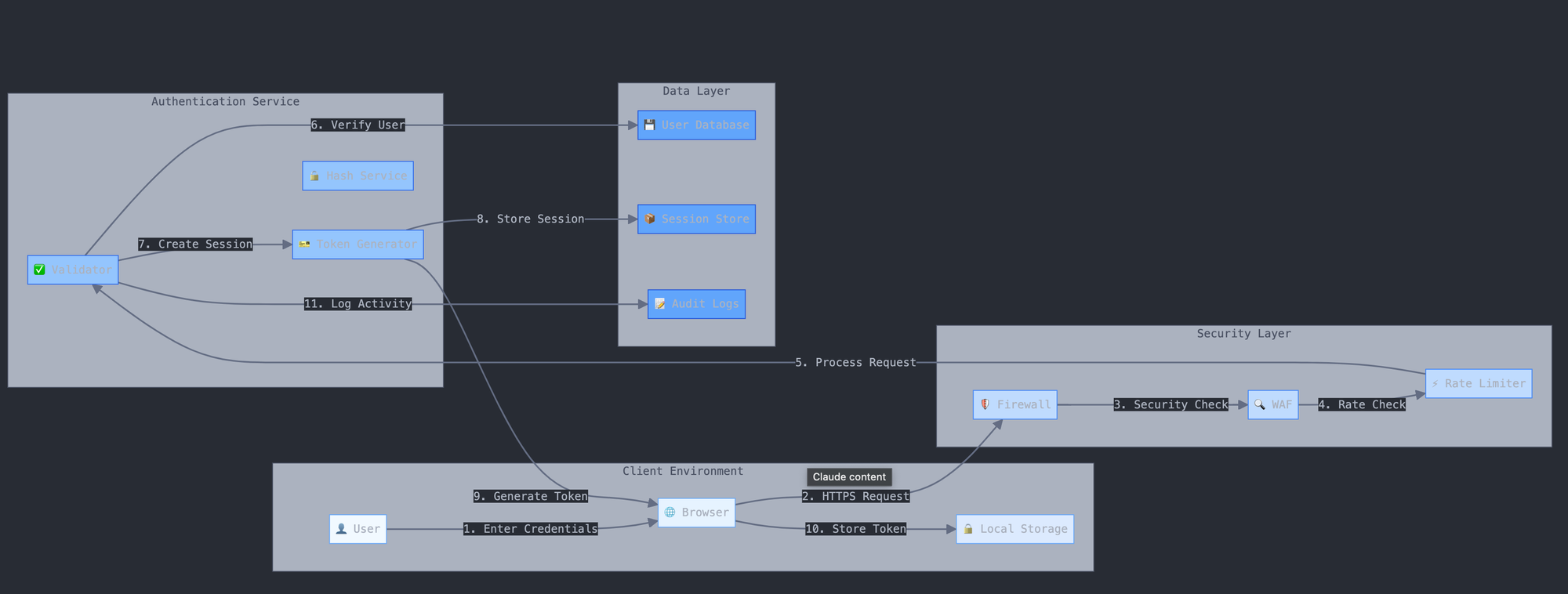
Basic Auth Flow

2. Cookies and Session Management

Cookies and session management form the backbone of maintaining user authentication states in web applications. Despite HTTP's stateless nature, cookies provide the crucial ability to remember who a user is between requests, making them fundamental to modern authentication systems.

Understanding cookies in authentication is like understanding how a hotel key card system works. The key card (cookie) proves you're a guest, tracks which room is yours (session data), and has built-in security features (cookie attributes). Just as a hotel carefully manages its key card system, web applications must carefully manage their cookies and sessions.

Session management builds upon cookies to create a complete system of user identity tracking. Think of it as the difference between simply having a key card and having a complete system that knows which key cards are active, when they were issued, and when they should expire. This comprehensive management is crucial for maintaining security while providing a seamless user experience.

Cookies are crucial for session management in authentication systems. Here's how to use them securely:

Session Cookie vs. Persistent Cookie:

// Session cookie (expires when browser closes)
Set-Cookie: sessionId=abc123; HttpOnly; Secure

// Persistent cookie (explicit expiry)
Set-Cookie: rememberMe=true; Max-Age=2592000; HttpOnly; Secure

Secure Cookie Configuration:

// Express.js example
app.use(session({
  cookie: {
    secure: true,           // Only transmit over HTTPS
    httpOnly: true,         // Prevent JavaScript access
    sameSite: 'strict',     // Protect against CSRF
    maxAge: 3600000,        // 1 hour expiry
    domain: '.example.com', // Scope to domain
    path: '/'               // Accessible across all paths
  }
}));

Session Management Best Practices

Session Storage:

// Redis example
const Redis = require('ioredis');
const redis = new Redis();

async function storeSession(sessionId, userData) {
  await redis.setex(`session:${sessionId}`, 3600, JSON.stringify(userData));
}

Session ID Generation:

const crypto = require('crypto');

function generateSessionId() {
  return crypto.randomBytes(32).toString('hex');
}

3. Database Security

SQL Injection attacks target the very foundation of user authentication – the database where user credentials and permissions are stored. This type of attack is particularly insidious because it exploits the trust between your application and its database.

In the context of authentication, SQL injection can be catastrophic because it potentially gives attackers access to user credentials, session tokens, and permission levels. It's like having a master key that not only opens any door but can also reprogram all the locks in the building.

The importance of preventing SQL injection in authentication systems cannot be overstated. Your authentication system might have perfect session management and robust password hashing, but if an attacker can directly manipulate your database queries, these protections become meaningless. It's similar to having a sophisticated alarm system but leaving the database of security codes written on a public whiteboard.

SQL Injection Fundamentals

SQL injection attacks can compromise authentication systems by manipulating database queries:

-- Vulnerable query
SELECT * FROM users WHERE username = '$username' AND password = '$password'

-- Attack input
username: admin' --
password: anything

-- Resulting query
SELECT * FROM users WHERE username = 'admin' -- ' AND password = 'anything'

Prevention Techniques

Input Validation:

function validateUsername(username) {
  // Only allow alphanumeric and underscore
  return /^[a-zA-Z0-9_]+$/.test(username);
}

ORM Usage:

// Using an ORM like Sequelize
const user = await User.findOne({
  where: {
    username: username,
    passwordHash: hash
  }
});

Prepared Statements:

// Node.js example with prepared statements
const query = 'SELECT * FROM users WHERE username = ? AND password_hash = ?';
connection.query(query, [username, passwordHash], function(error, results) {
  if (error) throw error;
  // Handle results safely
});

4. Authentication Security: Cross-Site Scripting (XSS)

Cross-Site Scripting represents one of the most critical security vulnerabilities in web authentication systems. Think of XSS as an uninvited guest at a party who convinces other guests they're the host – it's a breach of trust that can have severe consequences for security.

In authentication contexts, XSS is particularly dangerous because it can compromise the very tokens and credentials that prove a user's identity. Imagine having a secure vault (your authentication system) but leaving copies of the key (authentication tokens) where attackers can easily find them – that's what happens when XSS vulnerabilities exist in your application.

The relationship between XSS and authentication security is crucial because authentication mechanisms often rely on storing and transmitting sensitive data in the browser. When an XSS vulnerability exists, it's like having a secure door but leaving the windows wide open – attackers can bypass all your careful authentication measures.

Understanding XSS

Cross-Site Scripting attacks occur when malicious scripts are injected into trusted websites. In authentication contexts, XSS can be particularly dangerous:

Types of XSS:a) Reflected XSS:

// Vulnerable code
document.write('<input value="' + userInput + '">');

// Safe code
element.textContent = userInput;

b) Stored XSS:

// Vulnerable pattern
database.store(userInput);
page.innerHTML = database.getData();

// Safe pattern
database.store(sanitizeHTML(userInput));
page.textContent = database.getData();

c) DOM-based XSS:

// Vulnerable
element.innerHTML = window.location.hash.substring(1);

// Safe
element.textContent = window.location.hash.substring(1);

XSS Prevention in Authentication

Input Sanitization:

function sanitizeInput(input) {
  return input.replace(/[&<>"']/g, function(match) {
    const escape = {
      '&': '&amp;',
      '<': '&lt;',
      '>': '&gt;',
      '"': '&quot;',
      "'": '''
    };
    return escape[match];
  });
}

Content Security Policy (CSP):

Content-Security-Policy: default-src 'self';
                       script-src 'self' trusted.com;
                       style-src 'self';

Token Storage:

// Never store sensitive tokens in localStorage
localStorage.setItem('authToken', token); // Vulnerable to XSS

// Instead use httpOnly cookies
// Set-Cookie: authToken=xyz; httpOnly; secure; sameSite=strict

5. Cross-Site Request Forgery (CSRF)

Cross-Site Request Forgery represents a subtle but dangerous threat to authentication systems. Unlike other attacks that try to steal credentials, CSRF tricks authenticated users into performing actions they didn't intend. It's like a malicious actor using someone else's already-signed paperwork to authorize transactions they never approved.

In authentication systems, CSRF is particularly concerning because it exploits the trust between the user's browser and your application. When users are authenticated, their browsers automatically include authentication cookies with every request. CSRF attacks take advantage of this automatic inclusion to perform unauthorized actions while the user is authenticated.

The challenge with CSRF in authentication systems is maintaining the balance between user convenience and security. We want users to stay authenticated for a reasonable time, but this same persistence creates opportunities for CSRF attacks. It's similar to wanting a door to automatically unlock for authorized personnel while ensuring no one can trick the system into unlocking at the wrong time.

CSRF Vulnerability

CSRF attacks trick authenticated users into performing unwanted actions:

<!-- Malicious form on attacker's site -->
<form action="https://bank.com/transfer" method="POST">
  <input type="hidden" name="amount" value="1000">
  <input type="hidden" name="to" value="attacker">
</form>
<script>document.forms[0].submit();</script>

CSRF Prevention

Double Submit Cookie Pattern:

// Set CSRF token in cookie and form
app.get('/form', (req, res) => {
  const csrfToken = generateCSRFToken();
  res.cookie('XSRF-TOKEN', csrfToken, {
    httpOnly: true,
    secure: true
  });
  res.render('form', { csrfToken });
});

Token-based Protection:

// Generate CSRF token
function generateCSRFToken() {
  return crypto.randomBytes(32).toString('hex');
}

// Validate token middleware
function validateCSRF(req, res, next) {
  if (req.csrfToken() !== req.body._csrf) {
    return res.status(403).send('Invalid CSRF token');
  }
  next();
}

6. Cross-Origin Resource Sharing (CORS)

Cross-Origin Resource Sharing is a crucial security feature that directly impacts how authentication systems can be accessed across different domains. In the modern web, where applications often consist of separate frontend and backend services, understanding CORS is essential for building secure authentication systems.

CORS acts like a border control system for web resources. Just as countries have specific rules about who can cross their borders and what they can bring, CORS defines rules about which domains can access your authentication endpoints and what kinds of requests they can make. This is particularly important in authentication systems where you need to carefully control who can send and receive sensitive credentials.

The relationship between CORS and authentication is complex because it affects how your authentication tokens can be transmitted and used. Modern single-page applications and microservices architectures often require careful CORS configuration to ensure that authentication works securely across different domains while preventing unauthorized access.

CORS in Authentication

CORS is crucial for secure cross-origin requests in authentication systems:

Handling Preflight Requests:

app.options('/api/auth', cors());  // Handle preflight for specific route

app.post('/api/auth', cors(), (req, res) => {
  // Authentication logic
});

Basic CORS Configuration:

// Express.js CORS setup
app.use(cors({
  origin: 'https://trusted-client.com',
  methods: ['GET', 'POST'],
  allowedHeaders: ['Content-Type', 'Authorization'],
  credentials: true
}));

Security Considerations

Credential Handling:

// Client-side fetch with credentials
fetch('https://api.example.com/auth', {
  credentials: 'include',
  headers: {
    'Authorization': `Bearer ${token}`
  }
});

Whitelist Approach:

const whitelist = ['https://app1.example.com', 'https://app2.example.com'];

app.use(cors({
  origin: function(origin, callback) {
    if (whitelist.indexOf(origin) !== -1 || !origin) {
      callback(null, true);
    } else {
      callback(new Error('Not allowed by CORS'));
    }
  }
}));

7: Single Sign-On Tokens

Single Sign-On represents the evolution of authentication systems from isolated, application-specific solutions to unified, enterprise-wide identity management. SSO is like having a single master key that works across multiple buildings in a campus, rather than carrying different keys for each door.

The value of SSO in modern authentication systems cannot be overstated. It solves several critical problems: reducing password fatigue for users, centralizing authentication control for security teams, and streamlining access management across multiple applications. Think of it as creating a secure, central checkpoint that, once cleared, grants acess to multiple secure areas.

Understanding SSO implementation requires bringing together all the previous concepts – HTTP, cookies, CORS, and security protections – into a cohesive system. It's like orchestrating a complex dance where multiple participants (applications, identity providers, and user browsers) must move in perfect synchronization while maintaining security at every step.

SSO Architecture

OAuth 2.0 Flow:

// OAuth 2.0 Authorization Code Flow
app.get('/auth', (req, res) => {
  const authURL = `${idpBaseURL}/oauth/authorize?
    client_id=${clientId}&
    redirect_uri=${encodeURIComponent(redirectUri)}&
    response_type=code&
    scope=openid profile email`;
  
  res.redirect(authURL);
});

Identity Provider (IdP) Integration:

// SAML Authentication Example
const saml = require('saml2-js');

const sp_options = {
  entity_id: "https://sp.example.com",
  private_key: fs.readFileSync("key.pem").toString(),
  certificate: fs.readFileSync("cert.pem").toString(),
  assert_endpoint: "https://sp.example.com/assert"
};

const sp = new saml.ServiceProvider(sp_options);

Token Management

JWT Handling:

// JWT creation
function createJWT(user) {
  return jwt.sign(
    { 
      sub: user.id,
      email: user.email,
      roles: user.roles
    },
    process.env.JWT_SECRET,
    { 
      expiresIn: '1h',
      audience: 'https://api.example.com'
    }
  );
}

// JWT verification
function verifyJWT(token) {
  try {
    return jwt.verify(token, process.env.JWT_SECRET, {
      audience: 'https://api.example.com'
    });
  } catch (err) {
    throw new AuthenticationError('Invalid token');
  }
}

8. Best Practices and Security Checklist

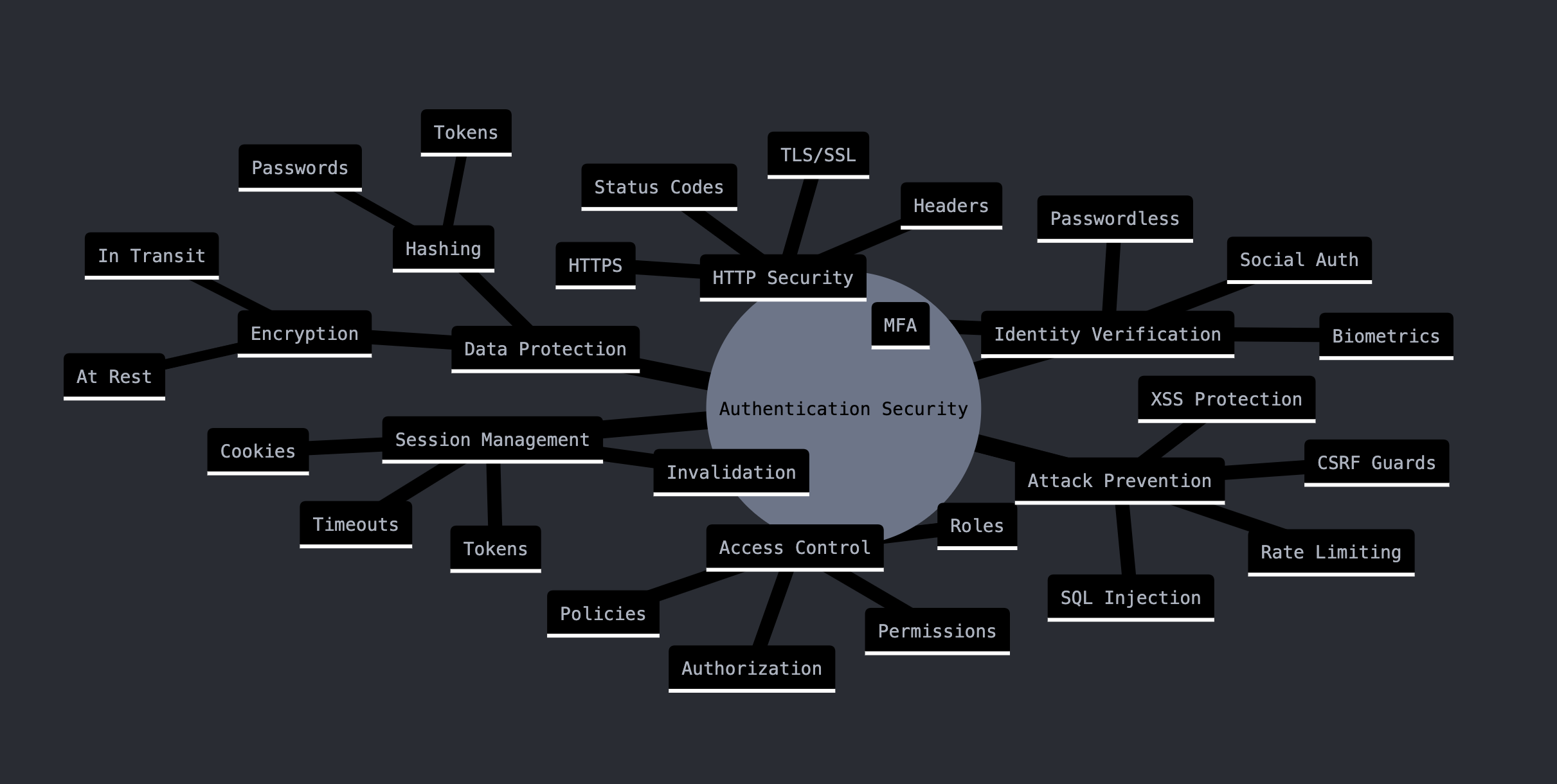
Security in authentication systems isn't a single feature or setting – it's a comprehensive approach that encompasses all aspects of your application. Best practices serve as your roadmap to creating and maintaining secure authentication systems, helping you avoid common pitfalls and implement proven solutions.

Think of authentication security as a chain where each link represents a different aspect of your system. Just as a chain is only as strong as its weakest link, your authentication system is only as secure as its most vulnerable component. This is why having a comprehensive security checklist and following best practices is crucial.
Authentication and Single Sign-On: Essential Technical Foundations

The value of following best practices in authentication cannot be overstated. While it might be tempting to implement quick solutions or take shortcuts, the cost of a security breach far outweighs the time and effort required to implement proper security measures. It's like building a house – taking the time to build on a solid foundation using proven techniques will save you from costly problems in the future.

Authentication Security Checklist

  1. Password Security:
    • Implement strong password policies
    • Use secure password hashing (bcrypt/Argon2)
    • Enforce MFA for sensitive operations
  2. Session Security:
    • Use secure session storage
    • Implement proper session expiration
    • Protect against session fixation
  3. API Security:
    • Use rate limiting
    • Implement proper error handling
    • Log security events

Start Auth NOW

Understanding these fundamental concepts is crucial for implementing secure authentication and SSO systems. Remember to:

  • Always use HTTPS
  • Implement proper input validation
  • Use secure session management
  • Keep dependencies updated
  • Regularly audit security measures
  • Follow security best practices
  • Stay informed about new vulnerabilities and attacks

This guide serves as a foundation for building secure authentication systems. As the security landscape evolves, continue to stay updated with the latest security practices and vulnerabilities.


Additional Resources

https://ift.tt/7BFnib3
https://ift.tt/UqLNV8m


https://2.gravatar.com/avatar/b7ed20e10da488de193e75b40fa28ba5ceda96c4265525794861ddaa33ae7723?s=96&d=identicon&r=G
https://deepakguptaplus.wordpress.com/2025/01/22/authentication-and-single-sign-on-essential-technical-foundations/

Monday, January 20, 2025

Bluesky AT Protocol: Building a Decentralized TikTok

Bluesky AT Protocol: Building a Decentralized TikTok

The Bluesky AT Protocol is designed as a federated social web protocol that emphasizes decentralization and user control over data. It facilitates a network where users can create and share data, which can be accessed and interacted with by various applications across the platform. The underlying architecture promotes the idea of "speech vs reach," encouraging a balance between expression and the dissemination of content.

At its core, the AT Protocol integrates concepts from existing social web protocols like ActivityPub, while also introducing its unique features aimed at enhancing security and collaboration across platforms. The protocol is currently in a state of active development, with ongoing efforts to align with relevant standards and best practices, including potential submissions to independent standards bodies.

Introduction to the Bluesky AT Protocol: Core Components

The Bluesky AT (Authenticated Transfer) Protocol is an open and decentralized protocol developed to power the Bluesky social media platform.

The key principles of the AT Protocol are:

  1. Full user ownership and control over data
  2. Data integrity via secured and authenticated data transfer

The AT Protocol enables a federated network architecture, where multiple independent servers work together to form a single interconnected social network. This makes the platform decentralized and not dependent on a single central server.

Key features of the AT Protocol include:
1. Identity management through decentralized identifiers (DIDs) that allow users to self-verify their accounts.
2. Data portability, where users can move their social media data (posts, likes, followers) to other platforms.
3. User-controlled moderation and content labeling services.
4. Custom algorithmic feeds that users can choose or create themselves.

How does AT protocol impact social media experience?

The AT Protocol addresses the issue of social media feed algorithms by providing a framework for creating and sharing custom feed algorithms called "Lexicons". This allows users to select the feed algorithm they want to use or even create their own custom algorithm by combining different Lexicons. The protocol separates identity, data storage, and service provision, giving users more control over their social media experience.

Overall, the Bluesky AT Protocol is an open, decentralized framework that aims to give users more control over their data and online identity, while enabling interoperability between different social media platforms.

Comparison with ActivityPub

The AT Protocol, developed for Bluesky, presents several distinctions when compared to existing protocols, notably ActivityPub, which is a prominent standard for decentralized social media.

Decentralization Approach

While ActivityPub decentralizes content across various servers, enabling users to post and interact across the "Fediverse," the AT Protocol approaches decentralization at the individual user level. This means that users maintain a singular identity across the network, which is customizable. If a user decides to migrate from one server to another, they can take all their data—including followers and an archive of posts—along with them. In contrast, ActivityPub requires users to create accounts on specific servers, which may impose varying moderation standards and rules

Interoperability

Both protocols emphasize interoperability. The AT Protocol enables communication between different platforms through a federated approach, allowing instances to operate independently while adhering to shared rules. This feature allows users to interact across different platforms seamlessly. Similarly, ActivityPub facilitates interaction between different instances and applications, such as Mastodon, providing a global timeline of posts from various servers. However, the AT Protocol's data portability feature enhances this aspect, allowing users to migrate their data freely between social networks, which may not be as straightforward in ActivityPub.

Control Over Identity

A notable limitation of the AT Protocol is its current reliance on Bluesky-controlled infrastructure for identity management. This centralized aspect means that users' identities are dependent on Bluesky's servers, potentially leading to a loss of control if the platform enforces bans or restrictions. In contrast, ActivityPub allows users to join different instances, each with its moderation standards, thus giving users more autonomy over their experience and identity.

Data Management and Portability

The AT Protocol places a strong emphasis on data portability, allowing users to manage their data as they see fit and transfer it between different services without loss. This contrasts with the ActivityPub model, where data migration between different servers may not be as seamless. The AT Protocol's design also supports low computational requirements for running personal data stores (PDS), enabling broader participation in the network without significant resource investment.

Future Developments and Governance

Both protocols are still evolving, with the AT Protocol aiming to solidify its governance through a formal standards process involving organizations like the IETF or the W3C. This contrasts with ActivityPub, which has already been established as a W3C standard since its introduction in 2018. The ongoing development of both protocols will likely lead to further innovations and improvements in their respective ecosystems

Developing a Social Media App with AT Protocol

The AT (Authenticated Transfer) Protocol is an open and decentralized standard developed by Bluesky, aimed at creating a more user-centric and interoperable social media ecosystem. Here is a guide on how to develop a social media app using the AT Protocol:

1. Identity and Data Repositories
– The AT Protocol provides a standard format for user identity, follows, and data on social apps.
– Users are identified by domain names that map to cryptographic URLs, securing their account and data.
– User data is stored in signed data repositories, allowing users to move their account and data freely between providers.

2. Federation and Interoperability
– The AT Protocol uses a federated networking model to sync user repositories across servers.
– It employs a global schemas network called Lexicon to unify the names and behaviors of API calls across servers.
– This enables interoperability, allowing different apps and services to understand each other's data without needing to exchange rendering code.

3. Algorithmic Choice and Moderation
– The AT Protocol allows for custom feed algorithms, giving users the ability to choose how content is displayed and ranked.
– It separates the "speech" layer (distributing authority for user posts) from the "reach" layer (content aggregation and moderation), allowing for flexible and scalable moderation.

4. Account Portability
– The protocol is designed to ensure users can migrate their account to a new provider without the original host's involvement.
– This is achieved through the use of Decentralized Identifiers (DIDs) and signed data repositories, which are independent of the user's personal data server (PDS).

To build a social media app on the AT Protocol, you would need to:
1. Implement the protocol's identity, data repository, and federation mechanisms.
2. Leverage the Lexicon framework to enable interoperability with other AT Protocol-based apps.
3. Provide custom feed algorithms and moderation tools that align with the protocol's principles.
4. Ensure a seamless user experience for account portability and migration.

The AT Protocol provides a decentralized and open framework for building social media applications that prioritize user control, interoperability, and transparency.

Implementing Short Video Features: Leveraging AT Protocol for TikTok-like Functionality

The rapid growth of short video platforms has led to a large number of user-generated short videos being uploaded every day. This has created challenges for efficient video recommendation, as collaborative filtering methods can struggle with the "cold-start" problem where new videos have difficulty competing with existing popular content.

To address this, researchers have explored content-based approaches that model the multi-modal features of short videos to better understand user preferences.

Some key points on short video features implementation using multi-modal approaches:

  • Extracting and combining modality-specific features (e.g. visual, textual, audio) to represent video content, rather than relying only on collaborative signals.
  • Using techniques like clustering to obtain trainable category IDs that can help bridge the gap between multi-modal feature extraction and user interest modeling.
  • Measuring the varying importance of different modalities for individual users and employing techniques like pairwise loss to better decouple user multi-modal preferences.
  • Deploying these multi-modal recommendation models in real-world short video platforms to improve performance in cold-start scenarios.

Overall, the research suggests that leveraging rich multi-modal video features through advanced modeling techniques can be an effective way to enhance short video recommendation, especially for new or unpopular content.

In the context of the AT Protocol, the protocol's focus on user control and transparency could be leveraged to develop short video features that give users more control over the recommendation algorithms used to surface content. The protocol's support for custom feed algorithms and decentralized identity management could enable users to choose or create their own recommendation models, tailored to their preferences.

Additionally, the AT Protocol's principles of data portability and interoperability could facilitate the development of short video features that allow users to seamlessly move their content and social connections between different platforms. This could help address the challenges of the "cold-start" problem by enabling users to bring their established social graphs and content preferences with them when trying new short video platforms.

The AT Protocol's decentralized and user-centric design principles could be leveraged to develop short video features that provide users with more control, transparency, and flexibility in how content is discovered and recommended, potentially addressing some of the challenges faced by current short video platforms.

Integrating Bluesky API: Enhancing Your App's Capabilities and User Experience

The Bluesky API, built on the Authenticated Transfer (AT) Protocol, offers a comprehensive set of features and capabilities that can significantly enhance the functionality and user experience of your social media application. Here's a detailed overview of how you can leverage the Bluesky API to improve your app:

1. Decentralized Identity Management
– The AT Protocol provides a decentralized identity system, where users are identified by domain names that map to cryptographic URLs.
– This approach ensures user ownership and control over their digital identity, allowing them to easily move their accounts and data between different providers.

2. Federated Networking and Interoperability
– The AT Protocol employs a federated networking model, where multiple independent servers work together to form a single interconnected social network.
– This decentralized architecture enables interoperability between different apps and services built on the protocol, allowing them to understand each other's data without needing to exchange rendering code.

3. Algorithmic Choice and User-Controlled Moderation
– The AT Protocol allows for the creation and sharing of custom feed algorithms, called "Lexicons," which users can choose from or even create themselves.
– It also separates the "speech" layer (distributing authority for user posts) from the "reach" layer (content aggregation and moderation), enabling flexible and scalable moderation mechanisms that are under user control.

4. Data Portability and Account Mobility
– The protocol is designed to ensure users can migrate their accounts and data to a new provider without the original host's involvement.
– This is achieved through the use of Decentralized Identifiers (DIDs) and signed data repositories, which are independent of the user's personal data server (PDS).

To integrate the Bluesky API into your application, you will need to:

  1. Implement the protocol's identity, data repository, and federation mechanisms to enable user-centric identity management and data portability.
  2. Leverage the Lexicon framework to provide users with the ability to choose or create custom feed algorithms that align with their preferences.
  3. Develop moderation tools and content labeling services that adhere to the protocol's principles of user-controlled moderation.
  4. Ensure a seamless user experience for account portability and migration, allowing users to easily move their social media presence between different platforms.

By integrating the Bluesky API, your application can offer a more decentralized, user-centric, and interoperable social media experience, empowering users with greater control over their data and online identity. This alignment with the principles of the AT Protocol can help differentiate your app in the market and attract users who value privacy, transparency, and customization in their social media experience.

https://ift.tt/kgQCyse
https://ift.tt/jCBYXAz


https://2.gravatar.com/avatar/b7ed20e10da488de193e75b40fa28ba5ceda96c4265525794861ddaa33ae7723?s=96&d=identicon&r=G
https://deepakguptaplus.wordpress.com/2025/01/20/bluesky-at-protocol-building-a-decentralized-tiktok/

Friday, January 17, 2025

The Comprehensive Guide to Understanding Grok AI: Architecture, Applications, and Implications

The Comprehensive Guide to Understanding Grok AI: Architecture, Applications, and Implications

Grok AI continues to evolve in both scale and capability, bolstered by recent funding of $6 billion from some of the industry’s most prominent investors. Initially launched as a chatbot within the X platform (formerly Twitter), Grok has since grown into a standalone iOS application that offers advanced conversational and image-generation features without requiring an X subscription. This transition underscores xAI’s ambition to compete directly with other AI heavyweights in the tech space, signaling a clear shift in strategy toward broader accessibility and innovation.

This guide delves deep into Grok AI’s foundational technology, its privacy and security considerations, and how it can be applied effectively across varied domains. By understanding its architecture and staying informed about the latest updates, users can fully leverage Grok’s capabilities while safeguarding their digital rights and privacy.

Understanding Grok’s Foundation

Historical Context

Grok AI emerged from xAI’s vision to challenge entrenched industry players by offering a system capable of contextual reasoning and real-time data access. When it was initially integrated with the X platform, it stood out for its irreverent personality and focus on humor, features that were deliberately designed to differentiate it from more formal AI chatbots. Over time, Grok’s roadmap has included plans for multiple upgraded versions, with Grok 3 famously missing its initial launch window in late 2024, adding to a broader trend of delayed AI rollouts in the industry. Despite these delays, the system’s second major iteration, Grok 2, arrived with upgrades that significantly improved its speed, instruction-following capacity, and multilingual features.

Core Architecture

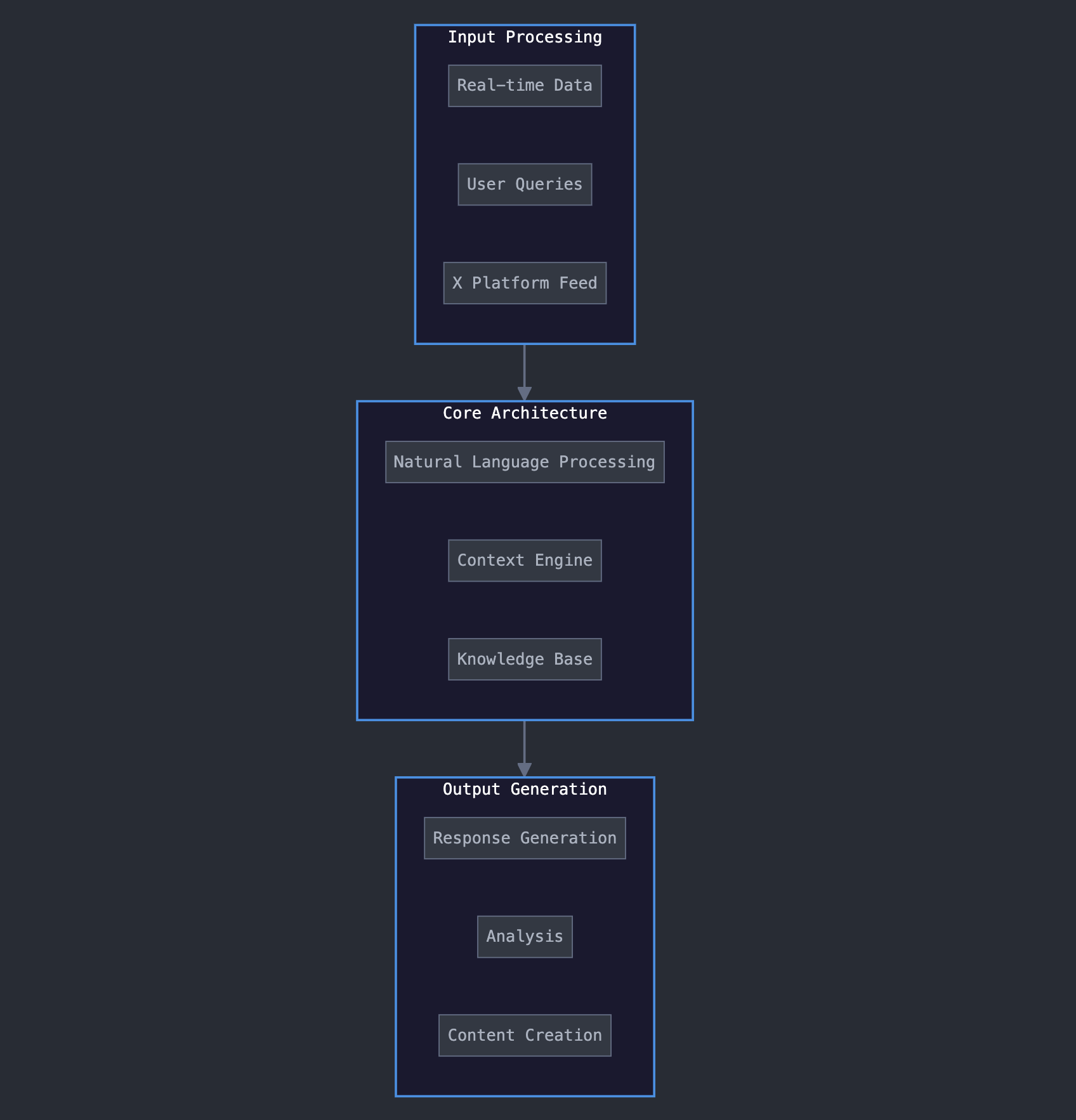
Grok is built upon xAI’s server infrastructure, designed to support data-intensive computations and machine learning pipelines at scale. It processes information from the massive data trove of X, analyzing real-time content such as posts, user trends, and emerging news stories. Grok employs advanced neural network architectures that allow for multi-modal processing, enabling it not only to handle text but also to generate and analyze images, detect patterns, and reason about contextual data in conversations.

Real-time data processing remains one of Grok’s hallmark features. By integrating live social media streams, it can offer up-to-date information along with contextual insights. Its ability to blend sarcasm or humor into responses—a feature that sets it apart from more traditional chatbots—derives from specialized language modeling techniques that factor in sentiment and user preference data.

Technical Infrastructure

The platform’s technical backbone relies on a distributed computing architecture, supported by GPU clusters that have been steadily expanded to improve processing power. This scaling strategy eventually aims to reach the forthcoming Memphis supercomputer, projected to become fully operational by 2025. Grok’s pipeline includes advanced data processing technologies that enable continuous updates and iterative learning. Streams of user interactions are applied to refine the AI’s language models, although concerns have arisen regarding how these interactions are collected and stored.

The Comprehensive Guide to Understanding Grok AI: Architecture, Applications, and Implications

Privacy and Security Framework

Data Protection Measures

Grok employs multiple layers of security to protect user data, including encryption in transit and at rest, anonymous processing methods, and regular security audits. These measures are designed to reduce the risk of unauthorized access or data interception. However, Grok’s high-profile launch has brought into focus the default inclusion of user data for AI training, which has prompted discussions about data ownership, regulatory compliance, and the scope of data usage.

Organizations adopting Grok in sectors like healthcare have implemented robust encryption strategies and anonymization protocols to ensure patient data remains confidential while still benefiting from Grok’s analytical abilities. Such real-world scenarios illustrate how Grok’s privacy features can be put into practice, but they also highlight the complexities of integrating AI in domains where data is considered sensitive.

Is Grok AI Safe?

Safety in the context of Grok involves both data security and content moderation. From a security standpoint, Grok implements encryption, frequent audits, and advanced threat detection to protect stored user data. Content moderation is aided by built-in filters that detect and handle harmful or malicious language, ensuring the platform does not generate material that violates policy standards. Although Grok is generally considered safe, unauthorized data leaks or malevolent prompt inputs remain potential risks inherent to any large-scale AI platform.

Ethical Considerations

Privacy controversies related to Grok largely revolve around X’s decision to opt users into data-sharing for AI training without explicit consent by default. Many experts argue that this approach challenges established guidelines that place a high premium on user transparency. Critics point out that the difficulty of turning off these settings can negatively impact user trust and potentially expose sensitive data to AI training sets.

In response to these concerns, xAI has introduced mechanisms enabling users to revoke data-sharing permissions, delete conversation histories, and maintain more control over which portions of their data Grok can access. Coupled with “age-appropriate content filtering” and “harmful content detection,” these features demonstrate a move toward more ethical AI practices, but the debate about the sufficiency of these measures continues.

Is Grok Anonymous?

Despite encryption and anonymization strategies, Grok is not entirely anonymous. By default, the system abstains from publicly displaying personal identifiers when generating responses. However, individuals’ conversation histories and posts can still be collected for model training. Complete anonymity would require users to opt out of data-sharing features, delete conversation traces, and restrict Grok’s ability to pull data from their profiles. While these controls exist, the user must proactively configure them to achieve a higher degree of anonymity.

Grok 2 Privacy

The second major iteration of Grok, often referred to as Grok 2, introduced expanded user controls for privacy. These controls allow individuals to toggle off data collection more easily and review how certain aspects of their activity—such as conversation logs—might be employed for training. While Grok 2 does not fully eliminate the default opt-in scenario, it makes the privacy dashboard more transparent, detailing the nature of collected data and offering more granular control over what gets shared. This incremental update improved user trust, but some privacy advocates still argue that stronger default settings are necessary to protect less tech-savvy consumers.

Is Grok Private?

Grok’s privacy largely hinges on user configuration. While the platform takes a privacy-by-design approach, where data is secured by encryption and anonymized to an extent, it does rely on user data to fine-tune its models. For especially sensitive use cases, users can explore advanced configurations such as disabling data collection, clearing conversation logs, and limiting integration to only specific accounts. In regulated industries like healthcare, some organizations implement specialized protocols for ensuring that Grok complies with regulatory requirements while still delivering its AI-driven insights.

Practical Applications

Content Generation

From drafting blog posts and marketing copy to creating technical documentation, Grok’s content generation capabilities are versatile and comprehensive. Unlike many AI chatbots, Grok can pull relevant data points from its access to X’s ecosystem and weave them into fresh content, providing context-based recommendations and summaries that have an edge over static large language models.

Academic researchers leverage Grok to analyze trending topics and produce quick literature overviews. Marketers can deploy Grok’s content suggestions for brand messaging, while educators can use it to generate lesson outlines or reference materials. Each of these applications highlights Grok’s potential to quickly adapt its responses according to the content domain and the user’s stated objectives.

Analysis and Problem-Solving

Grok’s advanced analytical capabilities extend beyond simple text generation. Thanks to real-time data streams, it can study sentiment, gauge user reviews on trending topics, and pinpoint emerging market opportunities for businesses. In strategic planning, Grok can process large datasets, identify patterns, and offer data-driven insights to assist in both short-term and long-term decision-making. Researchers harness Grok’s predictive modeling to explore complex quantitative problems, such as forecasting economic indicators or analyzing scientific data sets.

Engineers also turn to Grok for coding assistance, receiving immediate solutions and suggestions for debugging, code optimization, or feature enhancements, provided the query is within Grok’s training scope. This multipurpose approach offers a clue to Grok’s broader vision: to become an integrated assistant capable of simplifying tasks across numerous domains.

Integration and Ecosystem

Platform Integration

Grok’s deep ties to X remain a defining aspect of its ecosystem. The chatbot can fetch direct references from posts on X, summarize trending news, and help users with content creation specifically tailored for the platform’s audience. However, accessibility has expanded beyond X, as iOS users can now directly interact with Grok via its mobile app without needing a subscription, broadening the user base while maintaining cross-compatibility with X’s interface.

A web version now exists at Grok.com, offering a browser-based alternative for users who prefer not to interact through X or do not own an iOS device. This expansion strategy underscores xAI’s goal to create a cohesive ecosystem that is platform-agnostic, though focusing primarily on Apple users and web access at present.

Future Developments

Anticipated Improvements

After missing its initial release window, Grok 3 remains the talk of the AI community for its promised leap in capabilities, particularly in image processing and advanced reasoning. The delayed nature of Grok 3 exemplifies an industry-wide trend; still, the interim arrival of Grok 2.5 has been teased in code leaks as a bridge between current and next-generation features. Signs point to a more refined natural language understanding system, upgraded image-generation modules, and expanded real-time search functionalities.

Feature Expansion

Moving forward, xAI plans to incorporate further enhancements such as AI-driven privacy assistants that could automate data sharing preferences and alert users to any changes in privacy policies or data usage. There is also potential for more robust enterprise solutions, including specialized modules for healthcare, retail, and finance. These modules would boast domain-specific knowledge bases and advanced compliance checks, allowing Grok to be deployed within regulated industries with minimal privacy and security hurdles.

Best Practices for Users

Optimal Usage

In maximizing Grok’s capabilities, users are encouraged to remain vigilant about privacy. Regular audits of data sharing settings, especially the default opt-in, can ensure users remain in control of their personal information. Thoroughly reviewing conversation histories and maintaining only necessary interactions can reduce data exposure, while employing robust account security measures—such as strong passwords and two-factor authentication—mitigates potential unauthorized access.

When using Grok to handle sensitive information or creative workflows, it is advisable to confirm that the system’s features align with project requirements, particularly concerning data security and compliance. By staying informed about Grok’s ongoing developments through updates or official announcements, users can keep pace with the platform’s shifting capabilities and ensure they apply Grok in the most responsible, effective ways possible.

Conclusion

Grok AI stands at the intersection of advanced AI innovation and broader societal concerns surrounding data rights, fueled by xAI’s mission to deliver an engaging user experience on a massive scale. Its capacity for real-time information processing, image generation, and multi-domain expertise elevates it above traditional AI chatbots, compelling businesses, researchers, and everyday users to consider its potential. At the same time, controversies tied to its default data-sharing policy and occasional release delays reflect the trade-offs inherent in rapid AI growth versus privacy and regulatory considerations.

Ultimately, Grok is more than just a chatbot. It is a dynamic, multifunctional assistant that continues to expand its breadth of features and user adoption. By understanding its architecture, enabling the right privacy settings, and monitoring ongoing feature rollouts, users can harness the power of Grok AI in line with their privacy comfort levels and productivity goals. As xAI progresses toward future model releases and addresses concerns around user data, Grok’s story will likely provide key insights into balancing innovation with accountability in the ever-evolving AI landscape.

https://ift.tt/MyvqNA0
https://ift.tt/tMil9jp


https://2.gravatar.com/avatar/b7ed20e10da488de193e75b40fa28ba5ceda96c4265525794861ddaa33ae7723?s=96&d=identicon&r=G
https://deepakguptaplus.wordpress.com/2025/01/18/the-comprehensive-guide-to-understanding-grok-ai-architecture-applications-and-implications/

Tuesday, January 14, 2025

The Future of Cybersecurity: Global Outlook 2025 and Beyond

The Future of Cybersecurity: Global Outlook 2025 and Beyond

The cybersecurity landscape is entering an unprecedented era of complexity, marked by converging challenges that are fundamentally reshaping how organizations approach digital security. The World Economic Forum's Global Cybersecurity Outlook 2025 reveals a critical inflection point where traditional security approaches are being challenged by emerging technologies, geopolitical tensions, and evolving threat landscapes.

The New Complexity Paradigm

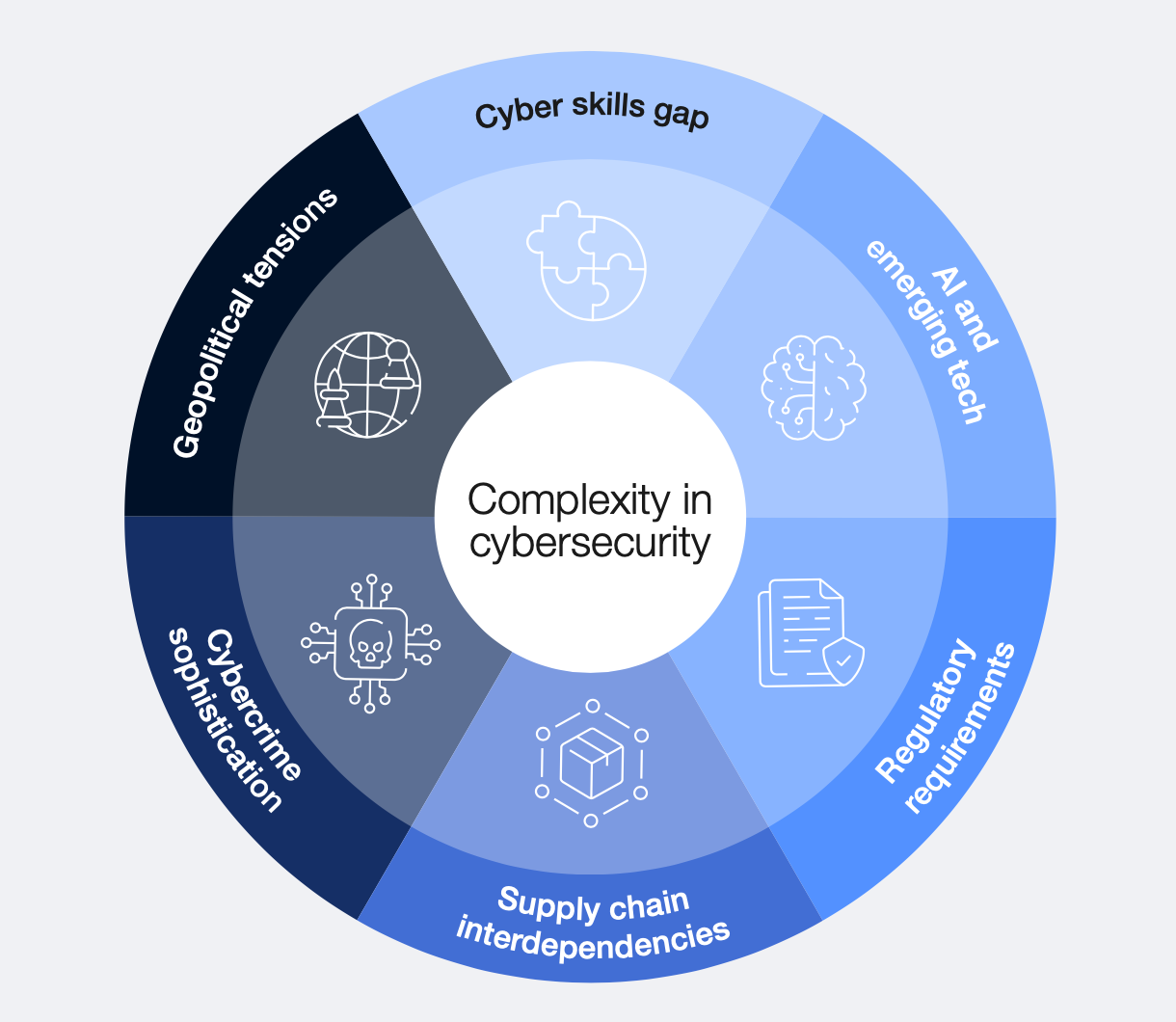
According to the WEF report, six key factors are driving increasing complexity in cybersecurity:

  1. Geopolitical Tensions: Nearly 60% of organizations report that their cybersecurity strategies are directly influenced by geopolitical uncertainties. This has led to 18% of organizations adjusting their trading policies and 17% halting operations in certain regions entirely.
  2. AI and Emerging Technologies: While 66% of organizations expect AI to significantly impact cybersecurity, only 37% have processes in place to assess AI security risks before deployment, creating a dangerous gap in preparedness.
  3. Supply Chain Interdependencies: 54% of large organizations identify supply chain challenges as their greatest barrier to achieving cyber resilience, highlighting the growing complexity of securing interconnected business ecosystems.
  4. Regulatory Requirements: The proliferation of cybersecurity regulations worldwide, while beneficial for baseline security, is creating significant compliance challenges. Over 76% of CISOs report that regulatory fragmentation affects their ability to maintain compliance.
  5. Cybercrime Sophistication: 72% of organizations report increased cyber risks, with ransomware remaining a top concern. Adversarial advances powered by generative AI are enabling more sophisticated and scalable attacks.
  6. Skills Gap: The cybersecurity workforce shortage has widened by 8% since 2024, with two out of three organizations reporting moderate-to-critical skills gaps.
The Future of Cybersecurity: Global Outlook 2025 and Beyond

Emerging Threats and Vulnerabilities

The Global Cybersecurity Outlook 2025 identifies several critical emerging threat vectors that are reshaping the cybersecurity landscape. These threats are characterized by their increasing sophistication, broader impact potential, and the challenges they present to traditional security approaches.

Critical Infrastructure Vulnerabilities

Water Systems and Utilities

Recent attacks on water infrastructure have exposed critical vulnerabilities in essential services. The report highlights a concerning trend where attackers are specifically targeting water treatment and distribution systems:

  • Control system manipulation risks have increased by 46% since 2024
  • Remote access vulnerabilities remain a primary attack vector
  • Legacy system dependencies create persistent security gaps
  • Cascade effects can impact multiple dependent infrastructure systems

The report notes that water facility attacks have evolved from primarily disruptive incidents to sophisticated attempts at contamination and systemic damage, representing a significant escalation in threat severity.

Energy Grid Infrastructure

The energy sector faces unique challenges due to the convergence of operational technology (OT) and information technology (IT):

  • State-sponsored attacks on power distribution systems have increased by 72%
  • Solar and wind farm control systems present new attack surfaces
  • Smart grid technologies introduce additional vulnerability points
  • Energy storage systems are emerging as potential targets

The integration of renewable energy sources and smart grid technologies is creating new security challenges that many organizations are not fully prepared to address.

Healthcare Systems

Healthcare infrastructure has emerged as a primary target, with attacks becoming more sophisticated and harmful:

  • Medical device vulnerabilities have increased by 38%
  • Ransomware attacks specifically targeting patient care systems are up 57%
  • AI-driven attacks on diagnostic systems represent a new threat vector
  • Supply chain attacks affecting pharmaceutical manufacturing have doubled
The Future of Cybersecurity: Global Outlook 2025 and Beyond

Emerging Technology Threats

Quantum Computing Risks

The report identifies quantum computing as a looming threat to current cryptographic systems:

  • 40% of organizations have begun assessing quantum threats
  • "Store now, decrypt later" attacks are increasing
  • Current encryption standards face obsolescence within 5-7 years
  • Quantum-resistant cryptography adoption remains low at 12%

AI-Driven Threats

The AI security paradox represents a fundamental shift in the threat landscape:

  • Large Language Model (LLM) manipulation for social engineering
  • AI-powered zero-day vulnerability discovery
  • Automated attack customization and scaling
  • Deepfake-enhanced business email compromise attacks
  • AI model poisoning and evasion techniques

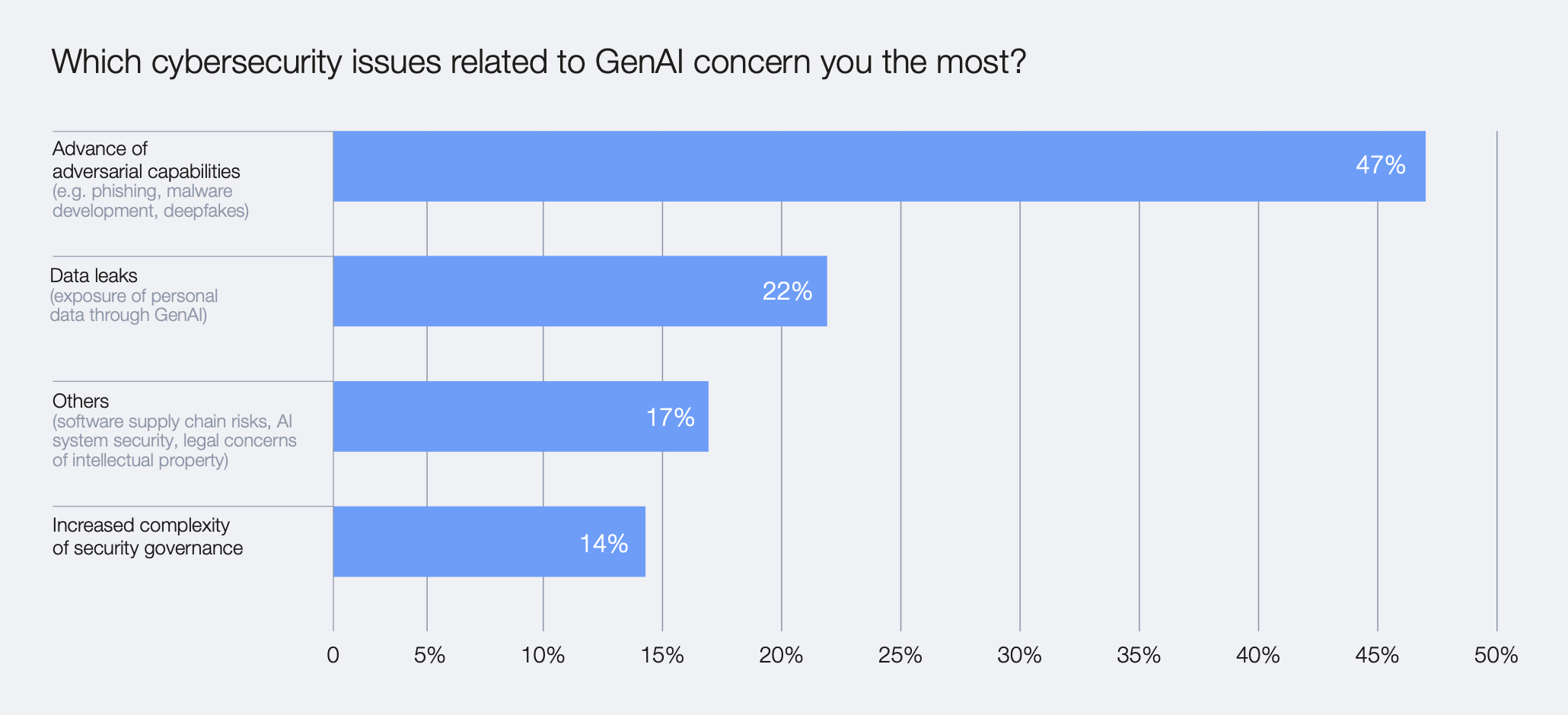
The report notes that 47% of organizations cite adversarial AI capabilities as their primary concern for 2025.

Biosecurity and Digital Systems

The convergence of biological and digital systems presents unprecedented risks:

  • Laboratory system compromises could affect genetic research
  • Digital bio-data theft poses privacy and security risks
  • Automated laboratory systems face increasing attack attempts
  • Biomedical device vulnerabilities can directly impact patient safety

The WHO has warned that AI and cyber attacks could pose catastrophic risks to global biosecurity by 2026.

Communication Infrastructure

Space-Based Systems

Satellite and space-based communication systems face growing threats:

  • 124 recorded cyber operations against space infrastructure in 2024
  • GPS spoofing incidents have increased by 85%
  • Satellite communication jamming poses risks to critical services
  • Space-based internet services face new types of denial-of-service attacks

Undersea Infrastructure

Submarine communication cables and systems are increasingly vulnerable:

  • Physical and cyber attacks on undersea cables have increased
  • New methods of cable system compromise are emerging
  • Limited redundancy in certain regions increases risk
  • State-sponsored threats to undersea infrastructure are growing

Supply Chain and Ecosystem Threats

The report emphasizes the growing complexity of supply chain attacks:

  • Third-party software compromises have increased by 54%
  • Cloud service provider dependencies create new risks
  • Software supply chain attacks have become more sophisticated
  • Open-source component vulnerabilities remain a significant concern

Emerging Social Engineering Threats

Social engineering attacks have evolved significantly:

  • AI-generated phishing campaigns show 300% higher success rates
  • Voice cloning attacks have increased by 250%
  • Deepfake-based fraud has caused $1.2 billion in losses
  • Multi-channel social engineering attacks are becoming common

Financial System Threats

New threats to financial systems are emerging:

  • Cryptocurrency infrastructure attacks have increased
  • Central Bank Digital Currency (CBDC) systems face new threats
  • Payment system vulnerabilities are being actively exploited
  • Cross-border financial system attacks are growing in frequency

The report emphasizes that these threats are not isolated but often interconnected, creating complex risk scenarios that organizations must prepare for. The convergence of multiple threat vectors, combined with the rapid pace of technological change, requires a fundamental shift in how organizations approach security and risk management.

Opportunities and Strategic Imperatives

The evolving cybersecurity landscape, while presenting significant challenges, also creates unprecedented opportunities for organizations to transform their security posture and create competitive advantages. The Global Cybersecurity Outlook 2025 identifies several key areas where organizations can leverage emerging trends and technologies to enhance their security capabilities.

Building Resilient Ecosystems

The report emphasizes that ecosystem resilience has become a critical differentiator for successful organizations. This presents several opportunities:

Collaborative Defense Networks

Organizations can establish and participate in industry-specific threat sharing networks. The report indicates that organizations participating in such networks demonstrate 43% better threat detection rates and 27% faster incident response times. Key components include:

  • Real-time threat intelligence sharing platforms
  • Cross-industry incident response teams
  • Shared security operations centers
  • Joint tabletop exercises and scenario planning
  • Collaborative security research and development

Supply Chain Innovation

The complexity of supply chain security is driving innovative approaches to risk management:

  • Implementation of blockchain for supply chain transparency
  • Development of automated supplier security assessment tools
  • Creation of shared security standards and frameworks
  • Establishment of industry-wide security certification programs
  • Integration of AI-driven supply chain risk monitoring

The report notes that organizations implementing these innovations have reduced supply chain incidents by 35% on average.

AI and Automation Opportunities

The Future of Cybersecurity: Global Outlook 2025 and Beyond

Defensive AI Applications

The report identifies several promising areas for AI application in security:

  • Automated threat hunting and detection
  • Predictive security analytics
  • Intelligent security orchestration
  • Natural language processing for threat intelligence
  • Behavioral analysis and anomaly detection

Organizations effectively implementing defensive AI have seen:

  • 67% reduction in false positive alerts
  • 41% improvement in threat detection speed
  • 53% decrease in incident response time
  • 38% reduction in security operational costs

Security Process Automation

Process automation presents significant opportunities for efficiency and effectiveness:

  • Security operations automation
  • Compliance monitoring and reporting
  • Vulnerability management
  • Access control and identity management
  • Incident response and recovery

The report indicates that automation of routine security tasks can free up to 30% of security team capacity for more strategic activities.

Workforce Development Innovation

The cybersecurity skills gap is driving creative solutions in workforce development:

AI-Augmented Security Teams

Organizations are finding success with hybrid human-AI security teams:

  • AI assistants for tier-1 security operations
  • Automated threat analysis and triage
  • Machine learning-powered decision support
  • Intelligent security training systems
  • AI-driven security documentation and knowledge management

Novel Training Approaches

Innovative training methods are showing promising results:

  • Virtual reality security training environments
  • Gamified learning platforms
  • AI-personalized learning pathways
  • Hands-on cyber ranges
  • Peer-to-peer learning networks

Organizations implementing these approaches report a 45% improvement in security team effectiveness and a 60% reduction in training time.

Economic Opportunities

The report identifies several areas where organizations can create economic value through security:

Security as a Business Enabler

Organizations can leverage security capabilities to:

  • Create competitive differentiation
  • Enable new business models
  • Accelerate digital transformation
  • Enhance customer trust
  • Drive operational efficiency

New Market Opportunities

Emerging security needs are creating new markets:

  • Security-as-a-Service offerings
  • Specialized security consulting
  • Compliance automation tools
  • Security training and certification
  • Risk transfer and insurance products

Regulatory Compliance as Opportunity

While regulatory compliance presents challenges, it also creates opportunities:

Standardization Benefits

  • Reduced complexity through common frameworks
  • Improved inter-organizational collaboration
  • Clear security investment justification
  • Enhanced stakeholder trust
  • Simplified vendor assessment

Innovation Drivers

Regulations are driving security innovation in:

  • Privacy-enhancing technologies
  • Security monitoring and reporting tools
  • Identity and access management solutions
  • Data protection technologies
  • Compliance automation platforms

Strategic Technology Integration

The report emphasizes opportunities in emerging technology integration:

Zero Trust Architecture

Organizations implementing zero trust architectures report:

  • 76% reduction in breach impact
  • 43% improvement in application security
  • 38% reduction in security complexity
  • 29% decrease in security costs

Quantum-Safe Security

Early movers in quantum-safe security are:

  • Developing competitive advantages
  • Securing long-term data protection
  • Building quantum-resistant infrastructures
  • Creating new service offerings
  • Establishing industry leadership

The report emphasizes that success in leveraging these opportunities requires a balanced approach that considers both immediate needs and long-term strategic objectives. Organizations must also maintain flexibility to adapt their strategies as new opportunities emerge and the security landscape continues to evolve.

Future Outlook (2025-2030)

The report projects several key developments:

The Future of Cybersecurity: Global Outlook 2025 and Beyond
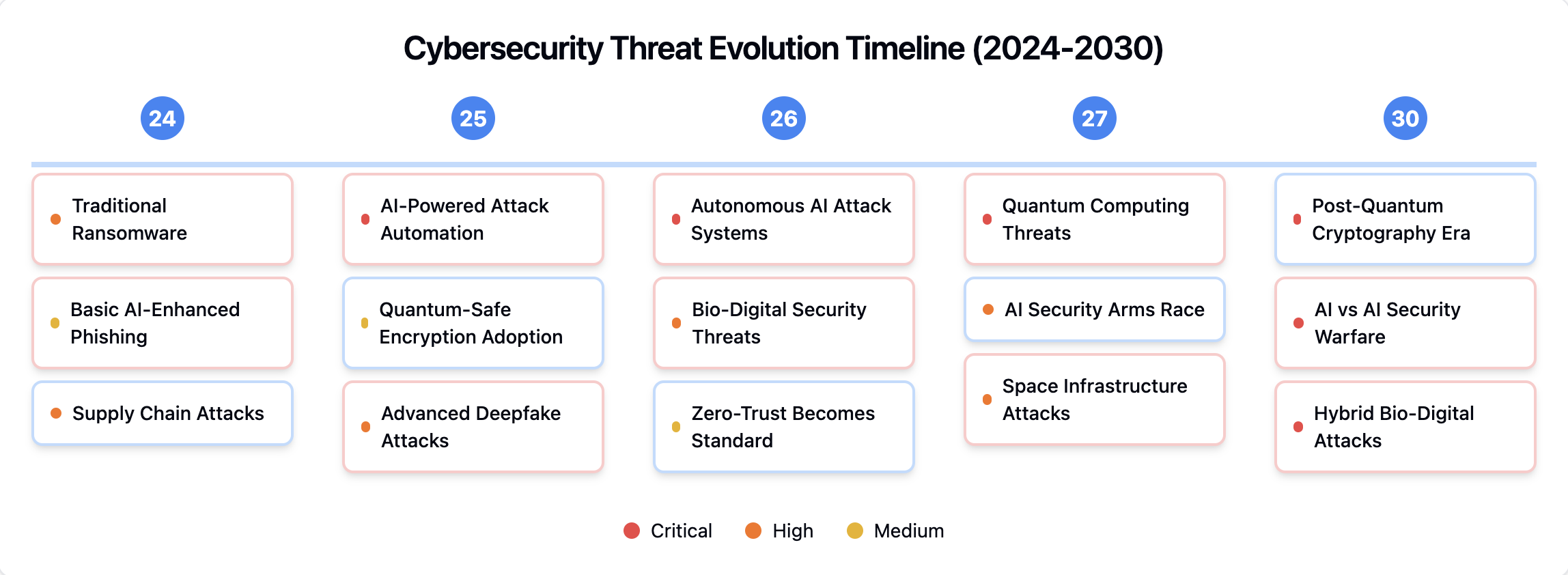
  1. Autonomous Security Systems: By 2027, fully autonomous security systems capable of detecting, analyzing, and responding to threats without human intervention will become mainstream.
  2. Quantum-Ready Infrastructure: Organizations must begin transitioning to quantum-resistant cryptography by 2028-2029.
  3. Zero-Trust Evolution: Advanced behavioral biometrics and AI-driven trust scoring will become standard components of security architectures.
  4. Regulatory Convergence: Efforts to harmonize international cybersecurity regulations will accelerate, though challenges will persist.

Recommendations for Organizations

The increasing complexity of the cybersecurity landscape demands a comprehensive and structured approach to organizational security. Based on the Global Cybersecurity Outlook 2025, organizations should focus on the following key areas:

1. AI Security Integration and Governance

Organizations must develop robust frameworks for AI security that include:

  • Comprehensive pre-deployment security assessments for all AI tools and systems
  • Continuous monitoring mechanisms for AI model behavior and outputs
  • Clear protocols for AI incident response and model adjustment
  • Regular audits of AI system decisions and security impacts
  • Integration of AI security considerations into broader risk management frameworks

The report emphasizes that organizations should establish dedicated AI governance committees that include representation from security, legal, and business units to ensure balanced decision-making in AI deployment.

2. Ecosystem Resilience and Supply Chain Security

Building resilience requires looking beyond organizational boundaries to include:

  • Implementation of real-time supply chain monitoring systems
  • Development of collaborative threat intelligence sharing networks
  • Creation of joint incident response plans with key suppliers and partners
  • Regular assessment and validation of third-party security controls
  • Implementation of zero-trust architectures that account for ecosystem dependencies

According to the report, organizations should allocate at least 15% of their security budget to ecosystem-wide initiatives and collaborative security measures.

3. Human Capital Development

The widening skills gap requires a multi-faceted approach to workforce development:

  • Creation of internal cybersecurity academies and training programs
  • Implementation of mentor-mentee programs to accelerate knowledge transfer
  • Development of cross-functional security awareness programs
  • Investment in AI-assisted tools to augment human capabilities
  • Establishment of clear cybersecurity career paths and progression frameworks

The report indicates that organizations with strong human capital development programs show 40% better resilience against sophisticated attacks.

4. Economic Framework Implementation

Organizations should adopt quantitative approaches to security that include:

  • Development of cyber risk quantification models
  • Implementation of return-on-security-investment (ROSI) calculations
  • Creation of security metrics tied to business outcomes
  • Integration of cybersecurity considerations into business strategy
  • Regular board-level reporting on security economics and risk exposure

5. Operational Resilience Enhancement

Building operational resilience requires:

  • Regular testing of business continuity and disaster recovery plans
  • Implementation of automated security orchestration and response
  • Development of scenario-based incident response playbooks
  • Creation of crisis communication protocols
  • Regular cyber crisis exercises involving senior leadership

6. Regulatory Compliance and Risk Management

Organizations must develop structured approaches to managing compliance that include:

  • Creation of centralized compliance monitoring systems
  • Development of automated compliance reporting capabilities
  • Implementation of privacy-by-design principles
  • Regular assessment of regulatory changes and their impacts
  • Integration of compliance requirements into security architecture

7. Security Culture Development

Building a strong security culture requires:

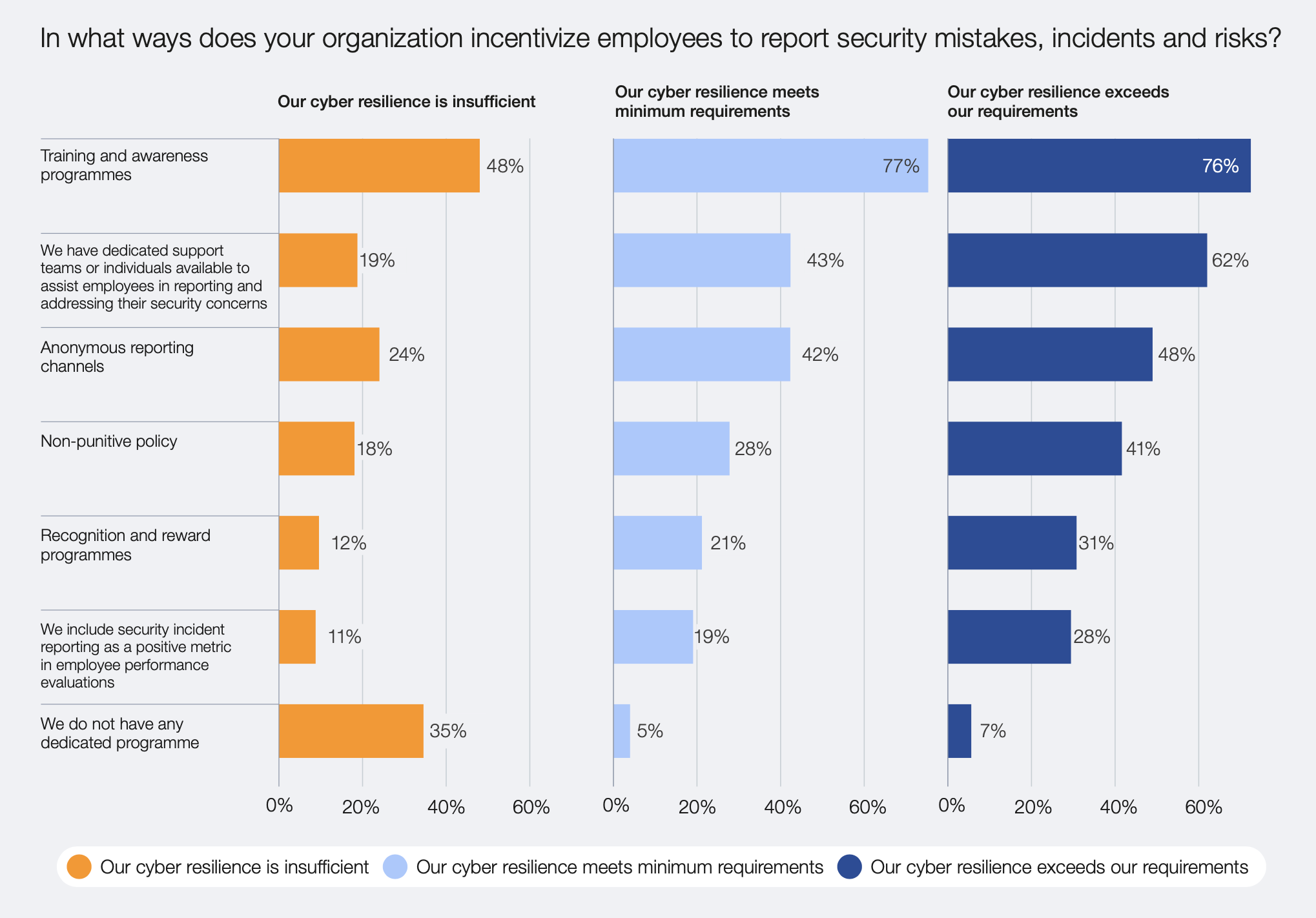
  • Regular security awareness training and simulations
  • Recognition programs for security-conscious behavior
  • Clear communication of security policies and expectations
  • Integration of security considerations into performance evaluations
  • Development of security champions across business units

8. Technology Innovation Management

Organizations should establish frameworks for managing security in technological innovation:

  • Creation of security requirements for new technology adoption
  • Implementation of secure development lifecycles
  • Regular security testing of new technologies
  • Integration of security considerations into digital transformation initiatives
  • Development of technology risk assessment frameworks
The Future of Cybersecurity: Global Outlook 2025 and Beyond

Implementation Priorities

The report suggests organizations should prioritize these recommendations based on:

  • Current security maturity level
  • Industry-specific threat landscape
  • Regulatory requirements
  • Available resources and capabilities
  • Business strategic objectives

Conclusion

The Global Cybersecurity Outlook 2025 paints a picture of both challenge and opportunity. While the complexity of threats continues to grow, organizations that adopt proactive, collaborative approaches to security while leveraging emerging technologies thoughtfully will be best positioned to thrive in this new era.

Success will require not just technological solutions but a fundamental shift in how organizations approach security – moving from isolated defensive postures to collaborative, ecosystem-wide resilience strategies. The report suggests that 2025 represents a critical year for organizations to make this transition, as the convergence of AI, geopolitical tensions, and evolving threats creates both unprecedented risks and opportunities for innovation in cybersecurity.

Read and download the complete report:

https://bit.ly/3DPyO3y
https://bit.ly/3WHr5vh


https://2.gravatar.com/avatar/b7ed20e10da488de193e75b40fa28ba5ceda96c4265525794861ddaa33ae7723?s=96&d=identicon&r=G
https://deepakguptaplus.wordpress.com/2025/01/15/the-future-of-cybersecurity-global-outlook-2025-and-beyond/

Monday, January 13, 2025

CISA Unveils New Cybersecurity Goals for IT and Product Design Sector

CISA Unveils New Cybersecurity Goals for IT and Product Design Sector

The Cybersecurity and Infrastructure Security Agency (CISA) has recently released new voluntary cybersecurity performance goals for the information technology (IT) and product design sector. These Sector Specific Goals (SSGs) are designed to strengthen security in the software development lifecycle and protect critical infrastructure from cyber threats.

Key Objectives

The IT SSGs aim to:

  1. Protect the sector from cyber incidents
  2. Identify and address vulnerabilities before product release
  3. Improve incident response capabilities
  4. Enhance overall software security

Software Development Process Goals

Environment Separation

Organizations should logically separate all software development environments, including development, build, test, and distribution. This separation helps prevent unauthorized access to sensitive data and systems, reducing the risk of lateral movement or privilege escalation between environments.

Monitoring and Logging

Regular logging, monitoring, and reviewing of trust relationships used for authorization and access across software development environments is crucial. This practice helps detect and mitigate lateral movement, privilege escalation, insider threats, and data exfiltration attempts.

Multi-Factor Authentication

Enforcing multi-factor authentication (MFA), preferably phishing-resistant MFA, for accessing all software development environments is essential. This significantly reduces the risk of unauthorized access and improves overall security.

Secure Credential Storage

Organizations should avoid storing sensitive data or credentials in source code. Instead, they should use encrypted storage methods, such as secret managers, to protect sensitive information.

Product Design Goals

Increasing MFA Usage

Products should be designed to encourage and increase the use of MFA among users. This can be achieved by implementing MFA by default, using "seat belt chimes" to nudge users towards enabling MFA, and supporting standards-based single sign-on (SSO).

Eliminating Default Passwords

Products should not use default passwords. Instead, they should implement more secure approaches, such as providing random, instance-unique initial passwords or requiring users to create strong passwords during installation.

Reducing Vulnerability Classes

Organizations should work towards reducing entire classes of vulnerabilities in their products. This can be achieved by implementing parameterized queries, transitioning to memory-safe languages, and utilizing web template frameworks.

Timely Security Patching

Providing customers with security patches in a timely manner is crucial. Organizations should also ensure that customers are aware when products are nearing end-of-life support and security patches will no longer be provided.

Additional Considerations

  1. Establish a software supply chain risk management program.
  2. Make a Software Bill of Materials (SBOM) available to customers.
  3. Implement effective perimeter and internal network monitoring solutions.
  4. Publish a vulnerability disclosure policy and address disclosed vulnerabilities promptly.

Industry Collaboration

CISA Director Jen Easterly emphasized the importance of industry collaboration in shaping these goals. The agency worked closely with the IT Sector Coordinating Council (IT SCC) and other key partners to develop these guidelines.

Relevance to SMBs

Small and medium-sized businesses (SMBs) should pay particular attention to these guidelines, as they are often targets of cyber attacks. Targeted phishing attacks are one of the leading cybersecurity threats that SMBs should prepare for. Implementing these CISA guidelines can help SMBs strengthen their cybersecurity posture.

Future of Cyber Attacks

As the threat landscape continues to evolve, it's crucial for organizations to stay ahead of potential risks. Future of cyber attacks highlight the importance of proactive cybersecurity measures. By following CISA's guidelines, organizations can better prepare for and mitigate emerging threats.

Conclusion

CISA's new Sector Specific Goals for the IT and product design sector provide a comprehensive framework for improving cybersecurity practices. By implementing these guidelines, organizations can significantly enhance their security posture, protect critical infrastructure, and contribute to a more resilient digital ecosystem.

https://bit.ly/42e3tlg
https://bit.ly/4gXz4MD


https://2.gravatar.com/avatar/b7ed20e10da488de193e75b40fa28ba5ceda96c4265525794861ddaa33ae7723?s=96&d=identicon&r=G
https://deepakguptaplus.wordpress.com/2025/01/14/cisa-unveils-new-cybersecurity-goals-for-it-and-product-design-sector/

Saturday, January 11, 2025

From Chaos to Control: Building Your Company’s Access Management Foundation

From Chaos to Control: Building Your Company's Access Management Foundation

In previous article, "The Hidden Costs of Poor Access Management", we explored how inadequate access controls can lead to devastating financial and reputational damage for small businesses. The average cost of a security breach—ranging from $120,000 to $1.24 million—makes it clear that proper access management isn't just an IT luxury; it's a business necessity. But how do you actually build a secure access management system without breaking the bank or overwhelming your team?

Imagine walking into a house where every door has a different key, some locks don't work, and you're not quite sure who has copies of which keys. Unfortunately, this scenario perfectly describes how many small businesses manage their digital access—a chaotic collection of passwords, permissions, and procedures that leave them vulnerable while making work needlessly complicated. As someone who has helped numerous small businesses establish their security foundations, I can tell you that building a proper access management system doesn't have to be overwhelming or expensive.

Understanding Your Access Management Needs

Before diving into specific tools and implementations, let's understand what your small business actually needs. Think of access management as the security system for your digital workplace. Just as you wouldn't install a bank-grade vault for a small retail shop, you don't need enterprise-level solutions for a small team. What you need is a system that's both secure and sensible for your size.

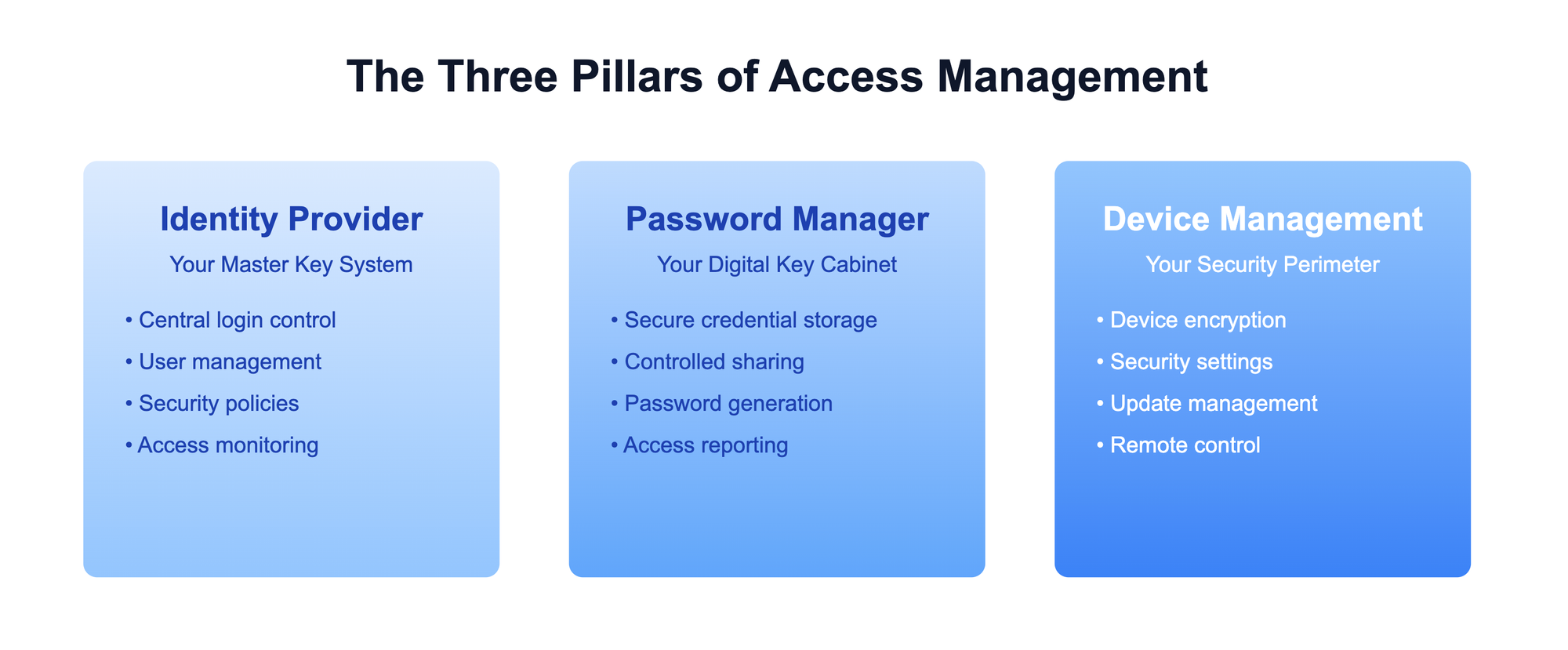
The Three Pillars of Basic Access Management

Your access management foundation rests on three essential components that work together to keep your business secure:

  1. Identity Provider (IdP) – Your Master Key System
    Your IdP serves as the central authority for digital access, controlling who can reach your workspace resources. For small businesses, two solutions stand out for their balance of features and affordability:

Google Workspace (formerly G Suite):

  • Best suited for: Teams that prioritize simplicity and collaboration
  • Starting cost: $6 per user monthly
  • Key advantages:
    • Intuitive interface that reduces training needs
    • Comprehensive mobile support for remote work
    • Integrated collaboration tools that work seamlessly together
    • Built-in security features that protect your business automatically

Microsoft 365:

  • Best suited for: Teams heavily invested in Windows and Office tools
  • Starting cost: $6 per user monthly
  • Key advantages:
    • Familiar Office tools that require minimal training
    • Strong integration with Windows environments
    • Advanced security features included in business plans
    • Comprehensive email and calendar solutions
From Chaos to Control: Building Your Company's Access Management Foundation
The Three Pillars of Basic Access Management
  1. Password Manager – Your Digital Key Cabinet
    A password manager serves as your secure vault for all access credentials. For small teams, consider these options:

1Password for Business:

  • Cost: $7.99 per user monthly
  • Ideal for: Teams needing intuitive interfaces and robust sharing features
  • Standout features:
    • Simple and secure password sharing
    • Detailed security reports
    • Travel mode for secure international business
    • Emergency access protocols

Bitwarden Teams:

  • Cost: $3 per user monthly
  • Ideal for: Cost-conscious teams comfortable with simpler interfaces
  • Standout features:
    • Open-source transparency
    • Self-hosting capabilities
    • Unlimited password collections
    • Basic sharing features
  1. Device Management – Your Security Perimeter
    Start with these fundamental device security measures:
  • Enable built-in encryption tools (FileVault for Mac, BitLocker for Windows)
  • Implement basic mobile device management through your IdP
  • Deploy standard antivirus protection across all devices

Building Your Access Management System: A Step-by-Step Guide

Phase 1: Setting Up Your Identity Foundation

Start with your identity provider setup. Here's a detailed implementation plan using Google Workspace as an example:

Tasks:

  1. Visit workspace.google.com and select the Business Starter plan
  2. Verify your domain ownership or purchase a new domain
  3. Create your primary administrator account
  4. Set up your organization structure

Security Configuration:

  1. Access the Google Admin console
  2. Enable and configure these critical security settings:
    • Require 2-Step Verification for all users
    • Set minimum password length to 12 characters
    • Enable suspicious activity alerts
    • Configure basic mobile device management

Implementation Tip: Many businesses skip the security settings, planning to "do it later." This mistake often leads to security incidents. Complete your security configuration before adding any users to the system.

Phase 2: Implementing Password Security

With your identity foundation in place, establish your password management system:

Step 1: Initial Setup

  1. Create your business account with your chosen password manager
  2. Set up administrator access
  3. Configure security policies

Step 2: Organize Your Password Vaults
Create this structured vault hierarchy:

Company Vaults:

  • Core Business (Administrative, Financial)
  • Team Tools (Development, Marketing, Support)
  • Emergency Access

Implementation Tip: Set up emergency access procedures immediately. This simple step can prevent business disruption if key personnel become unavailable.

Phase 3: Employee Access Management

Create a systematic process for managing employee access throughout their lifecycle with your company.

Pre-onboarding Checklist (1-2 Days Before):

  1. Create an Access Requirements Document (ARD) specifying:
    • Employee details and role
    • Required core system access
    • Role-specific tool access
    • Device requirements
    • Security tool needs

Day One Setup Process:

  1. Core Access Setup
    • Activate company email
    • Configure password manager access
    • Set up two-factor authentication
  2. Tool Access
    • Grant specific tool access based on ARD
    • Test all connections
    • Verify permission levels
  3. Security Training
    • Review security policies
    • Provide password manager training
    • Cover essential security practices

Avoiding Common Setup Mistakes

Learn from others' mistakes to build a more secure system:

The "We'll Fix It Later" Trap:

  • Problem: Postponing security configurations
  • Solution: Use our security checklist and complete it before adding users
  • Prevention: Set up automated security checks

The Overprovisioning Error:

  • Problem: Granting excessive admin access
  • Solution: Follow the principle of least privilege
  • Prevention: Document and justify each admin access grant

The Documentation Gap:

  • Problem: Poor access record-keeping
  • Solution: Maintain detailed access logs
  • Prevention: Implement automated access tracking

Quick Security Wins (Implement These Today)

Even before completing your full access management system, implement these rapid improvements:

  1. Enable Two-Factor Authentication (15 minutes):
    • Activate 2FA on all critical business accounts
    • Set up backup authentication methods
    • Document recovery procedures
  2. Create Basic Password Requirements (10 minutes):
    • Set minimum password length to 12 characters
    • Require special characters and numbers
    • Prohibit password sharing
  3. Document Current Access (20 minutes):
    • List all business tools and services
    • Record who has access to each
    • Note how access is currently granted
  4. Establish Emergency Procedures (10 minutes):
    • Document key contact information
    • Create backup access protocols
    • Outline emergency response procedures

Moving Forward

Remember that effective access management is an ongoing process, not a one-time setup. Start with these foundational elements and build upon them as your business grows. Focus on getting the basics right—identity management, password security, and core procedures—before implementing more advanced features.

First Month Priority Timeline:

  • Week 1: Identity provider setup and security configuration
  • Week 2: Password manager implementation and vault organization
  • Week 3: Documentation and template creation
  • Week 4: Team training and process refinement

The key to success is starting with these basics and improving incrementally. Don't let perfect be the enemy of good—implementing these fundamental controls will already put you ahead of most small businesses in terms of security and efficiency.


This article is part of a comprehensive guide on access management for small businesses. Stay tuned for our upcoming ebook that will provide detailed implementation guides, templates, and best practices for securing your business effectively.

https://bit.ly/4j9oSCe
https://bit.ly/3C6kcwo


https://2.gravatar.com/avatar/b7ed20e10da488de193e75b40fa28ba5ceda96c4265525794861ddaa33ae7723?s=96&d=identicon&r=G
https://deepakguptaplus.wordpress.com/2025/01/11/from-chaos-to-control-building-your-companys-access-management-foundation/

Palo Alto Networks + CyberArk: The $25 Billion Deal Reshaping Cybersecurity

Deal Overview Transaction Details : Palo Alto Networks announced on July 30, 2025, its agreement to acquire CyberArk for $45.00 in cash ...