Monday, November 11, 2024

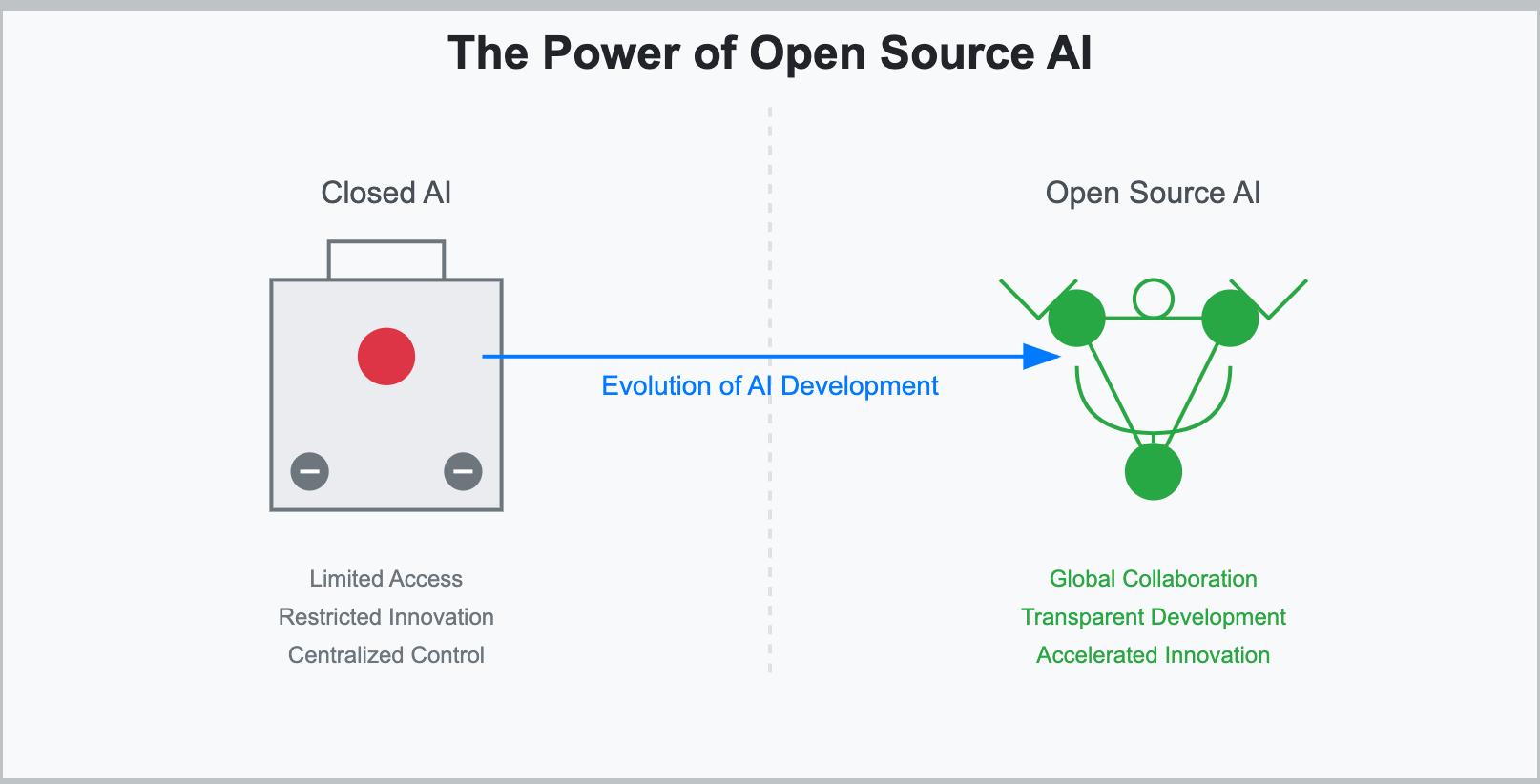
The Open Source AI : Understanding the New Standard

What is Open Source AI?

The Open Source AI : Understanding the New Standard

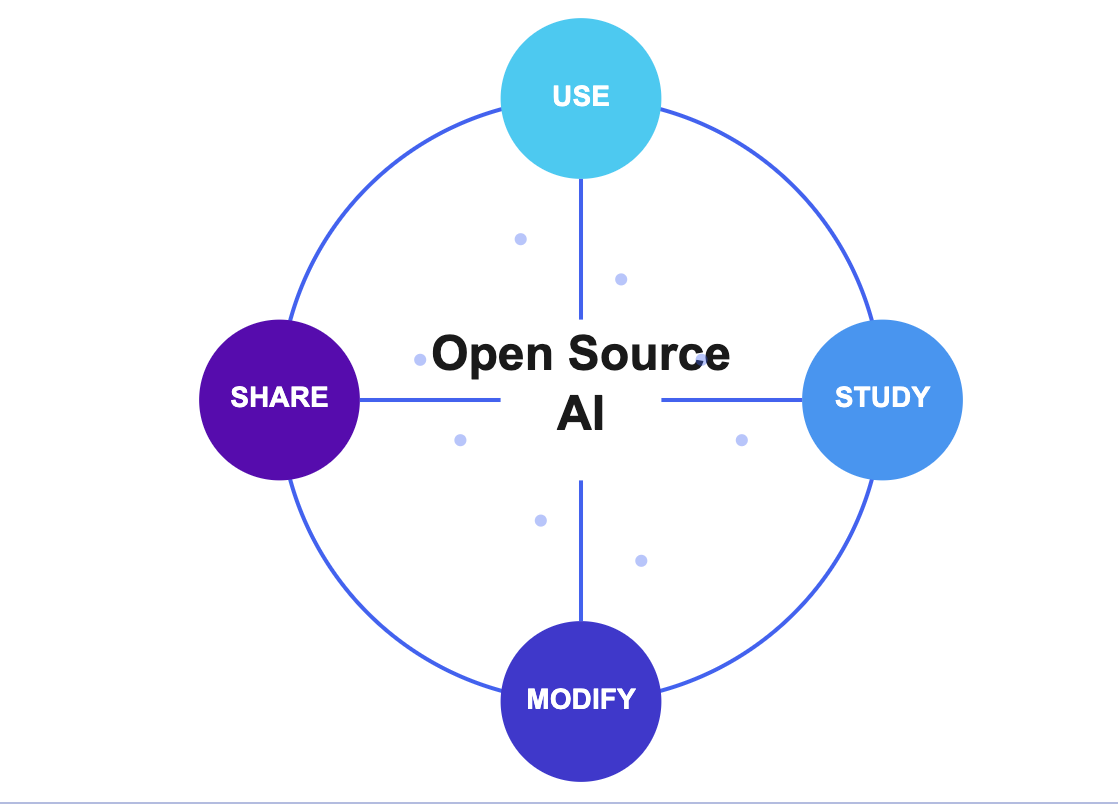
Open Source AI represents a fundamental shift in how artificial intelligence systems are developed and shared. According to the Open Source AI Definition 1.0, an AI system is considered "open source" when it grants users four essential freedoms:

  1. Freedom to Use: Anyone can use the system for any purpose without requiring permission
  2. Freedom to Study: Anyone can examine and inspect how the system works and its components
  3. Freedom to Modify: Anyone can modify the system for any purpose, including changing its output
  4. Freedom to Share: Anyone can share the original or modified system with others for any purpose

These freedoms apply not only to complete AI systems but also to their individual components, such as models, weights, parameters, and code.

The Open Source AI : Understanding the New Standard

The Three Pillars of Open Source AI

To be truly open source, an AI system must provide access to three critical elements in their preferred form for modification:

1. Data Information

  • Complete description of all training data, including unshareable data
  • Details about data provenance, scope, and characteristics
  • Information about data selection, labeling procedures, and processing methodologies
  • Lists of both publicly available and third-party obtainable training data

2. Code

  • Complete source code for training and running the system
  • Data processing and filtering specifications
  • Training procedures and configurations
  • Validation and testing protocols
  • Supporting libraries and tools
  • Model architecture specifications

3. Parameters

  • Model weights and configuration settings
  • Training checkpoints from key stages
  • Final optimizer state
  • All parameters must be available under OSI-approved terms

Important Clarifications

Models and Weights

The definition specifically addresses both AI models and weights:

  • AI Model: Consists of the model architecture, parameters (including weights), and inference code
  • Weights: The learned parameters that work with the model architecture to process inputs and generate outputs

Both components must include their associated data information and code used to derive the parameters to be considered truly open source.

Why This Definition Matters

The Open Source AI Definition serves several crucial purposes:

Transparency and Trust

  • Enables verification of AI system behavior
  • Allows identification of potential biases
  • Promotes accountability in AI development

Innovation and Collaboration

  • Removes barriers to access and modification
  • Enables global collaboration on AI development
  • Accelerates technological advancement

Democratization

  • Makes AI technology accessible to organizations of all sizes
  • Prevents monopolistic control of AI advancement
  • Promotes equal opportunities in AI development

Ethical Development

  • Enables community oversight
  • Facilitates responsible AI development
  • Supports broader ethical standards

Challenges and Considerations

While the definition sets a clear standard, several challenges must be addressed:

  • Data Privacy: Balancing transparency with data protection requirements
  • Security: Managing potential vulnerabilities in open systems
  • Intellectual Property: Navigating complex licensing requirements
  • Resource Requirements: Addressing computational needs for training and running models

Conclusion

The Open Source AI Definition 1.0 marks a significant milestone in making AI development more transparent, collaborative, and ethical. By providing clear guidelines for what constitutes truly open source AI, it helps ensure that artificial intelligence technology can benefit from the same advantages that have made open source software so successful.

This definition not only sets standards for transparency and accessibility but also provides a framework for building a more inclusive and innovative AI ecosystem. As AI continues to shape our future, embracing these open source principles will be crucial for ensuring that its development serves the broader interests of society.

https://bit.ly/4fCmHEw
https://bit.ly/48MgfJd


https://2.gravatar.com/avatar/b7ed20e10da488de193e75b40fa28ba5ceda96c4265525794861ddaa33ae7723?s=96&d=identicon&r=G
https://deepakguptaplus.wordpress.com/2024/11/11/the-open-source-ai-understanding-the-new-standard/

Thursday, November 7, 2024

The Future of Work: Understanding AI Agents and Digital Coworkers

The Future of Work: Understanding AI Agents and Digital Coworkers

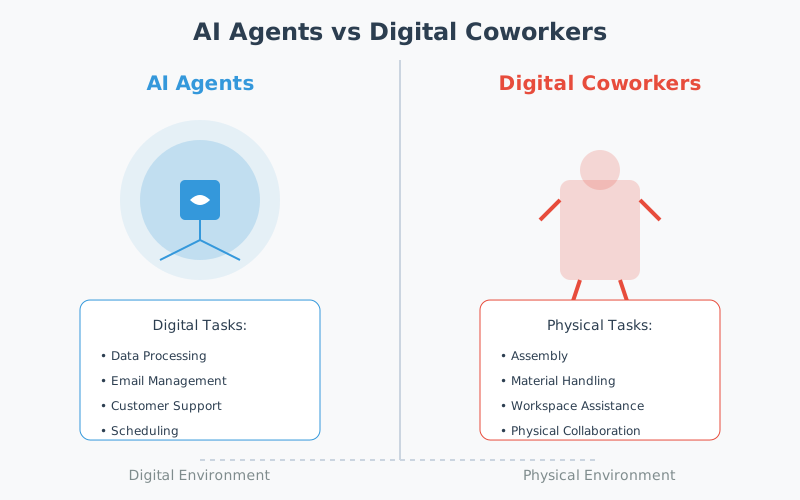
The workplace is transforming with two revolutionary technologies: AI agents and digital coworkers. Think of AI agents as your virtual team members who handle digital tasks, while digital coworkers are like robot colleagues who can physically interact with the world around them. This guide breaks down these technologies in simple terms while providing the technical depth professionals need.

1. Introduction: Meeting Your New AI Colleagues

What Are AI Agents?

Imagine having a super-efficient virtual assistant who never sleeps and can handle thousands of tasks simultaneously. That's an AI agent. These digital workers excel at tasks like:

  • Managing your email inbox
  • Scheduling meetings
  • Analyzing large datasets
  • Answering customer queries
  • Automating repetitive digital tasks

What Are Digital Coworkers?

Picture a robot colleague who can work alongside you, learning and adapting to physical tasks. Digital coworkers are the bridge between AI and the physical world. They can:

  • Help assemble products in factories
  • Assist doctors in hospitals
  • Stock shelves in retail stores
  • Clean and sanitize spaces
  • Deliver items in warehouses

2. How They Work: The Technology Behind the Magic

AI Agents: The Digital Brain

AI Agent Architecture:
├── Brain (AI Models)
│   ├── Understanding human instructions
│   ├── Making decisions
│   └── Learning from experience
├── Communication Center
│   ├── Processing natural language
│   └── Generating human-like responses
└── Task Center
    ├── Executing actions
    └── Managing workflows

Real-World Example:

When you ask an AI agent to "schedule a team meeting," here's what happens:

  1. It understands your request through Natural Language Processing
  2. Checks everyone's calendars
  3. Finds the best time slots
  4. Sends invitations
  5. Books a meeting room or sets up a virtual link
    All in seconds!

Digital Coworkers: The Physical Partner

Digital Coworker System:
├── Physical Body
│   ├── Cameras (the eyes)
│   ├── Sensors (the skin)
│   └── Robotic arms/legs
├── Brain
│   ├── Visual processing
│   ├── Movement planning
│   └── Safety systems
└── Learning System
    ├── Understanding demonstrations
    └── Adapting to new situations

Real-World Example:

In a manufacturing setting, a digital coworker learning to assemble a product:

  1. Watches human workers perform the task
  2. Creates a digital model of the assembly process
  3. Practices the movements
  4. Gradually increases speed and precision
  5. Works alongside humans while maintaining safety

3. The Smart Stuff: Core Technologies

For AI Agents:

Natural Language Processing (NLP)

  • What It Is: The technology that helps AI understand and respond in human language
  • Real-World Impact: Enables natural conversations with customers, reducing response time from hours to seconds
  • Business Value: Can handle thousands of customer inquiries simultaneously, operating 24/7

Machine Learning

  • What It Is: Systems that learn and improve from experience
  • Real-World Impact: Gets better at predicting customer needs and solving problems over time
  • Business Value: Reduces errors by up to 80% compared to manual processes

For Digital Coworkers:

Computer Vision

  • What It Is: Technology that helps robots "see" and understand their environment
  • Real-World Impact: Enables safe movement around humans and precise handling of objects
  • Business Value: Reduces workplace accidents by up to 90% while increasing productivity

Reinforcement Learning

  • What It Is: Learning through trial and error, just like humans
  • Real-World Impact: Allows robots to adapt to new situations and improve their skills
  • Business Value: Reduces training time for new tasks by up to 60%

4. Real-World Applications and Success Stories

AI Agents in Action

Customer Service Excellence

  • Company: E-commerce platform
  • Implementation: AI agents handling customer queries
  • Results:
    • 85% reduction in response time
    • 95% customer satisfaction
    • $2M annual savings

Sales and Marketing

  • Company: B2B software provider
  • Implementation: AI agents qualifying leads and scheduling demos
  • Results:
    • 3x increase in qualified leads
    • 70% reduction in sales cycle
    • 45% increase in conversion rates

Digital Coworkers at Work

Manufacturing Innovation

  • Company: Automotive manufacturer
  • Implementation: Collaborative robots in assembly
  • Results:
    • 40% increase in productivity
    • 90% reduction in errors
    • Zero safety incidents

Healthcare Support

  • Company: Large hospital network
  • Implementation: Robot assistants for logistics
  • Results:
    • 60% reduction in manual transport tasks
    • 85% faster delivery times
    • Improved staff satisfaction

5.1 Emerging Technologies

a. Quantum Computing Integration

  • Current State: Early-stage quantum computers achieving 100-1000 qubit processing
  • Future Impact:
    • Processing complex algorithms 100-1000x faster than classical computers
    • Optimization of supply chains and logistics in real-time
    • Enhanced machine learning capabilities for both AI agents and digital coworkers
  • Practical Applications:
    • Real-time language translation across 100+ languages simultaneously
    • Complex molecular modeling for pharmaceutical research
    • Optimization of global logistics networks in milliseconds

b. Advanced Sensor Technologies

  • Next-Generation Environmental Awareness:
    • LiDAR systems with sub-millimeter accuracy
    • Bio-inspired sensors mimicking human touch sensitivity
    • Thermal and electromagnetic sensing capabilities
  • Enhanced Capabilities:
    • 360-degree spatial awareness in dynamic environments
    • Micro-movement detection for precise operations
    • Environmental condition monitoring (temperature, humidity, air quality)
  • Real-World Applications:
    • Surgical assistants with super-human precision
    • Warehouse robots navigating complex, dynamic spaces
    • Manufacturing quality control with microscopic accuracy

c. Human-AI Collaboration Frameworks

  • Advanced Interface Systems:
    • Brain-computer interfaces for direct AI interaction
    • Augmented reality overlays for real-time collaboration
    • Gesture and intent recognition systems
  • Collaborative Features:
    • Real-time skill transfer between humans and AI
    • Predictive assistance based on behavioral patterns
    • Emotional intelligence integration for better human interaction

5.2 Integration Possibilities

a. AI Agent-Digital Coworker Synergy

  • Unified Systems:CopyIntegrated Workflow Example:
Integrated Workflow Example:
AI Agent    ─────────────►    Digital Coworker
├── Task Planning               ├── Physical Execution
├── Data Analysis               ├── Environmental Interaction
└── Decision Making             └── Real-world Feedback
  • Real-World Applications:
    • Warehouse operations where AI agents manage inventory while digital coworkers handle physical movement
    • Healthcare settings with AI agents managing patient records while digital coworkers assist in patient care
    • Manufacturing environments where AI agents optimize production schedules while digital coworkers handle assembly

b. Cross-Platform Integration

  • Universal Standards Development:
    • Open APIs for seamless integration
    • Standardized communication protocols
    • Universal task description language
  • Platform Capabilities:
    • Real-time synchronization across systems
    • Automated workflow orchestration
    • Dynamic resource allocation

c. Enhanced Security and Privacy

  • Advanced Protection Measures:
    • Quantum encryption for data transmission
    • Blockchain-based audit trails
    • Zero-knowledge proof systems
  • Privacy-Preserving Features:
    • Federated learning for distributed AI training
    • Data anonymization at source
    • Granular access control systems

Conclusion: Embracing the Future

The combination of AI agents and digital coworkers represents a new era in workplace efficiency and innovation. By understanding and implementing these technologies strategically, organizations can:

  • Increase productivity
  • Reduce costs
  • Improve employee satisfaction
  • Stay competitive in a rapidly evolving market

References

  1. IEEE Robotics and Automation Society Standards
  2. ISO/TS 15066:2016 – Robots and robotic devices

https://bit.ly/40G74Yz
https://bit.ly/4fENMau


https://2.gravatar.com/avatar/b7ed20e10da488de193e75b40fa28ba5ceda96c4265525794861ddaa33ae7723?s=96&d=identicon&r=G
https://deepakguptaplus.wordpress.com/2024/11/08/the-future-of-work-understanding-ai-agents-and-digital-coworkers/

Monday, November 4, 2024

Busting Common Passwordless Authentication Myths: A Technical Analysis

Busting Common Passwordless Authentication Myths: A Technical Analysis

Cyber threats continue to evolve for enterprises and passwordless authentication emerges as a transformative approach to digital security. This comprehensive analysis examines the technical foundations, security implications, and user experience impacts of passwordless authentication, drawing from extensive experience in Customer Identity and Access Management (CIAM) systems.

Understanding Passwordless Authentication

Core Technical Architecture

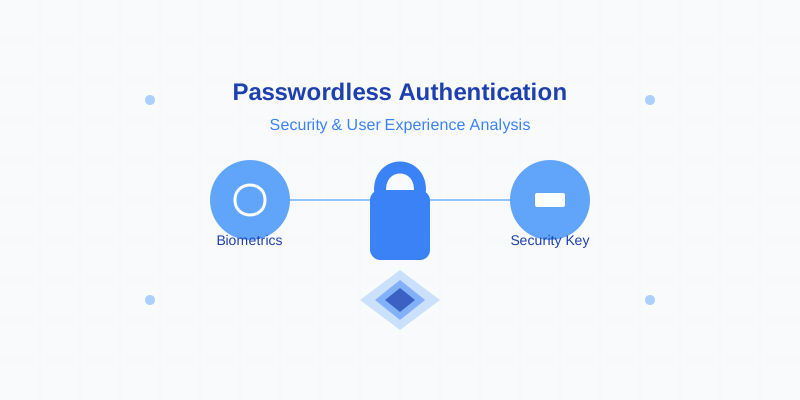
Passwordless authentication fundamentally shifts away from shared secrets (passwords) to cryptographic key pairs and biometric verification. The architecture typically consists of:

  • Public-private key cryptography for secure authentication
  • Hardware security modules (HSMs) for secure key storage
  • Challenge-response protocols for verification
  • Biometric template protection and secure storage
  • WebAuthn/FIDO2 standard implementations

Security Advantages Over Traditional Methods

  • No stored password hashes to be compromised
  • Protection against credential stuffing attacks
  • Immunity to password spraying techniques
  • Resistance to rainbow table attacks

2. Enhanced Phishing Resistance

  • Domain-binding prevents credential interception
  • Public key cryptography ensures server authenticity
  • Challenge-response mechanisms prevent replay attacks
  • Real-time verification eliminates credential harvesting

Debunking Common Myths

Myth 1: "Passwordless Is Less Secure Than Traditional MFA"

Technical Reality

  • Passwordless solutions often incorporate multiple factors inherently
  • Hardware-backed security provides stronger guarantees
  • Biometric factors offer high entropy and uniqueness
  • Local verification reduces attack surface

Implementation Benefits

  • Reduced complexity in security architecture
  • Lower risk of misconfiguration
  • Simplified audit trails
  • Enhanced compliance capabilities

Myth 2: "PINs Are Just Short Passwords"

Technical Differences

  • PINs are locally verified, not transmitted
  • Hardware-backed secure enclaves protect PIN verification
  • Rate-limiting is enforced at hardware level
  • PINs are bound to specific devices

Security Implications

  • Brute force protection through hardware
  • No remote attack surface for PIN guessing
  • Device-specific security boundaries
  • Immediate feedback for verification

Myth 3: "Biometrics Are Easy to Spoof"

Modern Biometric Security

  • Advanced presentation attack detection (PAD)
  • Neural network-based liveness detection
  • Secure biometric templates
  • Zero-knowledge biometric verification

Technical Safeguards

  • Template encryption and secure storage
  • Match-on-device architecture
  • Regular template updates
  • Multiple biometric modality support

Implementation Best Practices

1. Risk-Based Deployment Strategy

  • Start with low-risk applications
  • Gradually expand to critical systems
  • Monitor and adjust security parameters
  • Maintain fallback authentication methods

2. User Experience Optimization

  • Seamless enrollment processes
  • Clear error messaging
  • Robust recovery mechanisms
  • Progressive security enhancement

3. Security Architecture Considerations

  • Implement strong attestation checks
  • Utilize hardware security when available
  • Enable secure device management
  • Deploy robust key management systems

Future-Proofing Considerations

Emerging Technologies

  • Behavioral biometrics integration
  • Continuous authentication methods
  • AI-powered risk assessment
  • Quantum-resistant cryptography

Regulatory Compliance

  • GDPR biometric data requirements
  • CCPA privacy considerations
  • Industry-specific regulations
  • Cross-border data protection

Technical Recommendations

1. Authentication Flow Design

1. Initial Registration:
   - Generate device-bound key pair
   - Register public key with server
   - Establish biometric/PIN verification
   
2. Regular Authentication:
   - Server issues challenge
   - Device signs challenge with private key
   - Biometric/PIN unlocks signing
   - Server verifies signature

2. Security Controls

  • Implement strict attestation policies
  • Enable continuous trust verification
  • Deploy anomaly detection systems
  • Maintain comprehensive audit logs

Conclusion

Passwordless authentication, when properly implemented, provides superior security compared to traditional password-based systems. The combination of hardware security, biometric verification, and cryptographic protocols creates a robust security architecture that addresses many of the vulnerabilities inherent in password-based systems while improving the user experience.

The future of digital authentication lies in passwordless solutions that balance security with usability. As the technology continues to mature and adoption increases, organizations that embrace passwordless authentication will be better positioned to protect their digital assets and provide seamless user experiences.

https://bit.ly/3YRD4b5
https://bit.ly/4efs0sF


https://2.gravatar.com/avatar/b7ed20e10da488de193e75b40fa28ba5ceda96c4265525794861ddaa33ae7723?s=96&d=identicon&r=G
https://deepakguptaplus.wordpress.com/2024/11/04/busting-common-passwordless-authentication-myths-a-technical-analysis/

Thursday, October 31, 2024

The AI Paradox in Digital Identity: Why More Security Might Mean Less Privacy (And What to Do About It)

The AI Paradox in Digital Identity: Why More Security Might Mean Less Privacy (And What to Do About It)

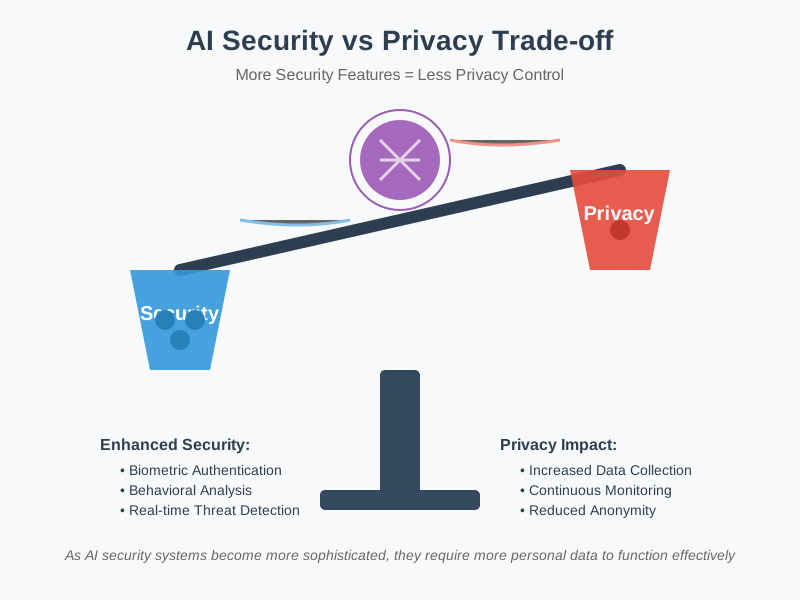
In today's digital world, our online identities are becoming as important as our physical IDs. Artificial Intelligence (AI) is making these digital identities more secure, but there's a catch – it needs to collect more and more of our personal information to do so. This research examines this trade-off between better security and decreased privacy, helping you understand what it means for your digital future.

Why Should You Care?

Think of your digital identity as your passport to the online world. It's how you prove you're really you when you:

  • Log into your bank account
  • Make an online purchase
  • Use social media
  • Access your work emails
  • Use government services online

Understanding Today's Digital Identity Landscape

What's Changed? A Simple Timeline

  1. The Past (1990s-2000s)
    • Simple passwords
    • Security questions ("What's your mother's maiden name?")
    • Basic PIN numbers
  2. The Present
    • Fingerprint scanning
    • Face recognition
    • AI watching how you type
    • Location tracking
    • Device recognition
  3. The Near Future
    • Continuous behavior monitoring
    • Emotional state recognition
    • Cross-platform identity verification
    • Predictive identity protection

How AI Makes Things More Secure (But Less Private)

Think of AI as a Very Attentive Security Guard

What It Watches:

  • How you type (Are you typing faster or slower than usual?)
  • Where you click (Do you usually click in these areas?)
  • When you're active (Are you logging in at unusual hours?)
  • What devices you use (Is this a new device?)
  • Where you're located (Are you suddenly logging in from a different country?)

Why This Matters:
✅ Security Benefits:

  • Catches imposters quickly
  • Stops automated attacks
  • Prevents account takeovers
  • Reduces fraud

Privacy Concerns:

  • Your every move is being recorded
  • Your habits are being analyzed
  • Your patterns are being stored
  • Your behavior is being predicted

Real-World Impact: What This Means For You

Everyday Scenarios

  1. Banking App
    • Old Way: Enter password and maybe answer a security question
    • New AI Way:
      • App checks your location
      • Analyzes how you hold your phone
      • Monitors your typing patterns
      • Watches your transaction behavior
      • Creates a "risk score" based on all this data
  2. Work Login
    • Old Way: Username and password at the start of day
    • New AI Way:
      • Continuous monitoring throughout the day
      • Checks if your behavior matches your usual patterns
      • Monitors what files you access
      • Analyzes your communication patterns

The Privacy Cost: What You're Giving Away

Your Digital Footprint Includes:

  1. Behavioral Data
    • How you move your mouse
    • Your typing speed and patterns
    • When you're most active
    • What apps you use most
  2. Personal Patterns
    • Your daily routines
    • Your location habits
    • Your device usage
    • Your social connections
  3. Sensitive Information
    • Your biometric data
    • Your health indicators
    • Your emotional states
    • Your personal preferences

Future Implications: What's Coming Next?

The Good

  1. Easier Authentication
    • No more passwords to remember
    • Quick, seamless access to services
    • Better protection against fraud
    • Personalized security levels
  2. Better Security
    • Instant detection of suspicious activity
    • Protection from identity theft
    • Reduced financial fraud
    • Safer online transactions

The Concerning

  1. Privacy Risks
    • Companies knowing too much about you
    • Potential for surveillance
    • Data breaches exposing detailed personal profiles
    • Limited control over your information
  2. Social Impact
    • Digital discrimination
    • Behavior manipulation
    • Social scoring systems
    • Limited anonymity options

Protecting Yourself: Practical Steps

For Everyone

  1. Understand Your Rights
    • Know what data is being collected
    • Learn about privacy settings
    • Understand terms of service
    • Know how to request your data
  2. Take Control
    • Regular privacy checkups
    • Selective data sharing
    • Use privacy-focused alternatives
    • Regular security updates

For Organizations

  1. Best Practices
    • Collect only necessary data
    • Be transparent about AI use
    • Provide user control options
    • Regular privacy impact assessments
  2. Future Planning
    • Invest in privacy-preserving AI
    • Develop ethical AI guidelines
    • Create user-centric systems
    • Regular security updates

Looking Ahead: Balancing Security and Privacy

The Ideal Future

  • Strong security without excessive surveillance
  • User control over personal data
  • Transparent AI systems
  • Privacy-preserving authentication
  • Ethical use of personal information

Warning Signs to Watch

  • Excessive data collection
  • Lack of transparency
  • Limited user control
  • Mission creep in data usage

Conclusion

The future of digital identity is a balance between security and privacy. While AI offers unprecedented security benefits, we must be mindful of privacy costs. By understanding these trade-offs, both individuals and organizations can make informed decisions about their digital identity management.

Action Items:

  1. Review your digital footprint
  2. Check privacy settings on all accounts
  3. Understand what data you're sharing
  4. Make informed choices about security features
  5. Stay informed about privacy rights

https://ift.tt/CoZw2E1
https://ift.tt/1R6KZDI


https://2.gravatar.com/avatar/b7ed20e10da488de193e75b40fa28ba5ceda96c4265525794861ddaa33ae7723?s=96&d=identicon&r=G
https://deepakguptaplus.wordpress.com/2024/10/31/the-ai-paradox-in-digital-identity-why-more-security-might-mean-less-privacy-and-what-to-do-about-it/

Monday, October 28, 2024

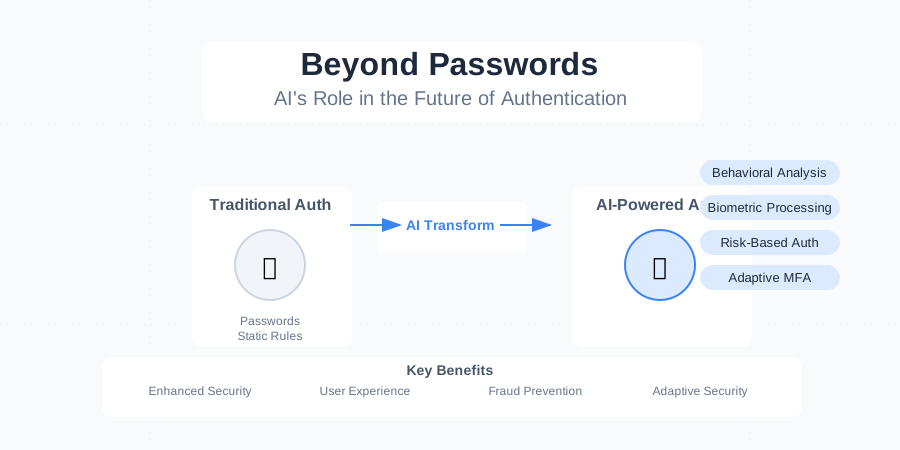
Beyond Passwords: AI’s Role in the Future of Authentication

Beyond Passwords: AI's Role in the Future of Authentication

Imagine never having to remember another password again. Sounds too good to be true? Welcome to the future of authentication, where Artificial Intelligence (AI) is revolutionizing how we prove our identity online. This article will explore how AI is making our digital lives more secure and convenient, and what it means for you.

The Password Problem: Why Change is Necessary

We've all been there – trying to log into an account, only to realize we've forgotten the password. It's frustrating, time-consuming, and unfortunately, all too common. In fact, a study by NordPass found that the average person has 168 passwords to remember. But the problem goes beyond mere inconvenience:

  • Security Vulnerabilities: In 2023, 24 billion usernames and passwords were exposed by data breaches (Cybersecurity Ventures). Hackers can crack a password with 8 characters in less than an hour.
  • Human Error: 23% of employees admit to using the same password for multiple work accounts (Keeper Security).
  • Phishing Attacks: 83% of organizations experienced successful phishing attacks in 2023 (Proofpoint).

These statistics paint a clear picture: passwords alone are no longer sufficient to protect our digital lives.

The Game-Changer in Authentication

1. Biometric Authentication: Your Body is Your Password

Biometric systems use unique physical or behavioral traits to verify your identity. Examples include:

  • Facial Recognition: Used by many smartphones for unlocking devices.
  • Fingerprint Scanning: Common in mobile payments and device access.
  • Voice Recognition: Increasingly used in banking and customer service.

Real-world example: HSBC's voice ID system, which uses over 100 unique identifiers in your voice, has prevented over £400 million in fraud attempts since 2016.

2. Behavioral Biometrics: Your Actions Speak Louder Than Passwords

Analyze how you interact with your devices to create a unique "behavior fingerprint." This includes:

  • Typing patterns
  • Mouse movements
  • Screen pressure (on touch devices)

Practical application: Some banks use behavioral biometrics to detect fraud. If someone tries to access your account but their typing pattern doesn't match yours, the system can flag it as suspicious activity.

3. Risk-Based Authentication: Adapting Security to the Situation

Assesses the risk of each login attempt based on various factors:

  • Location
  • Device used
  • Time of day
  • Type of transaction

How it affects you: If you usually access your bank account from home on your laptop, but suddenly there's a login attempt from a new device in a different country, the AI might require additional verification steps.

4. Continuous Authentication: Always On Guard

Instead of a one-time login, system can monitor your behavior throughout a session to ensure it's really you.

Example scenario: You're working on a sensitive document. If the system detects unusual behavior (like a sudden change in typing pattern), it might lock the screen or require re-authentication.

Preparing for a Passwordless Future

As we move towards AI-driven authentication, here are some steps you can take:

  1. Embrace Multi-Factor Authentication (MFA): Start using MFA wherever possible. It's a stepping stone to more advanced authentication methods.
  2. Stay Informed: Keep up with new authentication technologies offered by your service providers.
  3. Prioritize Privacy: Understand the privacy implications of biometric data and choose services that prioritize data protection.
  4. Be Open to Change: As new authentication methods become available, be willing to try them out.

The Road Ahead: What to Expect

The future of authentication is exciting and evolving rapidly:

  • Passkeys: A new standard supported by tech giants like Apple, Google, and Microsoft, allowing for passwordless logins across devices and platforms.
  • Adaptive Authentication: Systems that learn your habits over time and adjust security measures accordingly.
  • Blockchain-Based Identity: Decentralized identity systems that give you more control over your digital identity.

AI's Direct Impact on Passwords: The Path to Elimination

As AI continues to evolve, its role in authentication is becoming increasingly prominent. Here's how AI is actively working to make passwords obsolete:

1. AI-Powered Password Managers: A Transitional Step

While not eliminating passwords entirely, AI-enhanced password managers are making them more secure and easier to use:

  • Intelligent Password Generation: AI algorithms create highly secure, unique passwords for each account, reducing the risk of credential stuffing attacks.
  • Adaptive Multi-Factor Authentication (MFA): AI analyzes user behavior and context to determine when additional authentication factors are necessary, balancing security and convenience.

2. Natural Language Processing (NLP) in Voice Authentication

Advanced NLP algorithms are making voice authentication more secure and user-friendly:

  • Continuous Learning: AI models adapt to changes in users' voices over time, maintaining accuracy as voices naturally change.
  • Context Understanding: NLP can understand the content of spoken phrases, adding an extra layer of security beyond voice pattern recognition.

3. Computer Vision in Facial and Gesture Recognition

AI-powered computer vision is revolutionizing visual authentication methods:

  • 3D Face Mapping: Advanced algorithms create detailed 3D maps of users' faces, making spoofing attempts with photos or videos nearly impossible.
  • Gesture Recognition: AI can authenticate users based on unique gestures or movements, adding a dynamic element to visual authentication.

Emerging Technology: Apple's 2023 patent for "Adaptive Gesture Recognition Authentication" suggests future iPhones may use AI to authenticate users based on how they pick up and interact with their devices.

4. Federated Learning for Privacy-Preserving Authentication

This innovative AI approach allows for improved authentication without compromising user privacy:

  • Decentralized Learning: Authentication models improve over time without sharing raw user data, addressing privacy concerns associated with biometric data.
  • Cross-Device Authentication: Federated learning enables seamless, secure authentication across multiple devices and platforms.

Research Insight: A 2023 paper in the Journal of Cybersecurity demonstrated that federated learning-based authentication systems could reduce false acceptance rates by 40% compared to traditional centralized models.

5. Quantum-Resistant AI Authentication

As quantum computing threatens traditional encryption methods, AI is at the forefront of developing quantum-resistant authentication:

  • Post-Quantum Cryptography: AI algorithms are being used to develop and test new cryptographic methods that can withstand quantum attacks.
  • Quantum-Enhanced Authentication: Researchers are exploring how quantum principles, combined with AI, could create unbreakable authentication methods.

Future Outlook: The National Institute of Standards and Technology (NIST) predicts that by 2030, AI-driven quantum-resistant authentication methods will be widely adopted in critical infrastructure sectors.

The Transition to a Passwordless Future

As these AI-driven technologies mature, we're moving towards a truly passwordless future. Here's what this transition might look like:

  1. Short-term (1-2 years): Widespread adoption of AI-enhanced password managers and adaptive MFA.
  2. Medium-term (3-5 years): Mainstream use of AI-powered biometric authentication, including advanced facial, voice, and behavioral recognition.
  3. Long-term (5-10 years): Implementation of quantum-resistant, AI-driven authentication methods and potentially, brain-computer interfaces for thought-based authentication.

Preparing for the AI-Authenticated World

As we move towards this passwordless future, here are steps individuals and organizations can take:

  1. Embrace Current AI-Enhanced Security: Start using password managers with AI capabilities and enable adaptive MFA where available.
  2. Stay Informed: Keep up with developments in AI authentication and be prepared to adopt new technologies as they become available.
  3. Prioritize Privacy: Choose services that use federated learning or other privacy-preserving AI methods for authentication.
  4. Educate and Train: For organizations, invest in training employees on new AI-driven authentication methods to ensure smooth adoption.

Conclusion: A Safer, More Convenient Digital World

The future of authentication is not just passwordless – it's intelligent, adaptive, and seamlessly integrated into our daily lives. AI is the key driver of this revolution, promising a world where security doesn't come at the cost of convenience. As these technologies continue to evolve, we can look forward to a digital landscape that's more secure, more user-friendly, and free from the burden of passwords.

By understanding and embracing these AI-driven authentication methods, we're not just improving our individual security – we're contributing to a safer, more accessible digital world for everyone. The password's days are numbered, and AI is ushering in an era of effortless, robust security.

https://ift.tt/vfqKQEZ
https://ift.tt/iThdwGu


https://2.gravatar.com/avatar/b7ed20e10da488de193e75b40fa28ba5ceda96c4265525794861ddaa33ae7723?s=96&d=identicon&r=G
https://deepakguptaplus.wordpress.com/2024/10/28/beyond-passwords-ais-role-in-the-future-of-authentication/
Saturday, October 26, 2024

Mastering Cybersecurity: A Comprehensive Guide to Self-Learning

Mastering Cybersecurity: A Comprehensive Guide to Self-Learning

In an era where digital transformation drives every facet of our lives, cybersecurity has emerged as a critical field ensuring the safety and integrity of data and systems. Whether you’re a tech enthusiast or a professional looking to pivot your career, learning cybersecurity on your own is not only feasible but also highly rewarding. This guide will delve deep into how you can embark on this journey, explore various cybersecurity roles, outline key learning steps, and provide strategies to stay updated in this ever-evolving landscape.

  1. Understanding the Cybersecurity Landscape
  2. Exploring Cybersecurity Roles
  3. Key Steps to Learn Cybersecurity
  4. Practical Experience and Exercises
  5. Staying Informed and Up-to-Date
  6. Daily Improvement Strategies
  7. Conclusion

Understanding the Cybersecurity Landscape

Before diving into the specifics, it’s essential to grasp the breadth and depth of cybersecurity. Cybersecurity encompasses the technologies, processes, and practices designed to protect networks, devices, programs, and data from attack, damage, or unauthorized access. It’s a field characterized by constant evolution due to the ever-changing tactics of cyber adversaries.

Current State of Cybersecurity

The cybersecurity landscape is characterized by an ever-evolving battle between defenders and threat actors. With digital transformation accelerating across industries, the attack surface continues to expand exponentially. Key factors shaping today's cybersecurity environment include:

Core Components

  • Cloud Security: Multi-cloud environments requiring sophisticated security strategies
  • Network Security: Both traditional and software-defined networking security
  • Application Security: Focus on DevSecOps and secure development practices
  • Data Security: Protection of sensitive information across various storage points
  • Identity Security: Zero-trust architectures and advanced authentication methods

Emerging Threats

  1. Ransomware Evolution
    • Double extortion tactics
    • Ransomware-as-a-Service (RaaS)
    • Supply chain targeting
  2. Advanced Persistent Threats (APTs)
    • State-sponsored attacks
    • Long-term network infiltration
    • Sophisticated evasion techniques
  3. AI-Powered Attacks
    • Automated vulnerability discovery
    • Intelligent social engineering
    • Deepfake-based deception

Defense Strategies

Technical Controls

  • Next-generation firewalls
  • Endpoint Detection and Response (EDR)
  • Security Information and Event Management (SIEM)
  • Cloud Access Security Brokers (CASB)
  • Extended Detection and Response (XDR)

Operational Controls

  • Incident response planning
  • Vulnerability management
  • Security awareness training
  • Access control and monitoring
  • Patch management

Strategic Elements

  • Risk-based security programs
  • Compliance frameworks alignment
  • Security architecture design
  • Third-party risk management
  • Business continuity planning

Emerging Technologies

  • Quantum Computing: Impact on current cryptographic standards
  • 5G Security: New challenges in mobile and IoT security
  • Zero Trust Architecture: Moving beyond perimeter-based security
  • Blockchain: Decentralized security solutions

Industry Shifts

  • Remote workforce security
  • Industry-specific compliance requirements
  • Privacy-focused security measures
  • Integration of security with business strategy

Exploring Cybersecurity Roles

The cybersecurity field is diverse, offering various roles catering to different skill sets and interests. Understanding these roles can help tailor your learning path effectively.

1. Security Analyst

  • Role: Monitor and analyze security systems, identify vulnerabilities, and respond to incidents.
  • Skills Required: Proficiency in SIEM tools, knowledge of security threats, analytical thinking.

2. Penetration Tester / Ethical Hacker

  • Role: Simulate attacks on systems to identify security weaknesses.
  • Skills Required: Advanced understanding of networking, proficiency in hacking tools, creative problem-solving.

3. Security Engineer

  • Role: Design and implement security systems to protect infrastructure.
  • Skills Required: Strong background in IT, knowledge of security frameworks, scripting abilities.

4. Security Architect

  • Role: Develop and design security policies and architecture.
  • Skills Required: Extensive experience in security, strategic planning, understanding of business operations.

5. Incident Response Specialist

  • Role: Respond to security breaches and mitigate risks.
  • Skills Required: Rapid decision-making, forensic analysis skills, crisis management.

6. Governance, Risk, and Compliance (GRC) Specialist

  • Role: Ensures an organization's security practices align with industry standards and regulations.
  • Skills Required: Extensive experience in compliances, security policies, understanding of business operations.

7. Security Consultant

  • Role: Provide expert advice on securing systems and compliance.
  • Skills Required: Broad knowledge of security practices, excellent communication skills.

8. Forensic Computer Analyst

  • Role: Investigate cyber crimes and retrieve data from systems.
  • Skills Required: Detailed knowledge of forensic tools, attention to detail, legal knowledge.

Key Steps to Learn Cybersecurity

Embarking on a self-learning journey in cybersecurity requires a structured approach. Below are key steps to guide your learning process.

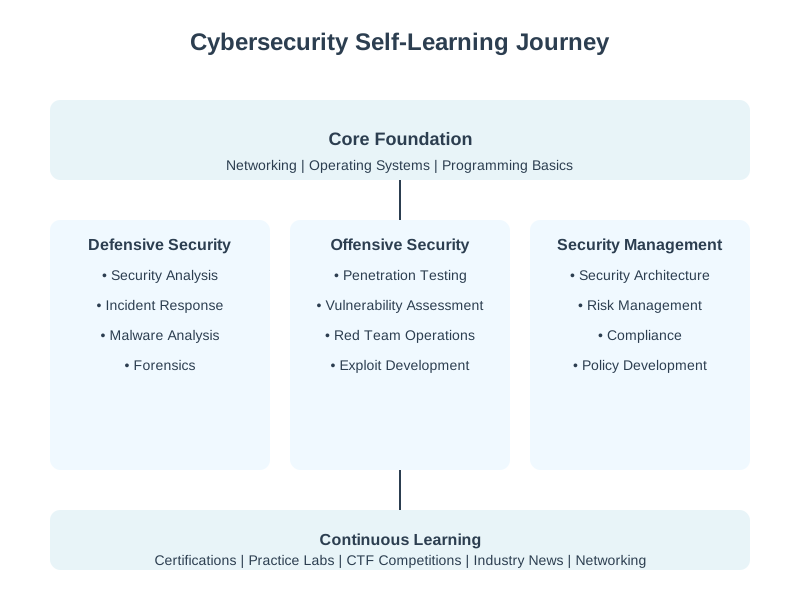
1. Build a Strong Foundation

a. Networking Fundamentals

  • Why It’s Important: Understanding how networks operate is crucial, as most cyber attacks target network vulnerabilities.
  • Topics to Cover:
    • OSI and TCP/IP models
    • IP addressing and subnetting
    • Routing and switching
    • Network protocols (HTTP, FTP, DNS, etc.)

b. Operating Systems

  • Why It’s Important: Many security tools and exploits are OS-specific; knowledge of OS internals aids in understanding vulnerabilities.
  • Focus On:
    • Linux: Familiarize yourself with distributions like Kali Linux, which is tailored for penetration testing.
    • Windows: Learn about Windows security features and common vulnerabilities.

c. Programming and Scripting Languages

  • Why It’s Important: Enables you to understand code exploits and automate tasks.
  • Languages to Learn:
    • Python: Widely used for scripting and automation in cybersecurity.
    • Bash: Essential for automating tasks in Unix/Linux environments.
    • JavaScript: Understanding web vulnerabilities like XSS.

2. Learn Core Security Concepts

a. Understanding the CIA Triad

  • Confidentiality: Ensuring information is not disclosed to unauthorized individuals.
  • Integrity: Maintaining the consistency and accuracy of data.
  • Availability: Guaranteeing reliable access to information and resources when needed.

b. Authentication, Authorization, and Accounting (AAA)

  • Authentication: Verifying the identity of a user or system.
  • Authorization: Granting permissions to authenticated users.
  • Accounting: Tracking user activities for auditing purposes.

c. Common Threats and Vulnerabilities

  • Malware Types: Viruses, worms, Trojan horses, ransomware.
  • Network Attacks: DDoS, man-in-the-middle, spoofing.
  • Application Security: SQL injection, cross-site scripting (XSS), buffer overflows.

3. Pursue Certifications

Certifications validate your knowledge and can enhance your credibility.

4. Utilize Self-Study Resources

a. Online Courses and Tutorials

b. Books

c. Blogs and Websites


Practical Experience and Exercises

Theory alone isn’t sufficient in cybersecurity. Practical application solidifies understanding and hones skills.

1. Setting Up a Home Lab

  • Purpose: Create a controlled environment to practice and test without risking legal or ethical violations.
  • Components:
    • Virtual Machines (VMs): Use platforms like VirtualBox or VMware to run multiple OS instances.
    • Networking Tools: Simulate network devices using tools like GNS3.

2. Hands-On Practice

a. Capture the Flag (CTF) Challenges

  • What They Are: Security competitions where participants solve security puzzles.
  • Platforms:
    • Hack The Box: Offers a range of hacking challenges.
    • OverTheWire: Focuses on learning through games.

b. Bug Bounty Programs

  • Purpose: Find and report bugs to organizations in exchange for rewards.
  • Platforms: HackerOne, Bugcrowd

c. Open-Source Projects

  • Contribution: Involvement in security-related open-source projects can offer real-world experience.

3. Tools Familiarization

  • Network Scanners: Nmap
  • Vulnerability Scanners: Nessus, OpenVAS
  • Sniffers: Wireshark
  • Penetration Testing Tools: Metasploit Framework

Staying Informed and Up-to-Date

Cybersecurity is dynamic; staying current is crucial.

1. Subscribe to Cybersecurity Newsletters and Podcasts

Newsletters:

  • SANS NewsBites
  • Dark Reading

Podcasts:

  • Security Now
  • CyberWire Daily

2. Attend Conferences and Webinars

Conferences:

  • Black Hat
  • DEF CON
  • RSA Conference

Webinars: Many organizations offer webinars on the latest security topics.

3. Follow Thought Leaders

Individuals:

  • Bruce Schneier: Security technologist and author.
  • Brian Krebs: Investigative journalist.

Organizations:

  • OWASP: Open Web Application Security Project.
  • SANS Institute: Offers security training and certifications.

Daily Improvement Strategies

Consistent daily efforts lead to significant progress over time.

1. Allocate Dedicated Study Time

  • Set a Schedule: Dedicate specific hours each day to study and practice.
  • Balanced Learning: Mix theoretical study with practical exercises.

2. Engage in Cybersecurity Communities

  • Forums: Participate in discussions on platforms like Reddit’s /r/cybersecurity.
  • Networking: Connect with professionals on LinkedIn.

3. Practice Ethical Hacking Regularly

  • Lab Exercises: Regularly attempt new challenges in your home lab.
  • Skill Enhancement: Focus on areas where you feel less confident.

4. Document Your Learning

  • Keep a Journal: Note down what you learn daily.
  • Blogging: Writing about topics can reinforce your understanding.

5. Build Projects

  • Automation Scripts: Create scripts to automate security tasks.
  • Security Tools: Develop simple tools to solve specific problems.

Conclusion

Learning cybersecurity on your own is a challenging yet fulfilling endeavor. By understanding the various roles within the field, building a solid foundation, engaging in practical exercises, and staying informed, you can develop the skills necessary to excel. Remember, cybersecurity is not just a profession but a commitment to continuous learning due to its ever-evolving nature. Embrace the journey with persistence and curiosity, and you’ll find yourself not only keeping pace with the industry but potentially leading the way.

https://ift.tt/rGT5hp8
https://ift.tt/KF4BzH7


https://2.gravatar.com/avatar/b7ed20e10da488de193e75b40fa28ba5ceda96c4265525794861ddaa33ae7723?s=96&d=identicon&r=G
https://deepakguptaplus.wordpress.com/2024/10/26/mastering-cybersecurity-a-comprehensive-guide-to-self-learning/

Thursday, October 24, 2024

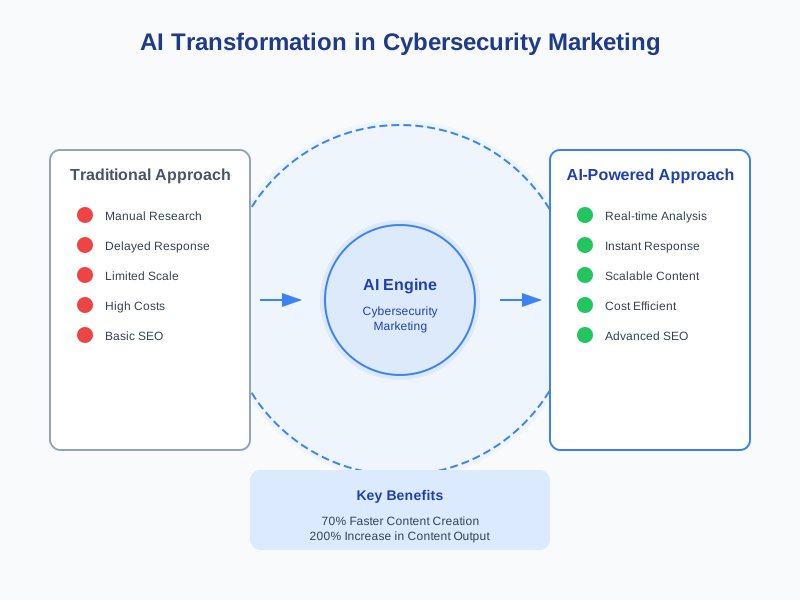
The Evolution of Cybersecurity Marketing: Traditional vs. AI-Powered Approaches

The Evolution of Cybersecurity Marketing: Traditional vs. AI-Powered Approaches

The cybersecurity marketing landscape has undergone a dramatic transformation in recent years. With the increasing sophistication of cyber threats and the growing complexity of security solutions, marketing teams face unique challenges in communicating value propositions, maintaining technical accuracy, and staying current with rapidly evolving threats. This analysis explores how artificial intelligence is revolutionizing cybersecurity marketing, comparing traditional methodologies with modern AI-powered approaches.

1. Content Creation and Management

Content creation in cybersecurity marketing presents unique challenges due to the technical nature of the subject matter, the rapid evolution of threats, and the need to maintain credibility while making complex concepts accessible. Traditional approaches have struggled to keep pace with the volume and velocity of changes in the cybersecurity landscape.

The cybersecurity industry generates an enormous amount of technical information daily:

  • 450,000+ new malware variants detected daily
  • 30+ major CVEs (Common Vulnerabilities and Exposures) published weekly
  • Hundreds of security research papers published monthly
  • Constant updates to compliance regulations and security standards

Traditional Approach

  • Research Process:
    • Manual monitoring of security news and threat intelligence portals
    • Security researchers spending 15-20 hours/week keeping up with latest threats
    • Technical writers needing 5-10 hours to understand and contextualize each new threat
    • 2-3 day delay in responding to emerging vulnerabilities
    • Heavy reliance on subject matter experts (SMEs) causing bottlenecks
    • Limited coverage of global security trends
  • Content Development:
    • Small team of specialized writers (typically 2-3) with cybersecurity knowledge
    • Average turnaround time of 1-2 weeks per technical piece
    • Content capacity limited to 2-4 major pieces per month
    • Cost per piece ranging from $500-$2000
    • Multiple revision cycles with technical teams
    • Difficulty maintaining consistent technical accuracy
    • Limited ability to create content variants for different platforms

AI-Powered Approach

  • Research Process:
    • Real-time monitoring of global threat intelligence feeds
    • Automated analysis of security research papers and technical documentation
    • Integration with threat databases and vulnerability scanners
    • Instant correlation of related threats and vulnerabilities
    • Automated technical validation with configurable accuracy thresholds
    • Global coverage of security trends and regional variations
  • Content Development:
    • AI systems trained on vast cybersecurity datasets and technical documentation
    • Content generation in hours rather than weeks
    • Scalable production of 20+ pieces per month
    • Cost reduction to $50-$200 per piece
    • Automated technical accuracy verification
    • Consistent terminology and technical definitions
    • Automatic content variants for different channels and audiences

2. Technical to Non-Technical Translation

The cybersecurity industry faces a unique challenge in communicating complex technical concepts to various stakeholders, from technical practitioners to C-level executives. This translation challenge has historically been a major bottleneck in marketing effectiveness.

Cybersecurity content must serve multiple audiences:

  • Technical professionals (CISOs, Security Engineers)
  • Business decision-makers (CEOs, CFOs)
  • IT professionals
  • Compliance officers
  • End users
  • Industry regulators

Traditional Approach

  • Communication Challenges:
    • Requiring writers with both deep technical knowledge and marketing skills
    • Average recruitment time of 3-6 months for qualified technical writers
    • 60% of content requiring multiple revisions for clarity
    • High risk of technical inaccuracies in simplified content
    • Limited ability to maintain technical depth while achieving accessibility
  • Content Adaptation:
    • Manual rewrites taking 4-8 hours per piece for each audience level
    • Extensive review cycles involving both technical and marketing teams
    • Inconsistent messaging across different audience versions
    • Limited ability to customize content for different industry verticals
    • High resource requirements for multi-audience content strategies

AI-Powered Approach

  • Communication Solutions:
    • Automated translation of technical concepts using industry-specific algorithms
    • Dynamic adjustment of technical depth based on audience profiles
    • Maintenance of technical accuracy through AI validation
    • Consistent terminology use across all content versions
    • Real-time adaptation to audience engagement metrics
  • Content Adaptation:
    • Simultaneous generation of multiple audience versions
    • Automated technical accuracy verification
    • Integration of industry-specific examples and use cases
    • Dynamic content adjustment based on reader behavior
    • Scalable multi-audience content strategy

3. SEO and Content Distribution

Cybersecurity SEO presents unique challenges due to rapidly changing terminology, emerging threats, and the need to maintain technical accuracy while optimizing for search visibility.

The cybersecurity SEO landscape includes:

  • Rapidly evolving technical terms
  • New threat names and categories
  • Changing compliance requirements
  • Complex product categories
  • Technical and non-technical search intent

Traditional Approach

  • SEO Strategy:
    • Manual keyword research taking 10-15 hours per month
    • Limited coverage of technical terms and emerging threats
    • Static optimization based on historical data
    • Delayed response to new security trends
    • Basic keyword mapping and content planning
    • Limited ability to target technical and non-technical searches simultaneously
  • Content Distribution:
    • Manual content scheduling and posting
    • Basic platform-specific optimization
    • Limited A/B testing capabilities
    • Standard analytics tracking
    • Fixed content formats and structures
    • Limited ability to respond to trending topics

AI-Powered Approach

  • SEO Strategy:
    • Real-time keyword discovery and trend analysis
    • Comprehensive technical term coverage
    • Dynamic content optimization based on search patterns
    • Automated identification of emerging security topics
    • Advanced keyword clustering and topic modeling
    • Multi-intent content optimization
  • Content Distribution:
    • Automated cross-platform distribution
    • AI-optimized posting schedules
    • Continuous performance optimization
    • Advanced analytics and predictive modeling
    • Dynamic content reformatting
    • Real-time trend response capabilities

4. Lead Generation and Nurturing

Cybersecurity solutions often have complex sales cycles involving multiple stakeholders and requiring significant education and trust-building. Traditional lead generation and nurturing approaches often struggle to address the unique needs of cybersecurity buyers.

Cybersecurity lead generation involves:

  • Complex buyer journeys (6-18 months)
  • Multiple decision-makers
  • High technical knowledge requirements
  • Significant trust and credibility requirements
  • Compliance and regulatory considerations

Traditional Approach

  • Lead Capture:
    • Standard form-based lead capture
    • Basic lead scoring based on form fields
    • Manual lead qualification processes
    • Generic nurture sequences
    • Limited ability to segment technical vs. non-technical leads
    • Static qualification criteria
  • Content Personalization:
    • Basic persona-based segmentation
    • Limited personalization capabilities
    • Static content journeys
    • Manual content recommendations
    • Fixed nurture paths
    • Limited ability to adapt to buyer behavior

AI-Powered Approach

  • Lead Capture:
    • Intelligent content gating based on visitor behavior
    • Advanced behavioral scoring algorithms
    • Automated technical vs. non-technical lead classification
    • Dynamic qualification criteria
    • Real-time lead prioritization
    • Adaptive nurture sequences
  • Content Personalization:
    • Dynamic persona development
    • Real-time content personalization
    • Adaptive content journeys
    • AI-driven content recommendations
    • Behavioral-based nurture paths
    • Continuous optimization based on engagement

5. Thought Leadership and Brand Building

In the cybersecurity industry, thought leadership is crucial for establishing credibility and trust. Companies must demonstrate deep technical expertise while maintaining accessibility to different audience segments.

Cybersecurity thought leadership requires:

  • Deep technical expertise
  • Current threat intelligence
  • Industry trend awareness
  • Regulatory compliance knowledge
  • Strategic security insights

Traditional Approach

  • Thought Leadership:
    • Reactive content strategy based on news cycles
    • Heavy reliance on individual experts
    • Limited perspective on emerging trends
    • Inconsistent publishing schedule
    • Difficulty maintaining technical depth
    • Limited ability to cover multiple security domains
  • Brand Building:
    • Manual brand monitoring
    • Delayed response to market changes
    • Basic competitive analysis
    • Traditional PR approaches
    • Limited market intelligence
    • Static brand positioning

AI-Powered Approach

  • Thought Leadership:
    • Proactive identification of emerging trends
    • AI-assisted expert insights
    • Predictive trend analysis
    • Consistent content cadence
    • Automated technical validation
    • Comprehensive security domain coverage
  • Brand Building:
    • Real-time brand sentiment analysis
    • Rapid market adaptation
    • Comprehensive competitive intelligence
    • Automated PR monitoring and response
    • Advanced market trend analysis
    • Dynamic brand positioning

6. Resource Allocation and ROI

Cybersecurity marketing requires significant resources to maintain technical accuracy, currency, and relevance while achieving marketing objectives. Traditional approaches often struggle with resource allocation and ROI measurement.

Resource challenges include:

  • High cost of technical expertise
  • Rapid pace of industry change
  • Complex content requirements
  • Multiple audience needs
  • Extensive review processes

Traditional Approach

  • Resource Requirements:
    • Large in-house marketing team (10+ people)
    • High personnel costs ($500K+ annually)
    • Significant time investment in technical validation
    • Limited scalability
    • Heavy reliance on external experts
    • Complex approval processes
  • ROI Measurement:
    • Basic analytics tracking
    • Delayed reporting cycles
    • Limited attribution modeling
    • Manual ROI calculations
    • Difficulty tracking technical content impact
    • Limited ability to measure multi-channel effectiveness

AI-Powered Approach

  • Resource Requirements:
    • Streamlined team structure (3-5 people)
    • Reduced personnel costs (40-60% savings)
    • Efficient resource utilization
    • Scalable operations
    • Automated technical validation
    • Streamlined approval workflows
  • ROI Measurement:
    • Advanced analytics integration
    • Real-time performance tracking
    • Multi-touch attribution modeling
    • Automated ROI calculation
    • Technical content impact analysis
    • Cross-channel effectiveness measurement

The cybersecurity marketing landscape continues to evolve with new technologies, threats, and buyer behaviors. Understanding future trends is crucial for maintaining competitive advantage.

Key drivers of change:

  • Advancing AI capabilities
  • Evolving threat landscape
  • Changing buyer behaviors
  • New security technologies
  • Regulatory changes

Emerging Technologies

  • Advanced AI Capabilities:
    • Natural language understanding improvements
    • Enhanced personalization algorithms
    • Predictive analytics advancement
    • Automated content optimization
    • Real-time threat analysis integration
    • Advanced technical validation capabilities
  • Integration Possibilities:
    • Seamless workflow automation
    • Enhanced cross-platform capabilities
    • Improved data analytics
    • Advanced threat intelligence integration
    • Automated compliance checking
    • Real-time market analysis

Market Impact

  • Competitive Advantages:
    • 70% reduction in time-to-market
    • 40% improvement in content quality
    • 200% increase in content production
    • 50% reduction in resource requirements
    • Enhanced market positioning
    • Improved technical accuracy
  • Industry Transformation:
    • Evolution of marketing roles
    • New skill requirements
    • Changed success metrics
    • Automated workflow adoption
    • Enhanced technical integration
    • Improved market responsiveness

Conclusion

The transformation from traditional to AI-powered cybersecurity marketing represents a fundamental shift in how companies approach their marketing efforts. This evolution offers significant advantages in terms of efficiency, scalability, and effectiveness, while also presenting new challenges and opportunities for marketing teams.

Key Recommendations:

  1. Invest in AI-powered tools specifically designed for cybersecurity marketing
  2. Develop hybrid teams combining technical expertise with AI capabilities
  3. Implement automated technical validation processes
  4. Focus on scalable, multi-audience content strategies
  5. Maintain balance between automation and human oversight
  6. Regularly evaluate and adapt to new AI capabilities
  7. Invest in continuous learning and skill development
  8. Develop integrated measurement frameworks
  9. Build flexible, adaptable marketing processes
  10. Focus on maintaining technical accuracy while increasing accessibility

Implementation Strategy:

  1. Assess current marketing capabilities and gaps
  2. Identify priority areas for AI implementation
  3. Develop phased adoption plan
  4. Train teams on new tools and processes
  5. Monitor and measure impact
  6. Continuously optimize and adapt
  7. Maintain focus on technical accuracy and credibility
  8. Build scalable, repeatable processes
  9. Establish clear governance frameworks
  10. Regular review and adjustment of strategies

https://ift.tt/5rUn2jM
https://ift.tt/BlHJ5Yy


https://2.gravatar.com/avatar/b7ed20e10da488de193e75b40fa28ba5ceda96c4265525794861ddaa33ae7723?s=96&d=identicon&r=G
https://deepakguptaplus.wordpress.com/2024/10/24/the-evolution-of-cybersecurity-marketing-traditional-vs-ai-powered-approaches/

Palo Alto Networks + CyberArk: The $25 Billion Deal Reshaping Cybersecurity

Deal Overview Transaction Details : Palo Alto Networks announced on July 30, 2025, its agreement to acquire CyberArk for $45.00 in cash ...