Friday, November 22, 2024

The Evolution of Hashing Algorithms: From MD5 to Modern Day

The Evolution of Hashing Algorithms: From MD5 to Modern Day

The journey of cryptographic hash functions mirrors the evolution of digital security itself. From the early days of MD5 to modern quantum-resistant algorithms, each generation of hash functions has emerged from the lessons learned from its predecessors. This article explores this fascinating evolution, examining the technical details, security considerations, and historical context of each major development in hashing algorithms.

Table of Contents

  1. Early Foundations (1989-1995)
  2. The Rise and Fall of MD5
  3. The SHA Family Evolution
  4. Modern Innovations
  5. Future Directions
  6. Performance Comparisons
  7. Implementation Considerations

Early Foundations (1989-1995)

The Birth of Modern Cryptographic Hashing

The concept of cryptographic hashing emerged from the need for efficient data integrity verification. The earliest widely-used hash functions were based on block cipher constructions:

Initial Hash Functions:
- Rabin's Hash (1978)
- Merkle-Damgård construction (1979)
- Davies-Meyer construction (1985)

These fundamental constructions established the basic principles that would influence all future hash functions:

  • Deterministic output
  • Avalanche effect
  • Preimage resistance
  • Collision resistance

Technical Foundation: The Merkle-Damgård Construction

The Merkle-Damgård construction remains fundamental to many modern hash functions. Here's its basic structure:

1. Message padding: M → M' (length is multiple of block size)
2. Break M' into fixed-size blocks: m₁, m₂, ..., mₙ
3. Initialize h₀ (IV)
4. For each block i:
   hᵢ = f(hᵢ₋₁, mᵢ)
5. Output hₙ as the hash

The Rise and Fall of MD5

MD5's Architecture

MD5, designed by Ron Rivest in 1991, processes messages in 512-bit blocks and produces a 128-bit hash value. Its core operation involves four rounds of similar operations:

// Core MD5 operation (simplified)
F(X,Y,Z) = (X & Y) | (~X & Z)
G(X,Y,Z) = (X & Z) | (Y & ~Z)
H(X,Y,Z) = X ^ Y ^ Z
I(X,Y,Z) = Y ^ (X | ~Z)

The Fall of MD5

MD5's vulnerabilities emerged gradually:

  1. 1996: First collision vulnerabilities identified
  2. 2004: Wang et al. demonstrated practical collisions
  3. 2008: Chosen-prefix collisions demonstrated

Example of an MD5 collision (discovered by Wang et al.):

Message 1 (hex):
d131dd02c5e6eec4693d9a0698aff95c2fcab58712467eab4004583eb8fb7f89...

Message 2 (hex):
d131dd02c5e6eec4693d9a0698aff95c2fcab50712467eab4004583eb8fb7f89...

Both produce MD5 hash:
79054025255fb1a26e4bc422aef54eb4

The SHA Family Evolution

SHA-1 (1995-2017)

SHA-1 improved upon MD5 with:

  • 160-bit output
  • Strengthened message schedule
  • Additional security margins

However, similar vulnerabilities emerged:

Timeline of SHA-1's decline:
2005: Theoretical attacks published
2017: First practical collision (SHAttered attack)
2020: Chosen-prefix collision achieved

SHA-2 Family (2001-Present)

SHA-2 introduced significant improvements:

Variants:
- SHA-224: 224-bit output
- SHA-256: 256-bit output
- SHA-384: 384-bit output
- SHA-512: 512-bit output
- SHA-512/224 and SHA-512/256: Truncated variants

Key technical improvements:

  1. Expanded message schedule
  2. Additional rotation operations
  3. Increased number of rounds
  4. Improved avalanche effect

SHA-3 (2015-Present)

SHA-3, based on the Keccak algorithm, represents a fundamental departure from the Merkle-Damgård construction:

Key Innovations:
1. Sponge construction
2. Permutation-based design
3. Flexible security parameters
4. Side-channel resistance

Modern Innovations

BLAKE2 and BLAKE3

BLAKE2/3 represent the latest generation of high-performance hash functions:

BLAKE2 Variants:
- BLAKE2b: Optimized for 64-bit platforms
- BLAKE2s: Optimized for 32-bit platforms
- BLAKE2bp: Parallel version of BLAKE2b
- BLAKE2sp: Parallel version of BLAKE2s

BLAKE3 Improvements:
- Simplified design
- Parallel by default
- Incremental updates
- Unlimited output size

Specialized Hash Functions

Modern specialized hash functions address specific use cases:

Lightweight Hashing:

- PHOTON: For constrained devices
- SPONGENT: Minimal hardware requirements
- QUARK: Balanced hardware/software performance

Password Hashing:

- bcrypt: Cost factor, salt handling
- scrypt: Memory-hard function
- Argon2: Winner of PHC competition

Performance Comparisons

Speed Benchmarks (GB/s on modern CPU)

Algorithm      | Single-thread | Multi-thread
---------------|---------------|-------------
MD5            | 3.46         | 13.84
SHA-1          | 2.80         | 11.20
SHA-256        | 1.64         | 6.56
SHA-3-256      | 1.28         | 5.12
BLAKE2b        | 2.95         | 11.80
BLAKE3         | 3.02         | 24.16

Memory Usage (KB)

Algorithm      | State Size | Block Size
---------------|------------|------------
MD5            | 0.128      | 0.064
SHA-1          | 0.160      | 0.064
SHA-256        | 0.256      | 0.064
SHA-3-256      | 0.200      | 0.136
BLAKE2b        | 0.256      | 0.128
BLAKE3         | 0.256      | 0.064

Implementation Considerations

Best Practices

  1. Implementation Security:
    • Constant-time operations
    • Side-channel resistance
    • Proper initialization
    • Secure memory handling

Algorithm Selection:

Use Case           | Recommended Algorithm
-------------------|---------------------
Password Hashing   | Argon2id
File Integrity     | BLAKE3
Digital Signatures | SHA-256/SHA-384
Legacy Systems     | SHA-256

Modern Implementation Example (Python)

import hashlib
from argon2 import PasswordHasher
from blake3 import blake3

# Modern password hashing
def hash_password(password: str) -> str:
    ph = PasswordHasher()
    return ph.hash(password)

# File integrity verification
def hash_file(filepath: str) -> str:
    hasher = blake3()
    with open(filepath, 'rb') as f:
        chunk = f.read(8192)
        while chunk:
            hasher.update(chunk)
            chunk = f.read(8192)
    return hasher.hexdigest()

# General purpose hashing
def secure_hash(data: bytes) -> str:
    return hashlib.sha256(data).hexdigest()

Future Directions

Quantum Resistance

The post-quantum era presents new challenges:

  1. Grover's Algorithm Impact:
    • Effective security halved
    • Need for larger hash sizes
    • New construction methods

Future-Proof Design Principles:

- Increased output sizes
- Stronger diffusion properties
- Quantum-resistant constructions
- Flexible security parameters
  1. Specialized Hash Functions:
    • IoT-optimized designs
    • Blockchain-specific functions
    • Zero-knowledge proof compatibility
  2. Performance Optimizations:
    • Hardware acceleration
    • Improved parallelization
    • Reduced energy consumption

Conclusion

The evolution of hash functions reflects our growing understanding of cryptographic security. From MD5's early innovations to modern quantum-resistant designs, each generation has built upon the lessons of its predecessors. As we move forward, the focus shifts to specialized applications, performance optimization, and quantum resistance, ensuring hash functions continue to serve as fundamental building blocks of digital security.

References

  1. NIST FIPS 180-4: Secure Hash Standard
  2. NIST FIPS 202: SHA-3 Standard
  3. The Password Hashing Competition
  4. "Understanding Cryptography" by Christof Paar
  5. BLAKE3 Specifications
  6. Argon2: The Memory-Hard Function

https://ift.tt/OUTsVBi
https://ift.tt/w7jDc3l


https://2.gravatar.com/avatar/b7ed20e10da488de193e75b40fa28ba5ceda96c4265525794861ddaa33ae7723?s=96&d=identicon&r=G
https://deepakguptaplus.wordpress.com/2024/11/22/the-evolution-of-hashing-algorithms-from-md5-to-modern-day/

Wednesday, November 20, 2024

Modern Cyber Attacks: Understanding the Threats and Building Robust Defenses

Modern Cyber Attacks: Understanding the Threats and Building Robust Defenses

On a quiet Friday afternoon in May 2017, a hospital administrator in the UK clicked on what seemed like a routine email. Within hours, the WannaCry ransomware had spread across the National Health Service, eventually affecting over 200,000 computers across 150 countries. This watershed moment in cybersecurity history highlighted a sobering reality: in our interconnected world, the line between digital security and human lives has become increasingly blurred.

The Evolution of Cyber Threats: A Historical Perspective

The Early Days: Technical Exploits

In the 1980s and early 1990s, cyber attacks were primarily the domain of technically skilled individuals focusing on exposing system vulnerabilities. The Morris Worm of 1988, one of the first computer worms distributed via the internet, marked the beginning of a new era in digital security threats. However, these early attacks, while disruptive, were often more about proving technical prowess than causing widespread harm.

The Rise of Organized Cybercrime

As the internet became commercialized in the late 1990s and early 2000s, cybercrime evolved into a sophisticated, profit-driven enterprise. The landscape shifted from individual hackers to organized criminal networks, state-sponsored actors, and hacktivists. This transformation brought new attack vectors: targeted spear-phishing campaigns, advanced persistent threats (APTs), and sophisticated social engineering tactics.

The Modern Threat Landscape

Today's cyber attacks represent a perfect storm of social manipulation, technical sophistication, and organizational complexity. Consider these statistics:

The Human Element

Perhaps the most significant shift in cyber attacks has been the increasing focus on human psychology. Modern attackers understand that it's often easier to manipulate people than to break through technical defenses. Take the case of the 2020 Twitter hack, where teenagers successfully compromised high-profile accounts not through sophisticated malware, but by convincing Twitter employees to grant them access through social engineering.

Understanding Today's Battlefield

The modern cybersecurity landscape is characterized by several key factors:

  1. Asymmetric Warfare
    • Attackers need to find only one vulnerability
    • Defenders must protect against all possible attack vectors
    • The cost of attacking is often lower than the cost of defense
  2. Automation and Scale
    • Artificial Intelligence-powered attacks
    • Automated scanning and exploitation
    • Mass customization of attack vectors
  3. Supply Chain Complexity
    • Interconnected systems and vendors
    • Third-party risk management
    • Cloud service dependencies
  4. Regulatory Environment
    • GDPR, CCPA, and other privacy regulations
    • Industry-specific compliance requirements
    • Cross-border data protection laws

As we delve into the specific types of attacks and defense strategies, it's crucial to understand that cybersecurity is no longer just an IT issue—it's a fundamental business risk that requires a holistic approach combining technical controls, human awareness, and organizational resilience.

1. Social Engineering Attacks

Understanding the Threat

Social engineering attacks exploit human psychology rather than technical vulnerabilities. These attacks manipulate people into breaking security protocols or revealing sensitive information.

Common Types:

  • Phishing: Fraudulent attempts to obtain sensitive information by posing as trustworthy entities
  • Spear Phishing: Targeted phishing attacks against specific individuals or organizations
  • Vishing: Voice phishing using phone calls
  • Baiting: Leaving malware-infected physical devices in strategic locations
  • Pretexting: Creating a fabricated scenario to obtain information

Notable Incidents

  • 2020 Twitter Bitcoin Scam: Attackers used social engineering to gain access to Twitter's internal tools, compromising high-profile accounts including those of Bill Gates, Elon Musk, and Barack Obama
  • 2016 Snapchat Breach: An employee fell for a phishing email impersonating the CEO, revealing payroll information of 700 employees

Prevention Strategies

  1. Employee Training Programs
    • Regular security awareness training
    • Simulated phishing exercises
    • Clear security protocols for handling sensitive information
  2. Technical Controls
    • Email filtering systems
    • DMARC, SPF, and DKIM implementation
    • Multi-factor authentication (MFA)

2. Credential Stuffing

Understanding the Threat

Credential stuffing is an automated attack where cybercriminals use stolen username/password pairs to gain unauthorized access to user accounts through large-scale automated login requests.

Attack Mechanics

  1. Attackers obtain leaked credentials from data breaches
  2. Create automated scripts to test these credentials across multiple services
  3. Exploit the common practice of password reuse
  4. Use successful logins to perpetrate fraud or steal sensitive information

Notable Incidents

  • 2020 Nintendo Account Breach: 300,000 accounts compromised through credential stuffing
  • 2019 Dunkin' Donuts: Customer accounts breached through credential stuffing attacks
  • 2016 Netflix Credential Stuffing: Attackers used stolen credentials to access and sell Netflix accounts

Prevention Strategies

  1. Technical Measures
    • Implement robust rate limiting
    • Use CAPTCHAs for suspicious login attempts
    • Deploy Web Application Firewalls (WAF)
    • Implement IP-based blocking for suspicious activities
  2. Authentication Enhancement
    • Mandate strong password policies
    • Implement MFA
    • Use passwordless authentication methods
    • Monitor for compromised credentials
  3. User Education
    • Encourage unique passwords for each service
    • Promote password manager usage
    • Regular security awareness training

3. Emerging Attack Vectors

AI-Powered Attacks

  • Deepfake Social Engineering: Using AI-generated voice and video to impersonate executives
  • Automated Attack Pattern Generation: AI systems creating sophisticated attack patterns
  • Behavioral Analysis Evasion: Using AI to mimic legitimate user behavior

Prevention Evolution

  1. Zero Trust Architecture
    • Verify every request regardless of source
    • Continuous authentication and authorization
    • Microsegmentation of networks
  2. AI-Powered Defense
    • Behavioral biometrics
    • Anomaly detection
    • Predictive threat analysis
  3. Blockchain-Based Identity
    • Decentralized identity verification
    • Immutable audit trails
    • Self-sovereign identity solutions
Modern Cyber Attacks: Understanding the Threats and Building Robust Defenses

4. Future of Cybersecurity Defense

Next-Generation Authentication and Identity

  1. Advanced Biometric Systems
    • Multi-modal biometric fusion
      • Combining facial, voice, and behavioral patterns
      • Contextual authentication factors
      • Liveness detection and anti-spoofing
    • Continuous Authentication Frameworks
      • Real-time behavior analysis
      • Risk-based authentication scoring
      • Adaptive security policies
    • Neural Biometrics
      • Brain-wave pattern recognition
      • Cognitive fingerprinting
      • Emotional state analysis
  2. Quantum-Era Cryptography
    • Post-Quantum Algorithms
      • Lattice-based cryptography
      • Hash-based signatures
      • Multivariate cryptographic systems
    • Quantum Key Distribution (QKD)
      • Satellite-based QKD networks
      • Metropolitan QKD infrastructure
      • Quantum random number generators
    • Hybrid Cryptographic Systems
      • Classical-quantum combinations
      • Algorithm agility
      • Backward compatibility solutions

Advanced Defense Systems

  1. AI-Powered Security Operations
    • Autonomous Security Platforms
      • Self-learning security systems
      • Predictive threat detection
      • Automated response orchestration
    • Cognitive Security Analytics
      • Natural language threat analysis
      • Visual pattern recognition
      • Contextual risk assessment
    • Neural Network Defense
      • Deep learning attack detection
      • Adversarial AI protection
      • AI-driven forensics
  2. Self-Healing Architecture
    • Automated Resilience
      • Real-time vulnerability remediation
      • Dynamic security policy adjustment
      • Autonomous system hardening
    • Intelligent Recovery Systems
      • Automated backup verification
      • Smart failover mechanisms
      • Self-restoring configurations
    • Adaptive Security Mesh
      • Dynamic security perimeter
      • Automated microsegmentation
      • Context-aware protection
  3. Privacy-Preserving Computing
    • Zero-Knowledge Systems
      • Advanced ZK-proof protocols
      • Privacy-preserving authentication
      • Secure multi-party computation
    • Homomorphic Encryption
      • Fully homomorphic encryption applications
      • Encrypted data processing
      • Secure cloud computing
    • Confidential Computing
      • Hardware-based encryption
      • Secure enclaves
      • Trusted execution environments

Emerging Defense Paradigms

  1. Biological Security Integration
    • DNA-Based Authentication
      • Genetic verification systems
      • Molecular computing security
      • Bioelectric authentication
    • Human-Computer Interface Security
      • Neural interface protection
      • Thought-based authentication
      • Biological encryption keys
  2. Quantum Defense Systems
    • Quantum Sensing
      • Quantum radar detection
      • Quantum imaging security
      • Quantum sensor networks
    • Quantum Machine Learning
      • Quantum pattern recognition
      • Quantum anomaly detection
      • Quantum optimization for security
  3. Distributed Security Frameworks
    • Blockchain-Based Security
      • Decentralized identity management
      • Smart contract security controls
      • Distributed security governance
    • Edge Security Mesh
      • Autonomous edge protection
      • Distributed threat detection
      • Edge-based encryption
  4. Cognitive Security Solutions
    • Natural Interface Security
      • Voice command authentication
      • Gesture-based security
      • Ambient computing protection
    • Emotional Intelligence Security
      • Stress-based threat detection
      • Emotional state authentication
      • Psychological security profiling

Comprehensive Implementation Guide

Immediate Actions: Building the Foundation

  1. Enhanced Security Baseline
    • Implement Risk-Based MFA
      • Adaptive authentication based on user behavior
      • Context-aware access policies
      • Biometric authentication for critical systems
    • Comprehensive Security Audits
      • Automated vulnerability scanning
      • Third-party security assessments
      • Compliance gap analysis
    • Advanced Incident Response
      • Automated playbooks for common scenarios
      • Integration with SOAR platforms
      • Regular tabletop exercises
    • Modern Employee Training
      • Gamified security awareness programs
      • Role-specific security training
      • Measured learning outcomes
  2. Advanced Technical Controls
    • Zero Trust Network Architecture
      • Microsegmentation with dynamic policies
      • Identity-aware proxies
      • Just-in-time access provisioning
    • Next-Gen Access Control
      • Attribute-based access control (ABAC)
      • Risk-adaptive access control
      • Continuous authorization
    • Enhanced Monitoring
      • ML-powered SIEM systems
      • User and entity behavior analytics (UEBA)
      • Network detection and response (NDR)
    • Comprehensive Testing
      • Purple team exercises
      • Adversary emulation
      • Bug bounty programs

Long-term Strategy: Building Resilience

  1. Evolution of Security Culture
    • Security Champions Network
      • Dedicated security advocates in each department
      • Peer-to-peer learning programs
      • Recognition and reward systems
    • Continuous Learning Framework
      • Personal development paths
      • Certification support
      • Knowledge sharing platforms
    • Measurable Security Metrics
      • Security scorecards
      • KPI tracking
      • Regular benchmarking
    • Collaborative Security Model
      • Cross-functional security teams
      • Vendor security management
      • Industry partnerships
  2. Strategic Technology Investment
    • Next-Generation Security Tools
      • Cloud-native security platforms
      • Container security solutions
      • API security frameworks
    • Advanced Authentication Systems
      • Passwordless authentication
      • Continuous behavioral authentication
      • Identity orchestration platforms
    • Automation and Orchestration
      • Security workflow automation
      • Automated compliance monitoring
      • Self-healing systems
    • Threat Intelligence Platform
      • Real-time threat feeds
      • Automated indicator sharing
      • Threat hunting capabilities
  3. Innovation Integration
    • Emerging Technology Adoption
      • Quantum-resistant cryptography
      • Blockchain-based identity systems
      • Edge computing security
    • Research and Development
      • Internal security innovation lab
      • Academic partnerships
      • Technology proof of concepts
    • Security by Design
      • Secure development frameworks
      • DevSecOps implementation
      • Security architecture reviews

Implementation Roadmap

  1. Phase 1: Foundation
    • Security assessment and gap analysis
    • Basic security controls implementation
    • Initial training program rollout
    • Essential monitoring setup
  2. Phase 2: Enhancement
    • Advanced security controls deployment
    • Automated response capabilities
    • Enhanced training and awareness
    • Security metrics establishment
  3. Phase 3: Optimization
    • AI/ML security integration
    • Advanced threat detection
    • Mature security program
    • Innovation implementation
  4. Phase 4: Evolution
    • Continuous improvement
    • Technology refresh cycles
    • Program expansion
    • Strategic partnerships

Conclusion

The landscape of cyber attacks continues to evolve, with attackers becoming increasingly sophisticated in their methods. Organizations must adopt a multi-layered approach to security, combining technical controls with human awareness and emerging technologies. The future of cybersecurity will likely see greater integration of AI, quantum-safe cryptography, and automated defense systems, but the fundamental principles of security awareness and defense-in-depth will remain crucial.

The key to protecting against modern cyber attacks lies in staying informed about emerging threats, maintaining robust security practices, and fostering a security-conscious culture. As we move forward, the focus should be on building resilient systems that can adapt to new threats while maintaining usability and efficiency.

Industry White Papers

  1. Cloud Security Alliance: Top Threats to Cloud Computing: The Pandemic Eleven
  2. SANS Institute: 2024 State of Security Awareness Report
  3. Gartner: Top Strategic Technology Trends for 2024

Government Advisories

  1. CISA : Known Exploited Vulnerabilities Catalog
  2. CISA: "Shields Up" Technical Guidance
  3. FBI: Internet Crime Report 2022
  4. National Cyber Security Centre (UK): Annual Review 2023

https://ift.tt/zminYWJ
https://ift.tt/TdhL6ie


https://2.gravatar.com/avatar/b7ed20e10da488de193e75b40fa28ba5ceda96c4265525794861ddaa33ae7723?s=96&d=identicon&r=G
https://deepakguptaplus.wordpress.com/2024/11/20/modern-cyber-attacks-understanding-the-threats-and-building-robust-defenses/

Monday, November 18, 2024

The Future of Search Marketing: Beyond Google’s Horizon

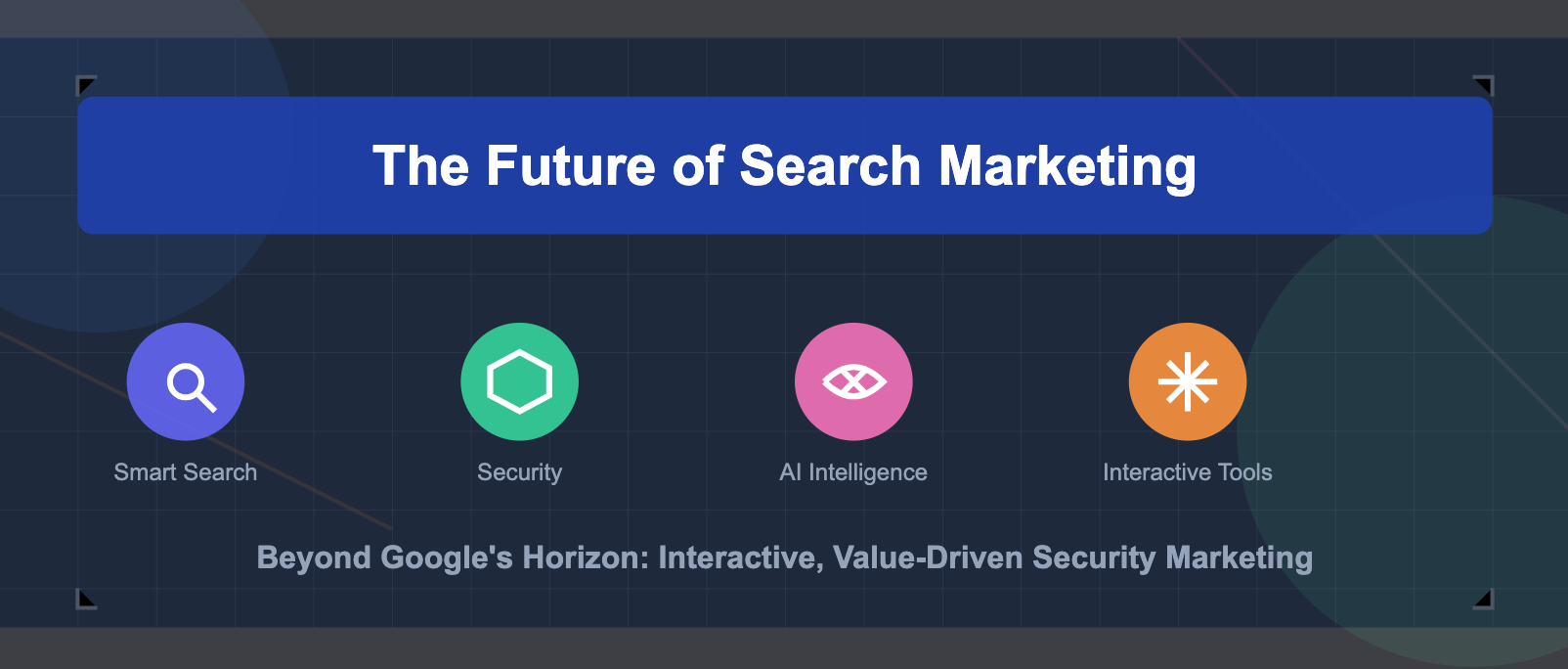
The Future of Search Marketing: Beyond Google's Horizon

As we stand at the intersection of artificial intelligence, cybersecurity, and digital marketing, a revolutionary transformation is reshaping how businesses connect with their audiences. Traditional search marketing, centered around Google's algorithm and keyword optimization, is giving way to a more sophisticated, multi-faceted approach that prioritizes practical value and interactive experiences. This evolution is particularly significant in the cybersecurity sector, where complex solutions and high-stakes decisions require more than just informational content.

The Evolution of Search Behavior: Deep Dive

The way people search for solutions has fundamentally changed. Today's B2B buyers, especially in technical fields like cybersecurity, engage in a complex discovery process that spans multiple platforms and formats. Understanding these changes is crucial for developing effective marketing strategies.

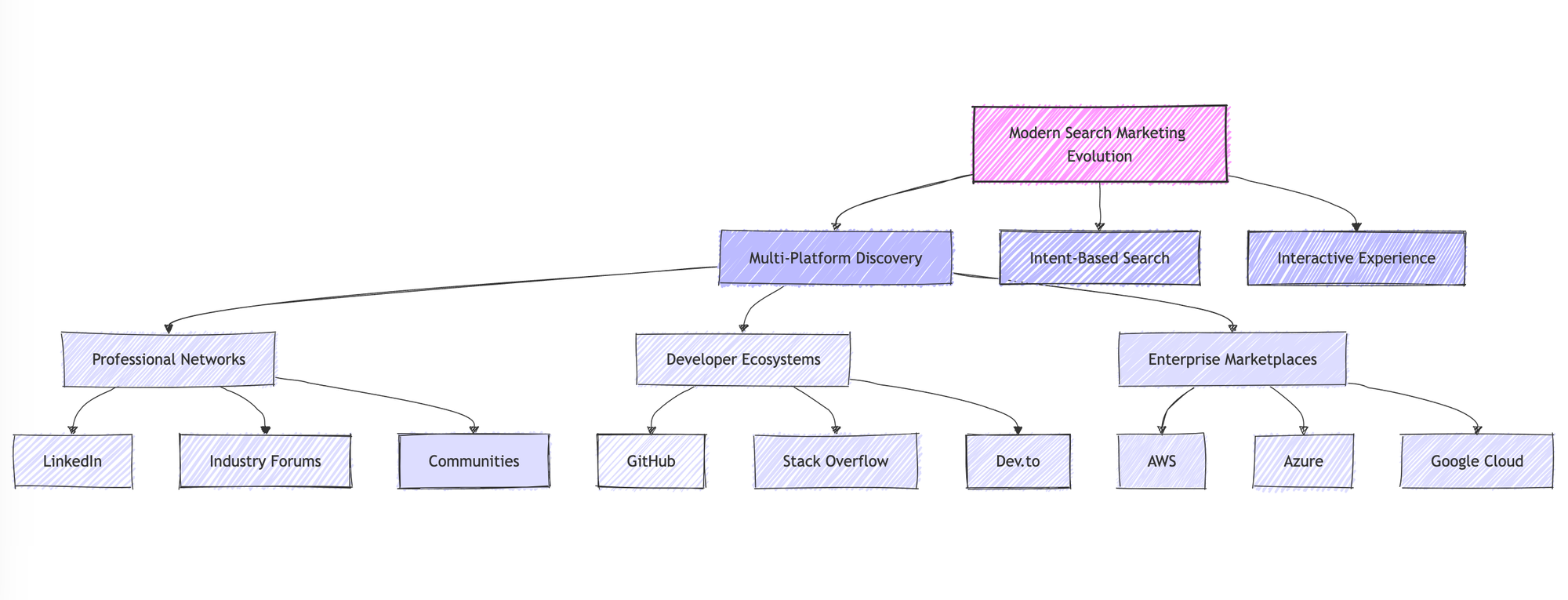
1. Multi-Platform Discovery

Modern B2B buyers no longer rely on a single search engine. Instead, they conduct parallel searches across various platforms, each serving a specific purpose in their decision-making journey:

Professional Networks

  • LinkedIn: Technical decision-maker discussions and peer recommendations
  • Industry Forums: Deep technical discussions and real-world implementation experiences
  • Specialized Communities: Sector-specific challenges and solutions

Developer Ecosystems

  • GitHub: Open-source security tools and implementation examples
  • Stack Overflow: Technical implementation challenges and solutions
  • Dev.to: Security development practices and tools

Enterprise Marketplaces

The shift from keyword-based to intent-driven searches represents a fundamental change in how users interact with search platforms:

Traditional vs. Modern Queries

  • Old: "endpoint security software"
  • New: "how to protect remote workforce endpoints in financial services"

Solution Discovery Process

  • Problem Definition: "preventing ransomware in healthcare"
  • Implementation Planning: "ransomware protection implementation steps"
  • Validation: "ransomware protection case studies healthcare"

3. Interactive Search Experience

Users now expect search results to provide immediate, actionable value:

Dynamic Content Engagement

  • Interactive Documentation: Click-through tutorials and guides
  • Live Demonstrations: Real-time product functionality showcase
  • Configurable Solutions: Customizable feature sets and pricing
The Future of Search Marketing: Beyond Google's Horizon

Tool-Based Marketing: Practical Implementation

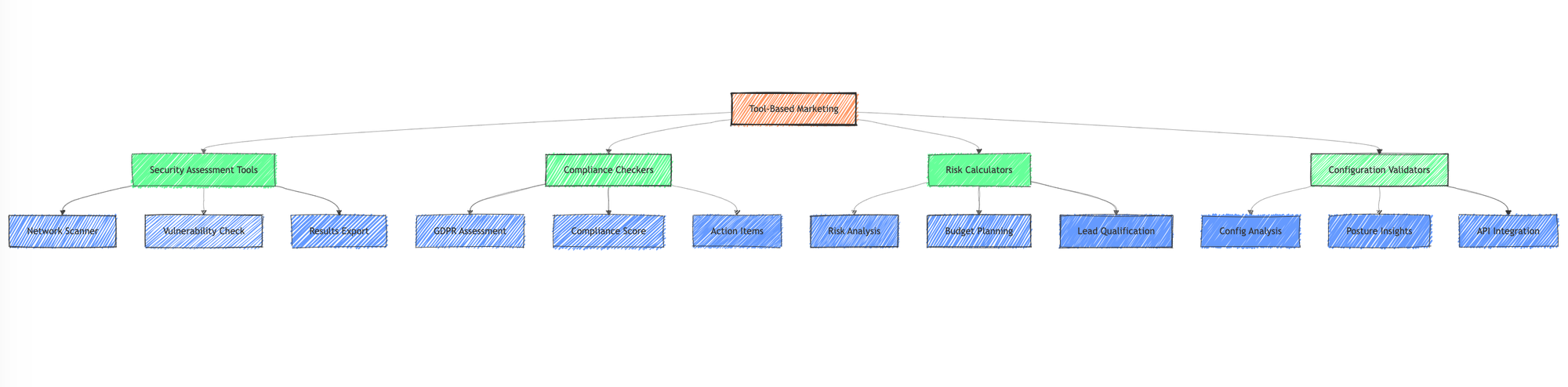
The future of search marketing lies in providing immediate, practical value through interactive tools. This approach is particularly effective in cybersecurity marketing, where technical capability demonstration is crucial.

1. Security Assessment Tools

Example: Network Security Scanner
Purpose: Provide immediate security insights while demonstrating expertise
Implementation Details:

  • Quick scan of external network vulnerabilities
  • Basic port scanning and service identification
  • Common vulnerability checking
  • Customizable scan parameters
  • Results export and sharing capabilities

Marketing Integration:

  • Lead capture through results delivery
  • Upsell opportunities based on identified vulnerabilities
  • Integration with full security assessment services

2. Compliance Checkers

Example: GDPR Readiness Assessment
Core Features:

  • Interactive questionnaire with branching logic
  • Real-time compliance score calculation
  • Industry-specific requirement mapping
  • Downloadable compliance reports
  • Action item prioritization

Business Integration:

  • Compliance gap analysis
  • Recommended solution mapping
  • Consultation scheduling
  • Compliance roadmap generation

3. Risk Calculators

Example: Cyber Insurance Cost Estimator

  • Functionality: Industry-specific risk assessment
  • User Value: Budget planning assistance
  • Marketing Value: Lead qualification and segmentation
  • Implementation: Mobile-friendly calculator with save/share features

4. Configuration Validators

Example: Cloud Security Posture Checker

  • Functionality: Automated security configuration analysis
  • User Value: Immediate security posture insights
  • Marketing Value: Technical capability demonstration
  • Implementation: API-based tool with integration options
The Future of Search Marketing: Beyond Google's Horizon

Strategic Implementation Guide

A systematic approach to implementing next-generation search marketing strategies.

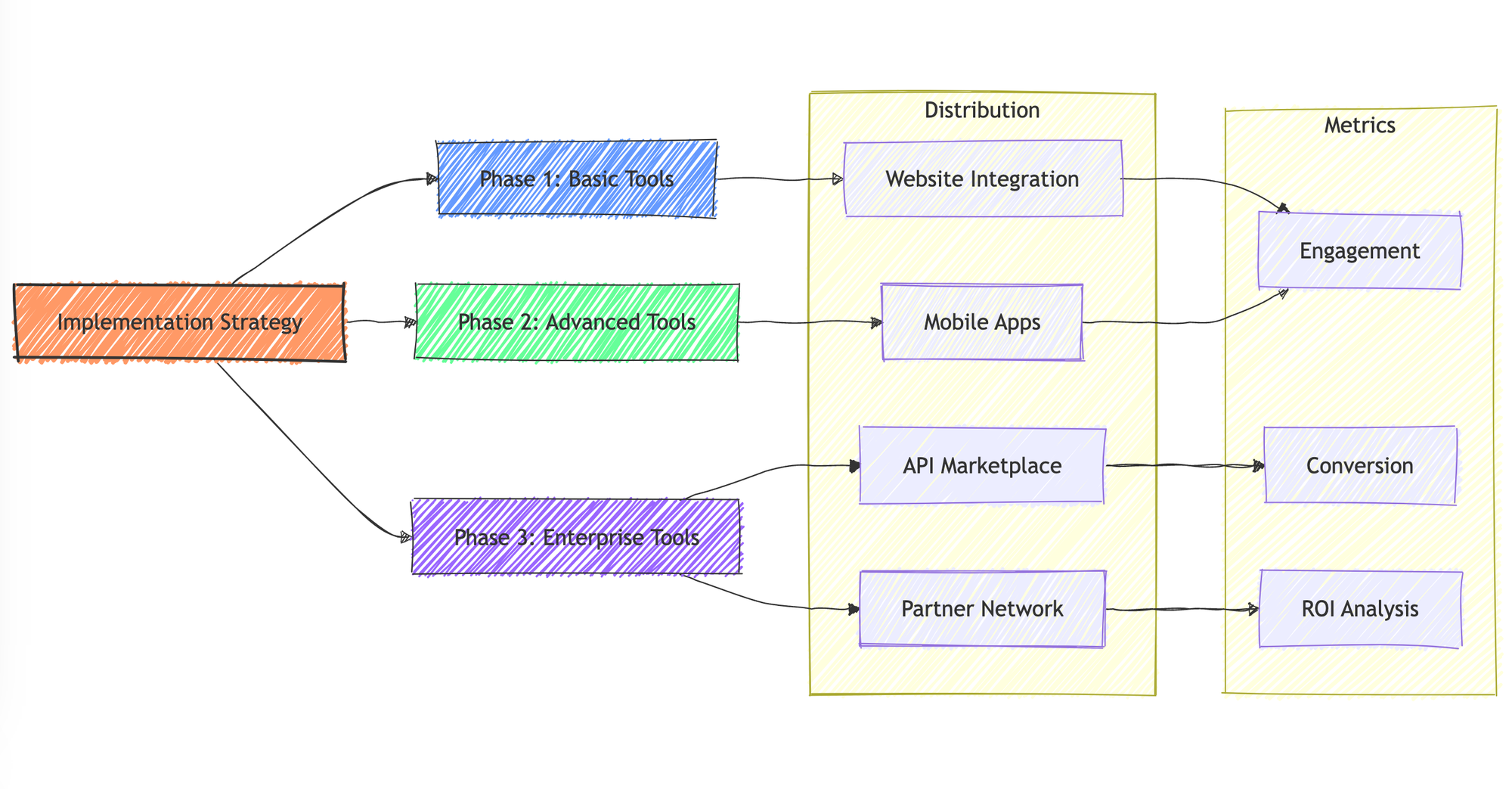
1. Building Your Tool Suite

Phase 1: Basic Tools

Foundation Components:

  • Security assessment wizard
  • Compliance checklist generator
  • Vulnerability scanner lite
  • Password policy analyzer

Integration Requirements:

  • Web-based interface
  • Basic authentication
  • Results storage
  • PDF report generation

Phase 2: Advanced Tools

Enhanced Features:

  • Custom policy generator
  • Risk simulation engine
  • Threat modeling system
  • Integration validator

Technical Requirements:

  • API integration capability
  • Multi-user support
  • Custom reporting
  • Data analytics

Phase 3: Enterprise Tools

Advanced Capabilities:

  • Full security stack analysis
  • Custom compliance frameworks
  • Advanced threat intelligence
  • ROI calculation engine

Enterprise Features:

  • Single Sign-On (SSO)
  • Role-based access control
  • Audit logging
  • Custom deployment options

2. Distribution Strategy

Multi-Channel Presence

Platform Integration:

  • Website embedding
  • Mobile optimization
  • API marketplace presence
  • Partner network distribution

Deployment Options:

  • Cloud-hosted SaaS
  • On-premise installation
  • Hybrid deployment
  • Container-based distribution
The Future of Search Marketing: Beyond Google's Horizon

Measuring Success

1. Engagement Metrics

User Interaction Analysis

Key Metrics:

  • Average session duration
  • Tool completion rates
  • Feature adoption velocity
  • Return user frequency

Advanced Analytics:

  • User journey mapping
  • Drop-off point analysis
  • Feature usage patterns
  • User satisfaction scores

2. Conversion Metrics

Business Impact Measurement

Primary Metrics:

  • Tool-to-trial conversion rate
  • Assessment-to-consultation ratio
  • Free-to-paid transition rate
  • Enterprise adoption velocity

ROI Analysis:

  • Customer acquisition cost
  • Lifetime value calculation
  • Revenue attribution
  • Market penetration rate

Future-Proofing Your Strategy

1. Continuous Innovation

Technology Evolution

Focus Areas:

  • AI/ML capability expansion
  • API ecosystem development
  • Interface modernization
  • Security enhancement

Innovation Process:

  • Regular feature updates
  • User feedback integration
  • Technology trend alignment
  • Competitive analysis

2. Scalability Planning

Technical Architecture

Core Components:

  • Microservices architecture
  • Container orchestration
  • API-first design
  • Cloud-native infrastructure

Operational Considerations:

  • Global availability
  • Load balancing
  • Data residency
  • Disaster recovery

Conclusion

The transformation of search marketing in cybersecurity represents a fundamental shift from traditional content-centric approaches to interactive, value-driven strategies. Success in this new paradigm requires:

  1. Understanding and adapting to evolving search behaviors
  2. Developing practical, value-first tools
  3. Leveraging AI and community intelligence
  4. Maintaining a scalable, future-ready infrastructure

Organizations that embrace this evolution, focusing on immediate value delivery while building long-term relationships, will establish themselves as trusted authorities in the cybersecurity domain. The future belongs to those who can effectively combine search visibility with practical utility, creating a seamless journey from discovery to engagement to lasting partnership.

https://bit.ly/3OaNRH8
https://bit.ly/3ZdnJ4s


https://2.gravatar.com/avatar/b7ed20e10da488de193e75b40fa28ba5ceda96c4265525794861ddaa33ae7723?s=96&d=identicon&r=G
https://deepakguptaplus.wordpress.com/2024/11/18/the-future-of-search-marketing-beyond-googles-horizon/

Thursday, November 14, 2024

Why Open-Source CIAM Solutions Are Essential for Data Security and Privacy

Why Open-Source CIAM Solutions Are Essential for Data Security and Privacy

Businesses are increasingly reliant on Customer Identity and Access Management (CIAM) solutions to handle user authentication, authorization, and identity management. As cyber threats escalate and data breaches become more prevalent, ensuring the security and privacy of customer data has never been more critical.

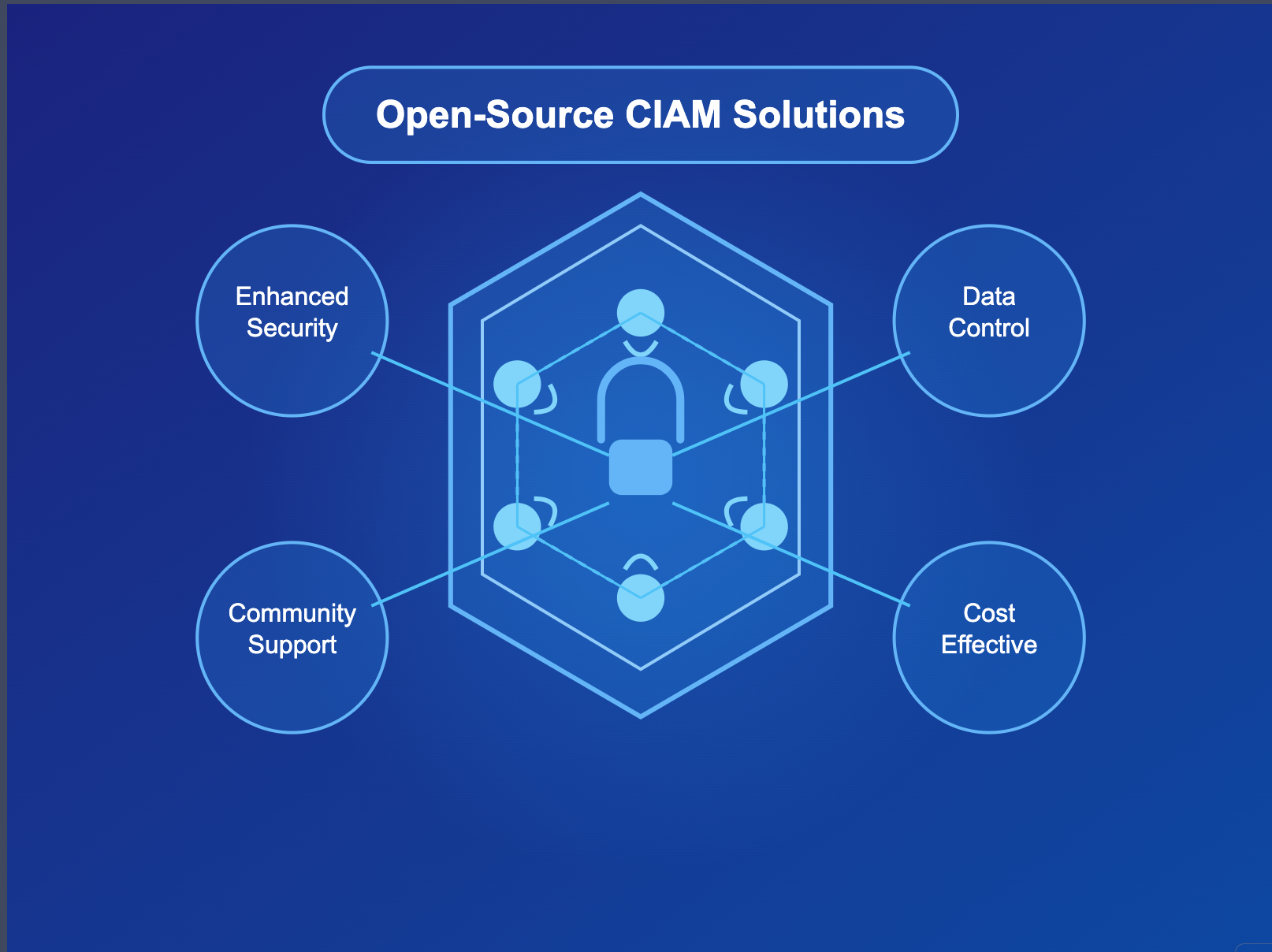
While third-party vendors offer proprietary CIAM solutions, they come with inherent risks, including data loss and massive disruptions. Open-source CIAM solutions present a compelling alternative, offering enhanced security, greater control over data, and scalability. This article delves into why companies should adopt open-source CIAM solutions, compares some of the leading options, and highlights how they keep customer data safe and secure.

Understanding CIAM and Its Importance

Customer Identity and Access Management (CIAM) is a framework that enables organizations to securely capture and manage customer identity and profile data. It governs how customers access applications and services, ensuring that only authorized users can interact with sensitive information.

Key functions of CIAM include:

  • User Authentication: Verifying user identities through credentials like passwords, biometrics, or multi-factor authentication.
  • Authorization: Granting or restricting access to resources based on user roles and permissions.
  • Profile Management: Handling customer data, preferences, and consent for data usage.
  • Security and Compliance: Ensuring adherence to regulations like GDPR, CCPA, and HIPAA.

The importance of CIAM lies in its ability to provide a seamless and secure user experience while safeguarding sensitive customer data from unauthorized access and cyber threats.

The Risks of Third-Party Vendors

Relying on proprietary CIAM solutions from third-party vendors may seem convenient, but it introduces several risks:

Data Breaches and Loss of Control

When outsourcing CIAM to third-party vendors, companies often lose direct control over their data. This loss of control can lead to:

  • Data Breaches: Vendors may not implement robust security measures, making them vulnerable to cyber-attacks.
  • Data Mismanagement: Inadequate handling of data can result in accidental exposure or loss.
  • Compliance Issues: Failure to comply with data protection regulations can lead to hefty fines and legal consequences.

Massive Disruptions

Third-party vendors can experience outages, service disruptions, or even go out of business, leading to:

  • Service Downtime: Interruptions in CIAM services can prevent customers from accessing applications, harming the user experience.
  • Data Unavailability: Critical customer data may become inaccessible, affecting business operations.
  • Migration Challenges: Switching vendors can be complex and time-consuming, with potential data loss during the transition.

Real-World Examples

Several high-profile incidents highlight the risks associated with third-party vendors:

1. Target Data Breach (2013)

In one of the most infamous data breaches, retail giant Target experienced a massive security breach during the 2013 holiday season. Hackers gained access to Target's network through a third-party HVAC (heating, ventilation, and air conditioning) contractor, Fazio Mechanical Services.

  • Cause: Attackers sent phishing emails to employees at Fazio Mechanical Services, obtaining credentials that were later used to infiltrate Target's network.
  • Impact: Personal and credit card information of over 40 million customers was compromised.
  • Aftermath: Target faced significant financial losses, lawsuits, and a damaged reputation.

2. Home Depot Data Breach (2014)

Home Depot suffered a data breach that exposed approximately 56 million payment card numbers and 53 million email addresses. The breach was traced back to a third-party vendor's compromised username and password.

  • Cause: Attackers used stolen credentials from a third-party vendor to access Home Depot's network and deploy custom-built malware on the company's self-checkout systems.
  • Impact: The breach resulted in one of the largest thefts of payment card information.
  • Aftermath: Home Depot agreed to pay at least $19.5 million to compensate affected customers.

3. Equifax Data Breach (2017)

Equifax, one of the largest credit reporting agencies, announced a data breach that affected 147 million consumers. While the primary cause was a vulnerability in their own systems, a significant factor was the failure of a third-party software provider to notify Equifax about critical software patches.

  • Cause: Attackers exploited a vulnerability in Apache Struts, a third-party web application software used by Equifax.
  • Impact: Exposed names, Social Security numbers, birth dates, addresses, and, in some cases, driver's license numbers.
  • Aftermath: Equifax faced severe criticism, legal actions, and agreed to a settlement of up to $700 million.

4. Facebook–Cambridge Analytica Scandal (2018)

Cambridge Analytica, a British political consulting firm, harvested the personal data of millions of Facebook users without their consent, using it for political advertising purposes.

  • Cause: A third-party app developer collected data through a personality quiz and exploited Facebook's API to access users' friends' data.
  • Impact: Data of up to 87 million users was improperly obtained and used.
  • Aftermath: Facebook faced intense scrutiny, leading to hearings before the U.S. Congress and significant changes to its data privacy policies.

5. Quest Diagnostics Data Breach via AMCA (2019)

Quest Diagnostics, a leading provider of medical diagnostic services, reported a data breach affecting nearly 12 million patients. The breach occurred through the American Medical Collection Agency (AMCA), a third-party billing collections vendor.

  • Cause: Unauthorized user access to AMCA's payment system compromised personal, financial, and medical information.
  • Impact: Exposed names, dates of birth, Social Security numbers, and medical information.
  • Aftermath: Quest Diagnostics terminated its relationship with AMCA, and AMCA later filed for bankruptcy.

6. Marriott Data Breach via Starwood Acquisition (2018)

Marriott International disclosed a data breach affecting up to 500 million guests. The breach originated from Starwood Hotels and Resorts Worldwide, which Marriott had acquired in 2016.

  • Cause: Attackers had access to Starwood's network since 2014 due to vulnerabilities that were not adequately addressed during the merger.
  • Impact: Exposed guest information, including passport numbers, reservation details, and credit card information.
  • Aftermath: Marriott faced regulatory fines and strengthened its cybersecurity measures.

7. SolarWinds Supply Chain Attack (2020)

The SolarWinds cyberattack was a significant supply chain breach where attackers compromised Active Directory and M365 with SolarWinds Orion software updates, affecting multiple government agencies and private companies.

  • Cause: Attackers inserted malicious code into SolarWinds' software updates, which were then distributed to SolarWinds' clients.
  • Impact: Up to 18,000 organizations, including U.S. government agencies and Fortune 500 companies, were potentially exposed.
  • Aftermath: Led to widespread concern over supply chain security and prompted investigations and policy changes.

8. Accellion FTA Breach Affecting Multiple Organizations (2020-2021)

A vulnerability in Accellion's File Transfer Appliance (FTA), a third-party file-sharing service, led to data breaches in multiple organizations, including universities, government agencies, and private companies.

  • Cause: Zero-day vulnerabilities in the legacy FTA software were exploited to steal data.
  • Impact: Sensitive data, including personal and financial information, was stolen and in some cases leaked.
  • Aftermath: Organizations had to notify affected individuals and enhance their cybersecurity protocols.

Importance of These Incidents

These breaches underscore the critical need for organizations to:

  • Vet Third-Party Vendors: Ensure that vendors adhere to strict cybersecurity standards.
  • Implement Strong Access Controls: Limit vendor access to only the necessary systems and data.
  • Conduct Regular Security Audits: Periodically review third-party security measures and compliance.
  • Monitor for Suspicious Activity: Use advanced monitoring to detect unauthorized access promptly.
  • Patch Management: Keep all software, including third-party applications, up to date with the latest security patches.

Third-party vendors can introduce significant vulnerabilities into an organization's security posture. The data breaches mentioned above highlight how attackers often target less secure vendors to gain access to larger organizations' networks. By learning from these incidents, companies can take proactive measures to strengthen their defenses, particularly when integrating third-party services into their systems.

These incidents underscore the vulnerability of depending on external providers for critical identity and access management functions.

Benefits of Open-Source CIAM Solutions

Adopting open-source CIAM solutions offers numerous advantages that address the shortcomings of proprietary vendors:

Enhanced Security Through Transparency

Open-source software allows anyone to inspect, modify, and enhance the code. This transparency leads to:

  • Community Auditing: A global community of developers continually reviews the code for vulnerabilities, leading to quicker identification and patching of security flaws.
  • No Hidden Backdoors: The open nature ensures that there are no undisclosed mechanisms that could compromise security.

Greater Control Over Data

With open-source CIAM, companies maintain complete control over their customer data:

  • Data Sovereignty: Organizations decide where and how data is stored and processed, ensuring compliance with regional regulations.
  • Customization: Tailoring the solution to specific security requirements and business needs is more feasible.
  • Elimination of Vendor Lock-In: Companies are not tied to a single provider, reducing dependency risks.

Cost-Effectiveness and Scalability

Open-source solutions often come with lower total cost of ownership:

  • Reduced Licensing Fees: Most open-source CIAM tools are free to use, with costs arising only from implementation and maintenance.
  • Scalability: They can be scaled horizontally to handle growing user bases without exorbitant fees.
  • Community Support: Access to a vast community for support, plugins, and extensions enhances functionality without additional costs.

Compliance and Innovation

  • Regulatory Compliance: Open-source CIAM solutions can be configured to meet specific compliance requirements.
  • Innovation: The collaborative nature fosters innovation, with new features and improvements contributed by the community.

Leading Open-Source CIAM and Authentication Solutions

Several open-source CIAM solutions stand out for their robustness, ease of use, and scalability. Below is a comparison of some of the best options available:

Certainly! Beyond the solutions previously mentioned, several other open-source CIAM (Customer Identity and Access Management) solutions are modern, scalable, and can be self-hosted. Here's a detailed look at some of these platforms:

1. Ory Kratos and Ory Hydra

  • Ory Kratos: An open-source identity and user management system that provides authentication and user management functionalities.
  • Ory Hydra: An OAuth2 and OpenID Connect server that handles authentication, authorization, and token management.

Features

  • Ory Kratos:
    • Self-Service Management: Password resets, account recovery, and profile updates.
    • Flexible Authentication: Supports passwordless logins, social sign-ins, and multi-factor authentication (MFA).
    • Identity Schemas: Customizable user identity models.
    • API-First Design: All functionalities are accessible via RESTful APIs.
  • Ory Hydra:
    • OAuth2 and OpenID Connect: Full implementation of these protocols.
    • Consent Management: Delegated consent flows.
    • Security Compliance: Follows security best practices and standards.

Ease of Use

  • Documentation: Comprehensive guides and API references.
  • Deployment: Docker images available; can be deployed on Kubernetes.
  • Community Support: Active community and regular updates.

Scalability

  • Cloud-Native: Designed for distributed environments.
  • Stateless Services: Facilitates horizontal scaling.
  • High Availability: Supports clustering and load balancing.

2. Authentik

Authentik is an open-source identity provider focused on flexibility and simplicity, ideal for cloud environments.

Features

  • Authentication Protocols: Supports OAuth2, OpenID Connect, SAML, and LDAP.
  • Authorization Flows: Customizable policies for access control.
  • User Management: Self-service registration and profile management.
  • Integrations: Works with reverse proxies like Traefik and Nginx.
  • MFA Support: Includes TOTP, WebAuthn, and Duo.

Ease of Use

  • User Interface: Intuitive web-based admin panel.
  • Deployment: Provides Docker images and Helm charts.
  • Documentation: Detailed setup and configuration guides.

Scalability

  • Containerization: Optimized for Docker and Kubernetes deployments.
  • Stateless Components: Easier scaling across multiple instances.
  • Caching: Utilizes Redis for caching to improve performance.

3. ZITADEL

ZITADEL is a cloud-native identity and access management platform built with a focus on modern architectures and developer-friendly APIs.

Features

  • Multi-Tenancy: Supports multiple projects and organizations within a single instance.
  • Authentication Protocols: OAuth2, OpenID Connect, and SAML 2.0.
  • Passwordless Authentication: Via FIDO2/WebAuthn.
  • Event-Driven Architecture: Built on event sourcing and CQRS patterns.
  • Auditing and Compliance: Detailed audit trails and compliance features.

Ease of Use

  • User Interface: Clean and modern admin console.
  • APIs and SDKs: Available in multiple programming languages.
  • Deployment: Can be self-hosted or used as a cloud service.

Scalability

  • Horizontal Scalability: Designed to scale across multiple nodes.
  • Distributed Database: Uses CockroachDB for high availability.
  • Microservices Architecture: Facilitates independent scaling of components.

4. . Keycloak

Developed by Red Hat, Keycloak is a comprehensive identity and access management solution.

Features:

  • Single Sign-On (SSO) and Single Logout
  • User Federation: Integration with LDAP and Active Directory
  • Social Login: Supports login through social media accounts
  • Admin Console: Web-based management interface
  • Extensibility: Supports custom authentication protocols

Ease of Use:

  • User-friendly admin console
  • Extensive documentation and community support

Scalability:

  • Designed to handle large-scale deployments
  • Supports clustering and high availability configurations

5. Authelia

Authelia is an open-source authentication and authorization server providing SSO and two-factor authentication for applications via a web portal.

Features

  • Reverse Proxy Integration: Works with proxies like Nginx and Traefik.
  • Authentication Methods: LDAP, Active Directory, and file-based users.
  • 2FA Support: TOTP, Duo Push, and more.
  • Access Control: Policy-based access rules.
  • Docker Support: Easy deployment using Docker and Docker Compose.

Ease of Use

  • Configuration: YAML-based, straightforward to set up.
  • Documentation: Clear guides and community examples.
  • User Interface: Simple web portal for user interaction.

Scalability

  • Stateless Architecture: Facilitates horizontal scaling.
  • Caching Mechanisms: Supports Redis for session storage.
  • Lightweight: Efficient resource utilization suitable for scaling.

6. Dex

Dex is an open-source OIDC (OpenID Connect) identity provider that can authenticate with multiple backends.

Features

  • Authentication Connectors: Integrates with LDAP, SAML, GitHub, Google, etc.
  • OIDC Provider: Complies with OpenID Connect standards.
  • Kubernetes Integration: Often used for authentication in Kubernetes clusters.
  • Stateless Design: Easier to deploy and manage.

Ease of Use

  • Configuration: Simple YAML files.
  • Deployment: Lightweight and can be run as a container.
  • Documentation: Focused documentation with examples.

Scalability

  • Stateless Service: Scales horizontally by adding more instances.
  • Caching and Storage: Uses external storage for state persistence.

7. Zitadel

Zitadel is an open-source solution providing a modern cloud-native identity infrastructure.

Features

  • Multi-Tenancy: Designed for multi-tenant applications.
  • Authentication Protocols: Supports OAuth2, OIDC, and SAML.
  • Passwordless and MFA: Advanced authentication methods.
  • Event Sourcing: Built with event-driven patterns for reliability.

Ease of Use

  • Admin Console: Modern UI for administration.
  • APIs: Comprehensive APIs for integration.
  • Deployment: Offers both self-hosted and cloud options.

Scalability

  • Cloud-Native: Optimized for Kubernetes.
  • Distributed Architecture: Designed for high availability and scalability.
  • Database: Uses scalable databases like CockroachDB.

8. LemonLDAP::NG

LemonLDAP::NG is a web SSO system that provides authentication and authorization services.

Features

  • Protocols Supported: CAS, SAML, OpenID Connect, and more.
  • Access Management: Centralized management of access rules.
  • MFA: Supports various second-factor methods.
  • Portal Features: Customizable user portal.

Ease of Use

  • Web-Based Configuration: Administered through a web interface.
  • Documentation: Detailed with examples.
  • Community: Active mailing lists and forums.

Scalability

  • Caching: Utilizes caching for performance.
  • Load Balancing: Can be deployed behind load balancers.
  • High Availability: Supports redundant setups.

9. Shibboleth Identity Provider

Shibboleth is a mature, standards-based open-source project for identity federation.

Features

  • SAML Support: Robust implementation of SAML protocols.
  • Attribute Release Policies: Fine-grained control over user attributes.
  • Integration: Works well with other SAML-compliant services.

Ease of Use

  • Configuration Complexity: Requires understanding of SAML and XML configurations.
  • Documentation: Comprehensive but may have a learning curve.
  • Java-Based: Runs on Java servlet containers like Apache Tomcat.

Scalability

  • Enterprise-Grade: Used in large-scale academic and research institutions.
  • Clustering: Supports clustered deployments for scalability.

10. PrivacyIDEA

PrivacyIDEA focuses on two-factor authentication and can integrate with existing IAM systems.

Features

  • MFA Tokens: Supports a wide range of token types.
  • Policies: Granular control over authentication policies.
  • APIs: RESTful APIs for integration.
  • Event Handling: Customizable event notifications.

Ease of Use

  • Web UI: User-friendly interface for administration.
  • Documentation: Well-documented with examples.
  • Plugins: Extend functionality via plugins.

Scalability

  • Stateless Design: Easier horizontal scaling.
  • Database Support: Works with scalable databases like MySQL and PostgreSQL.
  • Caching: Can integrate with Redis for improved performance.

Comparison Table

Solution Ease of Use Scalability Best For
Ory Kratos/Hydra Moderate (API-focused) High Modern applications needing customizable IAM
Authentik User-friendly High Cloud-native environments with flexible needs
ZITADEL Moderate High Enterprises requiring multi-tenancy and compliance
Keycloak Easy High Businesses needing a full-featured IAM solution
Authelia Easy Moderate Small to medium apps needing 2FA and SSO
Dex Easy High Kubernetes-centric applications
Zitadel Moderate High Modern, event-driven applications
LemonLDAP::NG Moderate High Organizations needing web SSO and access control
Shibboleth IdP Complex High Institutions requiring SAML-based federation
PrivacyIDEA Easy High Adding MFA to existing systems

Considerations for Selection

When evaluating these CIAM solutions, consider the following:

  • Technical Requirements: Assess your team's expertise and the technologies you're using (e.g., Kubernetes, Docker, programming languages).
  • Feature Needs: Identify the authentication protocols and features necessary for your applications (e.g., OAuth2, SAML, MFA).
  • Community and Support: An active community can be invaluable for troubleshooting and extending functionalities.
  • Integration Capabilities: Ensure the solution can integrate seamlessly with your existing systems and applications.
  • Compliance Needs: If you have specific regulatory requirements, choose a solution that supports necessary compliance features.

Why These Solutions Are Suitable

Modern Architecture

  • Cloud-Native Design: Solutions like Ory, Authentik, and ZITADEL are built with cloud-native principles, making them suitable for microservices and distributed systems.
  • Containerization: Many provide Docker images and Kubernetes support, facilitating deployment and scalability.

Self-Hosting Capability

  • Control Over Data: Hosting the CIAM solution yourself ensures that you have full control over user data and compliance with data sovereignty laws.
  • Customization: Open-source allows for code-level customization to meet specific business needs.
  • Code Transparency: Organizations can audit the source code to ensure there are no vulnerabilities or malicious code.
  • Security Compliance: Easier to verify compliance with security standards and regulations.

Scalability

  • Horizontal Scalability: Stateless architectures and support for distributed databases enable these solutions to scale out as your user base grows.
  • Performance Optimization: Built to handle high throughput and large numbers of authentication requests.

Security

  • Data Ownership: Full ownership of customer data, eliminating unauthorized access risks.
  • Customized Security Policies: Ability to implement stringent security measures tailored to specific threats.
  • Regular Updates: Open-source communities often release timely updates and patches.
  • Transparency: The open nature of the code allows for auditing and ensures there are no hidden vulnerabilities.

No Vendor Lock-In

  • Flexibility: Companies can switch solutions or modify the existing one without contractual constraints.
  • Cost Savings: Avoiding vendor lock-in reduces long-term costs associated with licensing and forced upgrades.

Regular Updates and Community Support

  • Continuous Improvement: Active communities contribute to regular updates, patches, and feature enhancements.
  • Rapid Response: Security vulnerabilities are often addressed quicker due to the collaborative nature of open-source projects.

Customizable and Extensible

  • Adaptability: Open-source CIAM solutions can be extended to integrate with existing systems and workflows.
  • Innovation: Encourages innovation through plugins, extensions, and integrations developed by the community.

Conclusion

In an era where data breaches and cyber threats are escalating, the importance of securing customer data cannot be overstated. Open-source CIAM solutions offer a robust, transparent, and secure alternative to proprietary third-party vendors. By providing greater control over data, enhanced security through transparency, and scalability, they empower organizations to protect their customers' information effectively.

Adopting open-source CIAM not only mitigates the risks associated with third-party vendors but also aligns with best practices for data security and privacy. Companies looking to safeguard their customer data while maintaining flexibility and control should consider open-source CIAM solutions as the optimal choice for their identity and access management needs.

https://bit.ly/3ATgxRI
https://bit.ly/3YPA5yt


https://2.gravatar.com/avatar/b7ed20e10da488de193e75b40fa28ba5ceda96c4265525794861ddaa33ae7723?s=96&d=identicon&r=G
https://deepakguptaplus.wordpress.com/2024/11/14/why-open-source-ciam-solutions-are-essential-for-data-security-and-privacy/

Monday, November 11, 2024

The Open Source AI : Understanding the New Standard

What is Open Source AI?

The Open Source AI : Understanding the New Standard

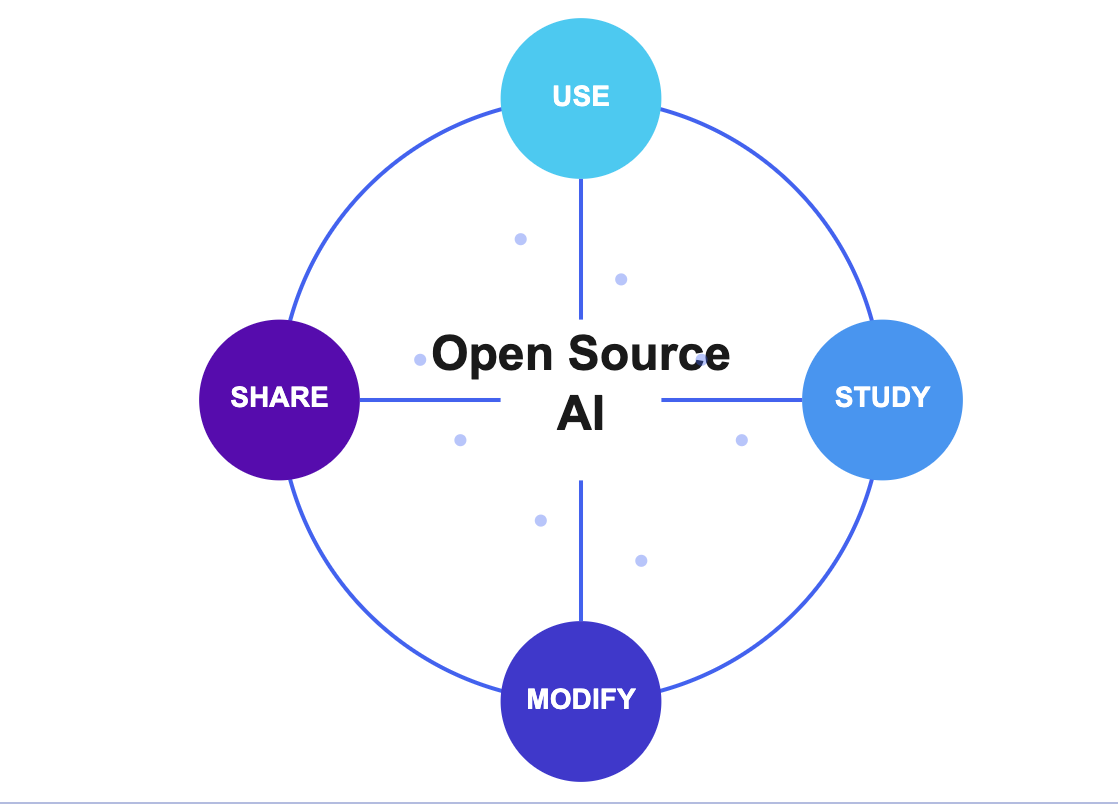
Open Source AI represents a fundamental shift in how artificial intelligence systems are developed and shared. According to the Open Source AI Definition 1.0, an AI system is considered "open source" when it grants users four essential freedoms:

  1. Freedom to Use: Anyone can use the system for any purpose without requiring permission
  2. Freedom to Study: Anyone can examine and inspect how the system works and its components
  3. Freedom to Modify: Anyone can modify the system for any purpose, including changing its output
  4. Freedom to Share: Anyone can share the original or modified system with others for any purpose

These freedoms apply not only to complete AI systems but also to their individual components, such as models, weights, parameters, and code.

The Open Source AI : Understanding the New Standard

The Three Pillars of Open Source AI

To be truly open source, an AI system must provide access to three critical elements in their preferred form for modification:

1. Data Information

  • Complete description of all training data, including unshareable data
  • Details about data provenance, scope, and characteristics
  • Information about data selection, labeling procedures, and processing methodologies
  • Lists of both publicly available and third-party obtainable training data

2. Code

  • Complete source code for training and running the system
  • Data processing and filtering specifications
  • Training procedures and configurations
  • Validation and testing protocols
  • Supporting libraries and tools
  • Model architecture specifications

3. Parameters

  • Model weights and configuration settings
  • Training checkpoints from key stages
  • Final optimizer state
  • All parameters must be available under OSI-approved terms

Important Clarifications

Models and Weights

The definition specifically addresses both AI models and weights:

  • AI Model: Consists of the model architecture, parameters (including weights), and inference code
  • Weights: The learned parameters that work with the model architecture to process inputs and generate outputs

Both components must include their associated data information and code used to derive the parameters to be considered truly open source.

Why This Definition Matters

The Open Source AI Definition serves several crucial purposes:

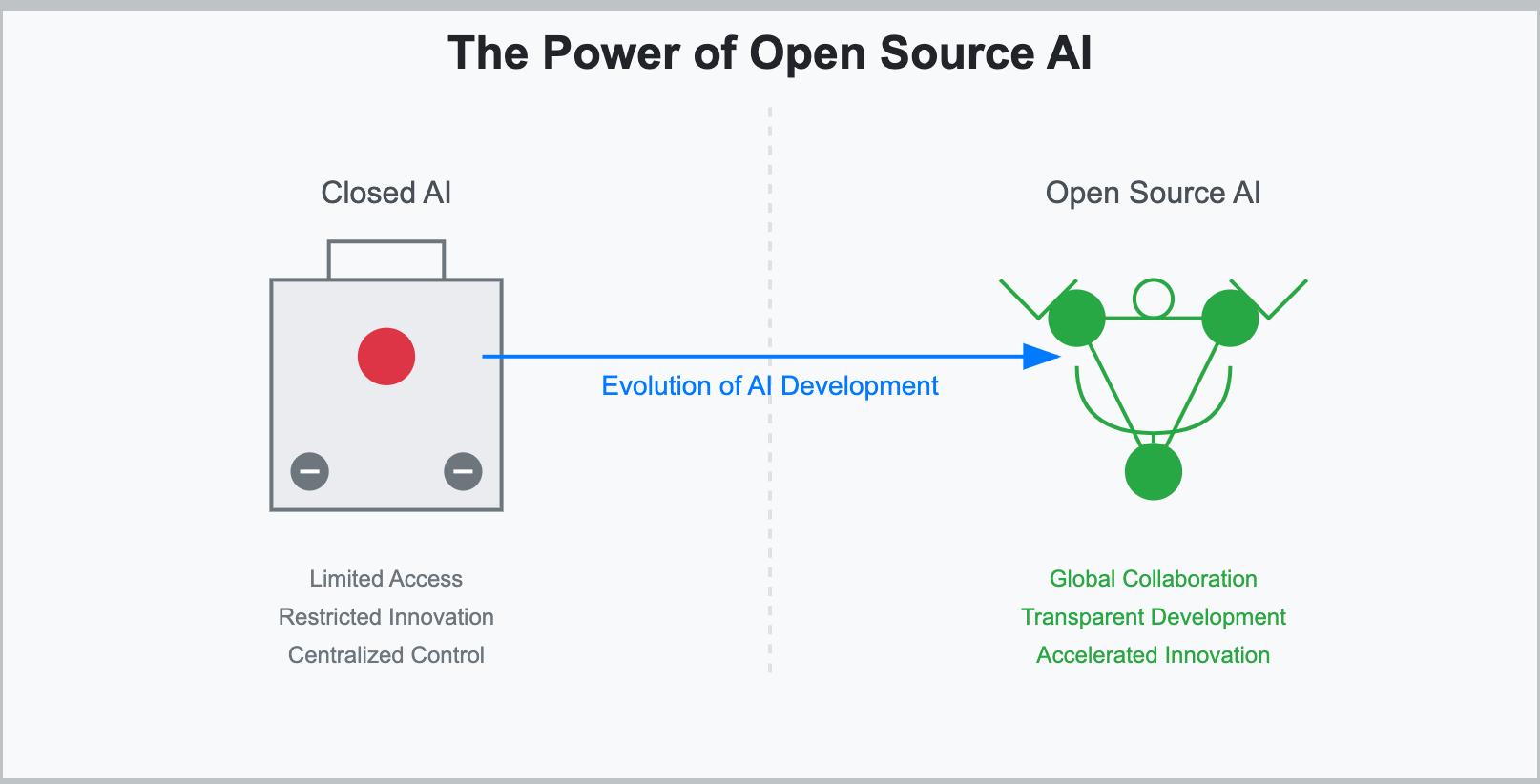
Transparency and Trust

  • Enables verification of AI system behavior
  • Allows identification of potential biases
  • Promotes accountability in AI development

Innovation and Collaboration

  • Removes barriers to access and modification
  • Enables global collaboration on AI development
  • Accelerates technological advancement

Democratization

  • Makes AI technology accessible to organizations of all sizes
  • Prevents monopolistic control of AI advancement
  • Promotes equal opportunities in AI development

Ethical Development

  • Enables community oversight
  • Facilitates responsible AI development
  • Supports broader ethical standards

Challenges and Considerations

While the definition sets a clear standard, several challenges must be addressed:

  • Data Privacy: Balancing transparency with data protection requirements
  • Security: Managing potential vulnerabilities in open systems
  • Intellectual Property: Navigating complex licensing requirements
  • Resource Requirements: Addressing computational needs for training and running models

Conclusion

The Open Source AI Definition 1.0 marks a significant milestone in making AI development more transparent, collaborative, and ethical. By providing clear guidelines for what constitutes truly open source AI, it helps ensure that artificial intelligence technology can benefit from the same advantages that have made open source software so successful.

This definition not only sets standards for transparency and accessibility but also provides a framework for building a more inclusive and innovative AI ecosystem. As AI continues to shape our future, embracing these open source principles will be crucial for ensuring that its development serves the broader interests of society.

https://bit.ly/4fCmHEw
https://bit.ly/48MgfJd


https://2.gravatar.com/avatar/b7ed20e10da488de193e75b40fa28ba5ceda96c4265525794861ddaa33ae7723?s=96&d=identicon&r=G
https://deepakguptaplus.wordpress.com/2024/11/11/the-open-source-ai-understanding-the-new-standard/

Thursday, November 7, 2024

The Future of Work: Understanding AI Agents and Digital Coworkers

The Future of Work: Understanding AI Agents and Digital Coworkers

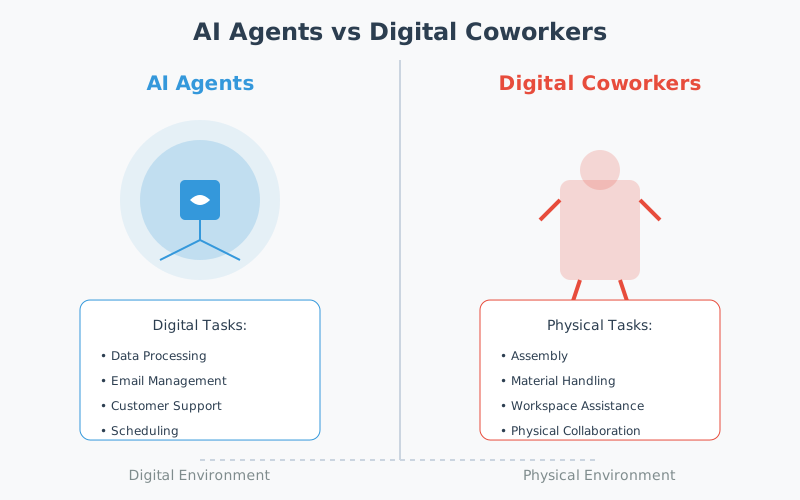
The workplace is transforming with two revolutionary technologies: AI agents and digital coworkers. Think of AI agents as your virtual team members who handle digital tasks, while digital coworkers are like robot colleagues who can physically interact with the world around them. This guide breaks down these technologies in simple terms while providing the technical depth professionals need.

1. Introduction: Meeting Your New AI Colleagues

What Are AI Agents?

Imagine having a super-efficient virtual assistant who never sleeps and can handle thousands of tasks simultaneously. That's an AI agent. These digital workers excel at tasks like:

  • Managing your email inbox
  • Scheduling meetings
  • Analyzing large datasets
  • Answering customer queries
  • Automating repetitive digital tasks

What Are Digital Coworkers?

Picture a robot colleague who can work alongside you, learning and adapting to physical tasks. Digital coworkers are the bridge between AI and the physical world. They can:

  • Help assemble products in factories
  • Assist doctors in hospitals
  • Stock shelves in retail stores
  • Clean and sanitize spaces
  • Deliver items in warehouses

2. How They Work: The Technology Behind the Magic

AI Agents: The Digital Brain

AI Agent Architecture:
├── Brain (AI Models)
│   ├── Understanding human instructions
│   ├── Making decisions
│   └── Learning from experience
├── Communication Center
│   ├── Processing natural language
│   └── Generating human-like responses
└── Task Center
    ├── Executing actions
    └── Managing workflows

Real-World Example:

When you ask an AI agent to "schedule a team meeting," here's what happens:

  1. It understands your request through Natural Language Processing
  2. Checks everyone's calendars
  3. Finds the best time slots
  4. Sends invitations
  5. Books a meeting room or sets up a virtual link
    All in seconds!

Digital Coworkers: The Physical Partner

Digital Coworker System:
├── Physical Body
│   ├── Cameras (the eyes)
│   ├── Sensors (the skin)
│   └── Robotic arms/legs
├── Brain
│   ├── Visual processing
│   ├── Movement planning
│   └── Safety systems
└── Learning System
    ├── Understanding demonstrations
    └── Adapting to new situations

Real-World Example:

In a manufacturing setting, a digital coworker learning to assemble a product:

  1. Watches human workers perform the task
  2. Creates a digital model of the assembly process
  3. Practices the movements
  4. Gradually increases speed and precision
  5. Works alongside humans while maintaining safety

3. The Smart Stuff: Core Technologies

For AI Agents:

Natural Language Processing (NLP)

  • What It Is: The technology that helps AI understand and respond in human language
  • Real-World Impact: Enables natural conversations with customers, reducing response time from hours to seconds
  • Business Value: Can handle thousands of customer inquiries simultaneously, operating 24/7

Machine Learning

  • What It Is: Systems that learn and improve from experience
  • Real-World Impact: Gets better at predicting customer needs and solving problems over time
  • Business Value: Reduces errors by up to 80% compared to manual processes

For Digital Coworkers:

Computer Vision

  • What It Is: Technology that helps robots "see" and understand their environment
  • Real-World Impact: Enables safe movement around humans and precise handling of objects
  • Business Value: Reduces workplace accidents by up to 90% while increasing productivity

Reinforcement Learning

  • What It Is: Learning through trial and error, just like humans
  • Real-World Impact: Allows robots to adapt to new situations and improve their skills
  • Business Value: Reduces training time for new tasks by up to 60%

4. Real-World Applications and Success Stories

AI Agents in Action

Customer Service Excellence

  • Company: E-commerce platform
  • Implementation: AI agents handling customer queries
  • Results:
    • 85% reduction in response time
    • 95% customer satisfaction
    • $2M annual savings

Sales and Marketing

  • Company: B2B software provider
  • Implementation: AI agents qualifying leads and scheduling demos
  • Results:
    • 3x increase in qualified leads
    • 70% reduction in sales cycle
    • 45% increase in conversion rates

Digital Coworkers at Work

Manufacturing Innovation

  • Company: Automotive manufacturer
  • Implementation: Collaborative robots in assembly
  • Results:
    • 40% increase in productivity
    • 90% reduction in errors
    • Zero safety incidents

Healthcare Support

  • Company: Large hospital network
  • Implementation: Robot assistants for logistics
  • Results:
    • 60% reduction in manual transport tasks
    • 85% faster delivery times
    • Improved staff satisfaction

5.1 Emerging Technologies

a. Quantum Computing Integration

  • Current State: Early-stage quantum computers achieving 100-1000 qubit processing
  • Future Impact:
    • Processing complex algorithms 100-1000x faster than classical computers
    • Optimization of supply chains and logistics in real-time
    • Enhanced machine learning capabilities for both AI agents and digital coworkers
  • Practical Applications:
    • Real-time language translation across 100+ languages simultaneously
    • Complex molecular modeling for pharmaceutical research
    • Optimization of global logistics networks in milliseconds

b. Advanced Sensor Technologies

  • Next-Generation Environmental Awareness:
    • LiDAR systems with sub-millimeter accuracy
    • Bio-inspired sensors mimicking human touch sensitivity
    • Thermal and electromagnetic sensing capabilities
  • Enhanced Capabilities:
    • 360-degree spatial awareness in dynamic environments
    • Micro-movement detection for precise operations
    • Environmental condition monitoring (temperature, humidity, air quality)
  • Real-World Applications:
    • Surgical assistants with super-human precision
    • Warehouse robots navigating complex, dynamic spaces
    • Manufacturing quality control with microscopic accuracy

c. Human-AI Collaboration Frameworks

  • Advanced Interface Systems:
    • Brain-computer interfaces for direct AI interaction
    • Augmented reality overlays for real-time collaboration
    • Gesture and intent recognition systems
  • Collaborative Features:
    • Real-time skill transfer between humans and AI
    • Predictive assistance based on behavioral patterns
    • Emotional intelligence integration for better human interaction

5.2 Integration Possibilities

a. AI Agent-Digital Coworker Synergy

  • Unified Systems:CopyIntegrated Workflow Example:
Integrated Workflow Example:
AI Agent    ─────────────►    Digital Coworker
├── Task Planning               ├── Physical Execution
├── Data Analysis               ├── Environmental Interaction
└── Decision Making             └── Real-world Feedback
  • Real-World Applications:
    • Warehouse operations where AI agents manage inventory while digital coworkers handle physical movement
    • Healthcare settings with AI agents managing patient records while digital coworkers assist in patient care
    • Manufacturing environments where AI agents optimize production schedules while digital coworkers handle assembly

b. Cross-Platform Integration

  • Universal Standards Development:
    • Open APIs for seamless integration
    • Standardized communication protocols
    • Universal task description language
  • Platform Capabilities:
    • Real-time synchronization across systems
    • Automated workflow orchestration
    • Dynamic resource allocation

c. Enhanced Security and Privacy

  • Advanced Protection Measures:
    • Quantum encryption for data transmission
    • Blockchain-based audit trails
    • Zero-knowledge proof systems
  • Privacy-Preserving Features:
    • Federated learning for distributed AI training
    • Data anonymization at source
    • Granular access control systems

Conclusion: Embracing the Future

The combination of AI agents and digital coworkers represents a new era in workplace efficiency and innovation. By understanding and implementing these technologies strategically, organizations can:

  • Increase productivity
  • Reduce costs
  • Improve employee satisfaction
  • Stay competitive in a rapidly evolving market

References

  1. IEEE Robotics and Automation Society Standards
  2. ISO/TS 15066:2016 – Robots and robotic devices

https://bit.ly/40G74Yz
https://bit.ly/4fENMau


https://2.gravatar.com/avatar/b7ed20e10da488de193e75b40fa28ba5ceda96c4265525794861ddaa33ae7723?s=96&d=identicon&r=G
https://deepakguptaplus.wordpress.com/2024/11/08/the-future-of-work-understanding-ai-agents-and-digital-coworkers/

Monday, November 4, 2024

Busting Common Passwordless Authentication Myths: A Technical Analysis

Busting Common Passwordless Authentication Myths: A Technical Analysis

Cyber threats continue to evolve for enterprises and passwordless authentication emerges as a transformative approach to digital security. This comprehensive analysis examines the technical foundations, security implications, and user experience impacts of passwordless authentication, drawing from extensive experience in Customer Identity and Access Management (CIAM) systems.

Understanding Passwordless Authentication

Core Technical Architecture

Passwordless authentication fundamentally shifts away from shared secrets (passwords) to cryptographic key pairs and biometric verification. The architecture typically consists of:

  • Public-private key cryptography for secure authentication
  • Hardware security modules (HSMs) for secure key storage
  • Challenge-response protocols for verification
  • Biometric template protection and secure storage
  • WebAuthn/FIDO2 standard implementations

Security Advantages Over Traditional Methods

  • No stored password hashes to be compromised
  • Protection against credential stuffing attacks
  • Immunity to password spraying techniques
  • Resistance to rainbow table attacks

2. Enhanced Phishing Resistance

  • Domain-binding prevents credential interception
  • Public key cryptography ensures server authenticity
  • Challenge-response mechanisms prevent replay attacks
  • Real-time verification eliminates credential harvesting

Debunking Common Myths

Myth 1: "Passwordless Is Less Secure Than Traditional MFA"

Technical Reality

  • Passwordless solutions often incorporate multiple factors inherently
  • Hardware-backed security provides stronger guarantees
  • Biometric factors offer high entropy and uniqueness
  • Local verification reduces attack surface

Implementation Benefits

  • Reduced complexity in security architecture
  • Lower risk of misconfiguration
  • Simplified audit trails
  • Enhanced compliance capabilities

Myth 2: "PINs Are Just Short Passwords"

Technical Differences

  • PINs are locally verified, not transmitted
  • Hardware-backed secure enclaves protect PIN verification
  • Rate-limiting is enforced at hardware level
  • PINs are bound to specific devices

Security Implications

  • Brute force protection through hardware
  • No remote attack surface for PIN guessing
  • Device-specific security boundaries
  • Immediate feedback for verification

Myth 3: "Biometrics Are Easy to Spoof"

Modern Biometric Security

  • Advanced presentation attack detection (PAD)
  • Neural network-based liveness detection
  • Secure biometric templates
  • Zero-knowledge biometric verification

Technical Safeguards

  • Template encryption and secure storage
  • Match-on-device architecture
  • Regular template updates
  • Multiple biometric modality support

Implementation Best Practices

1. Risk-Based Deployment Strategy

  • Start with low-risk applications
  • Gradually expand to critical systems
  • Monitor and adjust security parameters
  • Maintain fallback authentication methods

2. User Experience Optimization

  • Seamless enrollment processes
  • Clear error messaging
  • Robust recovery mechanisms
  • Progressive security enhancement

3. Security Architecture Considerations

  • Implement strong attestation checks
  • Utilize hardware security when available
  • Enable secure device management
  • Deploy robust key management systems

Future-Proofing Considerations

Emerging Technologies

  • Behavioral biometrics integration
  • Continuous authentication methods
  • AI-powered risk assessment
  • Quantum-resistant cryptography

Regulatory Compliance

  • GDPR biometric data requirements
  • CCPA privacy considerations
  • Industry-specific regulations
  • Cross-border data protection

Technical Recommendations

1. Authentication Flow Design

1. Initial Registration:
   - Generate device-bound key pair
   - Register public key with server
   - Establish biometric/PIN verification
   
2. Regular Authentication:
   - Server issues challenge
   - Device signs challenge with private key
   - Biometric/PIN unlocks signing
   - Server verifies signature

2. Security Controls

  • Implement strict attestation policies
  • Enable continuous trust verification
  • Deploy anomaly detection systems
  • Maintain comprehensive audit logs

Conclusion

Passwordless authentication, when properly implemented, provides superior security compared to traditional password-based systems. The combination of hardware security, biometric verification, and cryptographic protocols creates a robust security architecture that addresses many of the vulnerabilities inherent in password-based systems while improving the user experience.

The future of digital authentication lies in passwordless solutions that balance security with usability. As the technology continues to mature and adoption increases, organizations that embrace passwordless authentication will be better positioned to protect their digital assets and provide seamless user experiences.

https://bit.ly/3YRD4b5
https://bit.ly/4efs0sF


https://2.gravatar.com/avatar/b7ed20e10da488de193e75b40fa28ba5ceda96c4265525794861ddaa33ae7723?s=96&d=identicon&r=G
https://deepakguptaplus.wordpress.com/2024/11/04/busting-common-passwordless-authentication-myths-a-technical-analysis/

Palo Alto Networks + CyberArk: The $25 Billion Deal Reshaping Cybersecurity

Deal Overview Transaction Details : Palo Alto Networks announced on July 30, 2025, its agreement to acquire CyberArk for $45.00 in cash ...