
Monday, March 25, 2024

The Next Evolution of IAM: How Generative AI is Transforming Identity and Access

The Next Evolution of IAM: How Generative AI is Transforming Identity and Access

Identity and access management (IAM) remains a chief concern for organizations as workforce mobility, cloud adoption, and reliance on contractors expand the digital attack surface. But increasingly powerful generative AI now promises to reshape IAM, automating secure yet seamless access controls. This guide explores the merging of AI and IAM to safeguard the next-generation workforce.

Generative AI is revolutionizing identity and access management (IAM) by enabling intelligent, context-aware, and automated access controls. By learning from vast amounts of data, AI algorithms can dynamically adapt policies, detect anomalies, and streamline identity governance.

The Shortcomings of Legacy IAM Approaches

Traditional IAM solutions focus largely on role-based access but struggle with scale and context:

● Excessive privileges enable data exfiltration and abuse
● Provisioning backlogs inhibit productivity
● Deprovisioning gaps create dangerous lingering access
● Anomalous usage evades rule-based controls
● Friction blocks collaboration and burns user goodwill

And with over 80% of breaches involving compromised credentials, weak identity assurance fails to contain external threats.

Generating Intelligence for Contextual Access Decisions

Transitioning from predefined rules, generative AI parses contextual signals and learns patterns to make dynamic authorization decisions, just as humans intuitively do.

Powerful machine learning algorithms ingesting billions of data points, including user attributes, entity behaviors, and access logs, can:

● Discern suspicious anomalies amongst typical activity
● Weigh risk variables for adaptive requirements and expiration
● Synthesize role needs into minimal effective permissions
● Securely embed verification factors when risk warrants
● Grant precise access befitting situations automatically

This fluid intelligence acts as an IAM accelerator for security teams while removing friction for authorized users – optimizing both safety and experience.

Use Cases Driving Generative IAM’s Rise

Myriad scenarios stand to benefit from generative IAM:

Secure collaboration – Models instantly authorize third-party access only to specific resources during sensitive mergers and acquisition deals using time-bound permissions.

Emergency access – If a key employee falls suddenly ill, AI instantly transfers and thoughtfully distributes crucial duties to available coworkers per operational needs.

Insider threat response – Detection models identify early malicious behaviors by employees and instantly revoke access while notifying infosec teams, minimizing harm.

Cloud migration – AI rapidly translates complex on-prem permissions into precise cloud roles per application, ensuring continuity after migration.

Regulatory compliance – Platforms confirm that all user entitlements map cleanly to necessary duties around data handling for demonstrations to auditors.

The AI Difference: Risk-Prioritized, Frictionless Security

By perpetually learning and then optimizing identity, access, and authentication policies to legitimate real-time interaction patterns, AI-powered IAM platforms create frictionless security and access flexibility far beyond legacy identity tools.

Core benefits over rule-based IAM include:

  • Adaptive access tuned precisely to user context
  • Temporal constraints on privilege expiration
  • Risk-proportionate authentication demands
  • Predictive revocation of suspicious permissions
  • Contextual policy recommendations
  • Automating intricacy that outpaces admin capacity

Meeting AI’s Challenges Head-On

Fully unleashing AI’s potential to transform IAM ultimately requires evolving maturity in key areas:

Trust in predictions – Organizations must gain confidence in AI verdicts through explainability measures combined with platform transparency and accountability.

Diverse training data – The AI relies wholly on the quality of behavioral data fueling its learning. Carefully avoiding bias while maximizing coverage remains critical.

Value communication – Users must recognize how AI-powered IAM benefits them directly through frictionless authentication and access while upholding security. Progress visibility keeps confidence high even as platforms automatically challenge strange behaviors in real time to protect data.

The Outlook: AI-Defined Identity Management

By complementing learned access wisdom with the context and common sense so innate to human security teams yet so lacking in conventional identity software, generative AI propels IAM to realize greater potential, balancing ironclad protection with delightful user experiences. The future of generative secured access has arrived.

https://bit.ly/3VxOZcP
https://bit.ly/3xcRTtm


https://2.gravatar.com/avatar/b7ed20e10da488de193e75b40fa28ba5ceda96c4265525794861ddaa33ae7723?s=96&d=identicon&r=G
https://deepakguptaplus.wordpress.com/2024/03/26/the-next-evolution-of-iam-how-generative-ai-is-transforming-identity-and-access/

Monday, February 19, 2024

Demystifying JWT, OAuth, OIDC, and SAML: A Technical Guide

Demystifying JWT, OAuth, OIDC, and SAML: A Technical Guide

Applications and APIs today need to handle user authentication, authorized access controls, and identity management, leading to the common question – which standard is right for a given use case? Core standards include JSON Web Tokens (JWT), OAuth 2.0, OpenID Connect (OIDC), and SAML, each with distinct approaches. This comprehensive technical guide explores the key characteristics, appropriate integration scenarios, and relationship between these pivotal protocols for securing systems and data in the modern enterprise.

JSON Web Token (JWT)

Overview
JSON Web Tokens represent claims between parties as a compact JSON object encoded into a digitally signed or encrypted bearer credential passed in HTTP requests. JWT encodes assertions like user identity, access permissions and custom attributes.

Structure
A JWT comprises three logical sections:

  • Header – specifies token type and algorithm like HMAC or RSA
  • Payload – contains verifiable claims as JSON key/value pairs
  • Signature – created by encrypting header and payload together

Once the token is generated after initial authentication, applications pass JWTs to enable user access across domains and security contexts, avoiding repeat logins.

Use Cases
Typical JWT applications include:

  • Authorization – Validate user privileges and permissions
  • Information Exchange – Share verified user data between processes
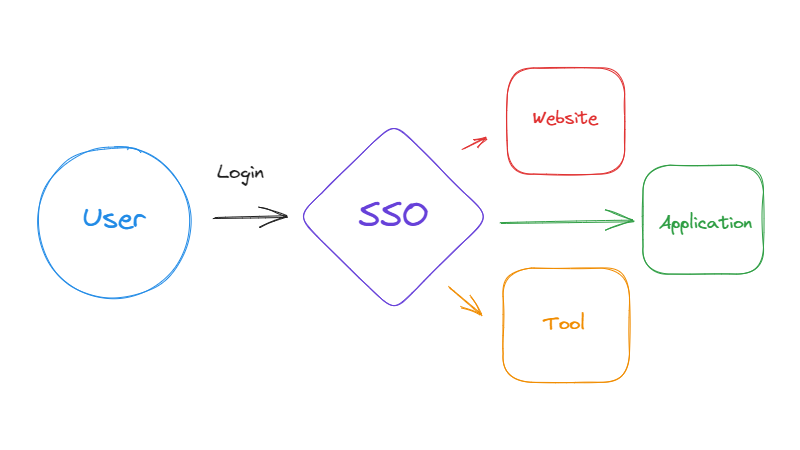
  • Single Sign On – Log a user into disparate systems without reauthenticating

Considerations

  • Not for sensitive data or long-term use since tokens are often short-lived
  • Payloads not encrypted by default
  • Revocation support requires token blacklisting, unlike expirations

OAuth 2.0

Overview
OAuth serves as an authorization framework enabling limited third-party access to web resources without exposing user credentials themselves. It provides API access delegation.

Flow Types
OAuth defines several participant roles and standardized flows including:

  • Authorization Code – grants code allowing access tokens to apps
  • Implicit – directly returns access tokens to clients
  • Resource Owner – supplies credentials to client to obtain access
  • Client Credential – verifies app identity and permissions to get tokens

OAuth use cases

  • Social login with Facebook, Google accessing user data
  • APIs allows third-party applications access to functionality and resources
    • Financial tech aggregation services accessing bank transaction data

Considerations

  • Focus on authorization not authentication
  • Bearer tokens allow access to anyone possessing them
  • Managing token expiration and revocation remains critical
  • Limited built-in user identity handling

OpenID Connect (OIDC)

Overview
As an authentication layer built atop OAuth 2.0, OpenID Connect enables single sign-on and identity exchange capabilities centered around a standards-based user ID token encapsulating verified user identity claims.

an
OIDC overlays enhanced identity handling into regular OAuth flows:

  • Authorizing party asks for an ID token
  • OAuth server issues signed JWT ID token attesting to authenticated user identity
  • Client validates token signatures to establish user SSO session

Use Cases

  • Single sign-on portals
  • Replacing proprietary federated identity management
  • Multi-domain identity layer for web/mobile

Considerations

  • Requires identity token parsing and verification
  • Logout and federation intricacies exist across domains
  • Increased client-side coding even using libraries
  • Token encryption remains optional

SAML

Overview
SAML or Security Assertion Markup Language offers XML-encoded schemas for exchanging authentication and authorization credentials between identity providers and service providers.

Roles
SAML involves three roles:

  • Principal – the user
  • Identity Provider (IdP) – authenticates principal and issues SAML assertions
  • Service Provider (SP) – relies on SAML tokens to allow access

Use Cases
Common SAML applications include:

  • Enterprise single sign-on (SSO)
  • Web browser SSO session portability
  • Federating partner identity

Considerations

  • XML parsing requires greater processing than JSON-based alternatives
  • Features eventual consistency between providers
  • Logout coordination intricacies between participating sites
  • WebRedirect bindings can raise vulnerability risks

Comparing Architectures and Models

While nuanced differences exist between standards, reviewing deployment models, integration complexity, and broader capabilities reveals core commonalities and distinctions for informing adoption choices:

Decentralized Identity Management
OIDC and OAuth 2.0 adopt user-centric identity models that distribute and delegate access rights across domains via interoperable JSON Web Token credentials. This contrasts with centralized SAML models relying more on pre-integration between identity and service providers beforehand.

Ease of Integration
OAuth 2.0 does not directly specify end-user authentication, avoiding this integration complexity. OpenID Connect essentially layers identity handling atop OAuth access delegation. But SAML federates sign-on directly with relatively heavier initial setup between providers.

Mobile and Device Scenarios
Native and mobile apps gravitate toward baked-in platform support for OAuth authorization flows, also invoking OpenID Connect identity capabilities as needed. SAML operates primarily in web infrastructure contexts.

Administrative Maintenance
SAML environments demand rigorous coordination during provider changes to update certificates and endpoints across participating sites. OpenID Connect transparently fetches fresh public signing keys as needed at runtime behind the scenes.

Ongoing Federation Management
SAML allows the listing of partner identity providers to scale configuration burden linearly, though with some consistency benefits. OIDC and OAuth require less initial linkage, dynamically federating wider identity universes at the cost of inconsistencies across providers.

Modern Transition Trajectory
While pioneering web SSO, some analysts argue SAML shows signs of aged architectural adversities like key hard-coding and bespoke XML messaging that OAuth and OIDC ecosystem momentum now modernizes with cloud and mobile-first design principles top of mind.

Enhancing Security and User Experience

Beyond architectural comparisons, what matters most is how these protocols impact application security and user experience:

Data Security
OAuth scope specifications combined with OpenID identity claims provide granular yet dynamic control over access to resources that users can understand. SAML relies more on predefined contracts between identity and service providers alone.

Credential Protection
Signed JWT tokens offer tamper proofing with embedded expiration and tenant identifiers for inspection by resource servers across stateless calls. SAML assertions pass similar information but in more bloated XML strings exposed to intermediate replay issues.

Usability
From login UX to multi-device handling, OIDC and OAuth adopt emerging authentication flows and biometrics that users increasingly expect around mobility and portability. The standards continue progressing with human expectations while SAML operates within conventional web constraints.

Visibility and Control
OIDC provides users transparency into data sharing with its consent screen prompts during sign-on. All standards offer some administrative oversight into API integrations and access policies with proper implementation.

Conclusion

This guide just scratches the surface of these pivotal but oft-conflated standards. Their ongoing convergence and divergence for evolving application scenarios warrant continued understanding. Before implementation, carefully evaluate your authentication methods, identity integration needs and access delegation goals to determine the optimal standards combo fitting security imperatives while smoothing adoption.

https://bit.ly/48lTjP1
https://bit.ly/3SN0RV4


https://2.gravatar.com/avatar/b7ed20e10da488de193e75b40fa28ba5ceda96c4265525794861ddaa33ae7723?s=96&d=identicon&r=G
https://deepakguptaplus.wordpress.com/2024/02/19/demystifying-jwt-oauth-oidc-and-saml-a-technical-guide/

Monday, February 12, 2024

The Future Is Verifiable: How Digital Credentials Will Transform Identity

The Future Is Verifiable: How Digital Credentials Will Transform Identity

In an increasingly digital world, proving who we are online grows ever more challenging. From accessing healthcare records to entering office buildings to exercising our right to vote, our virtual identities struggle to catch up to the real-world trust once built solely on physical documents and in-person recognition.

Enter Verifiable Digital Credentials – the encrypted, tamper-proof solution promising to shift control of identity back to users while making it safer for organizations to validate customers and employees online. This comprehensive guide examines the imminent dawn of a new paradigm for managing privacy and security across all facets of digital life.

The Evolution of Digital Identities

Since the internet’s inception three decades ago, online identities have relied largely on simple passwords and usernames, acting as weak substitutes for real-world credentials stored in wallets and desks. With effective identity policies an afterthought for many companies in the digital realm’s earliest days, the rampancy of leaks and hacks in recent years demonstrates such antiquated systems now fail users and businesses alike when reliably confirming identity matters most.

From credit card fraud to account takeover attacks to foreign influence operations, inadequate digital identity frameworks yield billions in economic losses while sowing distrust regarding the internet’s ability ever to reach its full potential.

Modern digital credentials aim to enable online interactions and transactions with the same confidence once reserved for flashing a driver’s license or branded corporate badge. Already, Apple and Google equip mobile users with wallet passes to use as boarding passes or event tickets while industry groups expand open standards for decentralized, user-owned credentials usable across any service. The tools to transform digital identity seem poised for prime time.

How Verifiable Digital Credentials Secure Online Identity

Built on cryptography and security standards, verifiable credentials include tamper-evident claims like names, birth dates, qualifications, permissions, and more. These attributes get digitally signed by the issuing authority and are stored only on users’ devices rather than in centralized databases.

Unlike passwords or physical badges, which can be easily exploited, stolen, shared, or forged, properly constructed digital credentials cannot be modified without invalidating the issuer’s cryptographic signature. Users can selectively disclose specific claims to satisfy particular access requirements without exposing unnecessary personal information.

For example, an office building could simply request digital proof validating the user’s current employee status, while a liquor store checks only age information – all without ever seeing medical history, salary details, or other sensitive data. Only the least privileged claims are revealed as strictly required at the moment.

Core Use Cases and Tangible Benefits

Myriad high-value applications emerge when users manage their own verifiable digital credentials, including:

Government IDs – Digital driver’s licenses, healthcare cards, and passports enable frictionless interactions with authority services, protected from tampering or forgery.

Background Checks – Employers confirm employment histories, skills, certifications and qualifications without relying solely on self-reported resumes.

Supply Chain – Manufacturers embed secured digital proofs regarding origin, safety testing status, and service records on distributed products and parts.

Contract Signing – Legally binding digitally signed documents relay cryptographic proof of exactly who signed them using attributes like public keys.

Prescriptions – Pharmacies verify real-time script authenticity, dosages, refill status and doctor identities to mitigate dangerous fraud.

Compared to traditional physical credentials, properly designed verifiable digital counterparts offer tangible advantages:

Convenience – Stored securely in digital wallets, users easily access credentials anywhere online or offline services request them.

Selective Disclosure – Unlike broad-access badges or IDs, users only share specific credential claims required for a transaction, optimizing privacy.

Reliable Verification – Cryptography provides issuing source and integrity proof for credential claims protected against any modifications or forgeries.

User Control – Organizations only see identities and attributes expressly consented to by users for each distinct access request.

Flexibility – With standardized schemas, digitally signed credentials securely port user identity and compliance across different providers and platforms.

Hurdles Toward Mainstream Adoption

Despite considerable upside, achieving widespread verifiable credential adoption over the next 5 years remains challenged by lingering barriers including:

No ecosystem support – Few apps and digital services currently integrate systems to consume digitally signed identity claims, though platform investment can close gaps.

Costly revamps – Transitioning legacy identity management systems to next-generation protocols requires time and resources many organizations lack today. But solutions are maturing.

Ongoing standardization – Industry organizations still finalize implementation specifics around open verifiable credential frameworks to ensure smooth interoperability between issuers and verifiers eventually.

User experience – Storing, selecting and sharing digitally signed credentials must feel intuitive and reliable for users less comfortable managing traditional wallets and keys already. Effortless designs lie ahead.

Privacy perceptions – Past data exploitation makes some users wary of storing identity information on devices or systems. But verifiable credentials smartly shift control back to users with selective disclosure unlike historical methods. Education should ease concerns.

Despite hurdles, with escalating cybercrime and stifled innovation blamed on inefficient digital identity guardrails today, forward-thinking analysts agree the value proposition for both businesses and motivated users wanting to reclaim their digital sovereignty outweighs drawbacks.

And most significantly, major platform movement from Apple, Microsoft and Google centering on decentralized, privacy-preserving identity finally reaches the mainstream – with hundreds of millions of consumer devices soon natively supporting next-generation credential technology. The trajectory seems locked toward interoperable and user-centric online identity infrastructure at last.

The Outlook: Personal Identity Reborn on the Horizon

The era of seamless decentralized digital identity fast approaches as verifiable credentials replace aging constructs unfit for the 21st century internet, effectively ushering the next evolution in online privacy and access management. With encrypted digital wallets shielding tamper-proof attributes controlled and shared by users only as requested, our digital personas soon traverse seamlessly yet securely across the apps and services defining modern connected life.

Much as blockchain removed intermediaries across financial exchanges, empowering decentralization stands poised to reshape digital identity. What lies ahead promises not only greater security and privacy but user experiences more customized, frictionless and free from exploitation of the past. Lean into the incoming wave of selective disclosure and cryptographic trust washing away decades of online identity chaos. The future of personally identifiable information is ultimately verifiable.

https://bit.ly/3I3l2ZT
https://bit.ly/3HUx1Jx


https://2.gravatar.com/avatar/b7ed20e10da488de193e75b40fa28ba5ceda96c4265525794861ddaa33ae7723?s=96&d=identicon&r=G
https://deepakguptaplus.wordpress.com/2024/02/12/the-future-is-verifiable-how-digital-credentials-will-transform-identity/

Monday, February 5, 2024

CSO’s Guide: Water-Tight Account Security For Your Company

CSO's Guide: Water-Tight Account Security For Your Company

In today's escalating threat landscape, account takeover and credential compromise remain top attack vectors for data breaches. As cybercriminals grow more sophisticated, organizations can no longer rely on outdated authentication practices and loose access governance. CSOs must mandate and implement robust account security to protect critical assets.

This comprehensive guide examines must-have account security measures spanning enhanced authentication policies, user session controls, log auditing, and real-time alerts. Adopting these water-tight protocols allows for catching and stopping account-based attacks early while collecting forensic evidence for future threat hunting.

Empowering Users with Multi-factor Authentication

Mandating multi-factor authentication across all accounts remains imperative for preventing unauthorized access, even when attackers steal valid passwords.

MFA requires users to provide two or more verification methods from independent categories like:

  • Knowledge – Passwords, PINs
  • Possession – Security keys, verification code-generating apps
  • Inherence – Biometrics like fingerprints and facial recognition

Provide flexible options:  

Allow users discretion to specify higher-risk accounts warranting strong MFA based on their access needs and levels.

Notifying Users of Account Access

Even with MFA slowing adversaries, breaches still occur. Confirming valid user logins gives in-session visibility when access attempts succeed.

The first line of defense is giving users visibility into account access attempts. Configure user accounts to send real-time alerts directly to owners reporting: 

  • Successful logins – Details like access location, device type, and IP address validate actions users have performed themselves vs. suspicious logins signaling compromise.
  • Failed logins – Too many failed attempts likely indicate credential stuffing attacks to block and flag for infosec teams. 
  • Recent login history – Maintaining awareness of account access patterns allows users to report anomalies suggesting hijacking.
  • MFA enrollment status – Have user recently changed their MFA option or update their existing MFA
  • Password change – If someone else changes their password from an unknown location, the user should see their whole password change history

Users can then flag suspicious actions like unfamiliar locations. Integrate identity management and SIEM tooling to track these events, spot anomalies, and trigger automated responses like temporary automatic lockouts.

Arming Users with Session Controls 

Even valid user sessions can be exploited by attackers — but users themselves should be able to limit unauthorized activity by:

● Logging out all sessions – Users can remotely invalidate all currently open sessions to force reauthentication.

● Disabling password reset – Temporarily blocking password reset requests can prevent takeover via hijacked recovery email.  

● Restricting trusted devices – Users can indicate which previously authenticated devices should have privileged persistent access. 

Forcing Reauthentication and Session Logouts

Access from a compromised session persists unless explicitly ended server-side. Limit unauthorized activity by:

  1. Forcing reauthentication with MFA after 30 minutes of web or VPN session activity
  2. Logging out inactive sessions after 1 hour automatically
  3. Terminating remembered device sessions after 24 hours

Additionally enforce new MFA prompts before granting access to highly confidential data or transmitting wire transfers – preventing malware or unauthorized users from misusing verified sessions even on trusted devices.

By actively managing open user sessions, your organization reduces the attack surface and risk of stolen credentials going unnoticed within networks.

Instrumenting Accounts with Deception Technology

Supplement real user accounts by planting false credentials and assets internally for cyber deception:

● Hook authentication portals with decoy login pages to catch credential stuffing.

● Seed honeytoken password dumps that alert when used to take over accounts.

● Embed honeypot deception users among valid identities for behavior analytics.

Attackers probing accounts inevitably trip deceptions, signaling IT response teams. Integrating deception visibly confirms account vulnerabilities while obstructing reconnaissance.

Logging, Notifications, and Alerts Internally

A savvy combination of robust user account controls, advanced behavioral analytics, and deception technology renders your critical enterprise accounts – both human and machine identities – essentially impenetrable using today’s threat tactics. Security teams gain uncompromising visibility when prevention falters while frictionless interdepartmental collaboration becomes secured.

Watching Failed Login Patterns

While hackers persist in trying passwords from data dumps, too many failed login attempts likely signal credential stuffing or brute force attacks.

Configure user accounts to notify both end users and security teams following continuous failed login attempts – whether from wrong passwords entered manually or via automated attacks. Enforce automatic temporary account lockouts following exceeded thresholds, like 10 false logins.

Analyzing Identity and Access Logs

Incorporate log data from cloud access security brokers, identity providers, and VPNs into monitoring for full visibility, including:

  • IP addresses
  • Geolocation
  • Device fingerprint
  • Successful logins
  • Failed access attempts

Leverage user behavior analytics tools to establish baselines, then highlight anomalies indicative of account misuse or takeover. Funnel all suspicious actions to the security operations center for rapid incident response.

Conclusion

While account takeover remains today’s most urgent pathway to breach, according to modern threat intelligence, achieving veritable impregnability is within reach using these force-multiplying measures in concert. When implemented masterfully under your CSO leadership, this instrumental guidance makes unauthorized account activity essentially impossible within your expanding digital enterprise footprint. You are armed to win the asymmetric battle for business data protection through account security mastery.

This guide helps Chief Security Officer (CSO) orchestrate resilient 360-degree account protection where any unauthorized activity becomes virtually impossible. Your expanding enterprise gains end-to-end account security mastery.

https://bit.ly/49pqB0K
https://bit.ly/3SqqWZX


https://2.gravatar.com/avatar/b7ed20e10da488de193e75b40fa28ba5ceda96c4265525794861ddaa33ae7723?s=96&d=identicon&r=G
https://deepakguptaplus.wordpress.com/2024/02/05/csos-guide-water-tight-account-security-for-your-company/

Monday, January 29, 2024

Protecting Business from the Inside Out: A Layered Approach to Cybersecurity

Protecting Business from the Inside Out: A Layered Approach to Cybersecurity

In the ever-evolving world of cyber threats, protecting a business is akin to fortifying a castle. Just as a castle relies on multiple layers of defense – from its outer walls to its inner keep – businesses must adopt a layered approach to cybersecurity. This holistic strategy is essential in today's digital landscape, where threats are not only external but can also arise from within an organization.

Understanding the Layered Security Model

A layered security model, often referred to as defense in depth, is the practice of implementing multiple security measures at different points in the system. This approach ensures that if one layer is breached, others stand in defense, protecting the core assets of the business.

The Outer Layer: Perimeter Security

The first line of defense is perimeter security, which includes firewalls, intrusion detection systems, and edge network defenses. This layer is akin to the castle walls, designed to repel most external attacks. Regular updates and patches are crucial to keep this barrier robust against emerging threats.

The Middle Layer: Network Security

Once inside the perimeter, network security measures come into play. These include internal firewalls, network segmentation, and intrusion prevention systems. Network security is about controlling who has access to what within the organization, much like a castle's guarded gates that regulate movement between different areas.

The Innermost Layer: Endpoint Security

At the heart of the castle lies the keep, the most heavily guarded area. In cybersecurity, this is endpoint security. It involves securing individual devices (like computers and mobile phones) that connect to the network. Anti-virus software, anti-malware programs, and data encryption are critical components of this layer.

Addressing the Human Element: Training and Awareness

No matter how strong your technological defenses are, the human element can often be the weakest link. Employees need to be trained to recognize phishing attempts, understand the importance of strong passwords, and be aware of the company's security policies.

Regular Training Sessions

Conducting regular training sessions keeps cybersecurity at the forefront of employees' minds. These sessions can range from formal training to sending simulated phishing emails to gauge and improve employee response.

Building a Culture of Security

Creating a culture where security is everyone's responsibility is vital. Encouraging employees to report suspicious activities and rewarding those who adhere to best security practices can foster this culture.

Incident Response Planning

Have an incident response plan for detecting threats quickly and then containing impacts through steps like isolating compromised systems, resetting access controls, and analyzing the root cause.

Application Security: Securing the Tools of Trade

Applications are the tools through which businesses operate and interact with the world. Ensuring these tools are secure is paramount.

Secure Development Practices

Incorporating security into the development lifecycle of software – known as secure coding – is essential. This includes regular code reviews, vulnerability testing, and using secure frameworks and libraries.

Regular Application Updates

Applications should be regularly updated to patch any vulnerabilities. This applies not just to in-house software but also to third-party applications used by the business.

Constant Monitoring

Watch activity happening across company networks, systems, email, and cloud apps using security analytics tools. Look for warning signs of compromised accounts, data theft, or policy violations.

Data Security: The Core of the Castle

At the core of every business lies its data – the ultimate treasure that needs safeguarding.

Encryption: Turning Data into Gibberish

Encryption is the process of encoding data so that only authorized individuals can read it. Encrypting sensitive data, both at rest and in transit, ensures that even if data is intercepted or breached, it remains incomprehensible to the attacker.

Access Control: Who Holds the Key?

Implementing stringent access control policies ensures that only those who need to access certain data can do so. This is akin to having different levels of access within a castle, where only select individuals can enter the most sensitive areas.

The Future of Cybersecurity: AI and Machine Learning

As cyber threats become more sophisticated, businesses need to stay ahead of the curve. Artificial intelligence (AI) and machine learning (ML) offer promising avenues.

AI in Threat Detection and Response

AI can analyze vast amounts of data to identify patterns indicative of a cyber attack. This enables quicker detection and response to threats, minimizing potential damage.

Machine Learning for Predictive Security

ML can predict potential vulnerabilities and threats by learning from historical data. This predictive capability allows businesses to fortify their defenses proactively.

Conclusion: An Ongoing Journey

Cybersecurity is not a destination but a journey. As the digital landscape evolves, so must the strategies to protect it. A layered approach to cybersecurity offers a comprehensive defense mechanism, addressing various potential points of failure. However, the key to robust cybersecurity lies not just in technology but in people. Training, awareness, and a culture of security are indispensable in this ongoing battle against cyber threats.

Businesses must be vigilant, adaptive, and proactive in their approach to safeguarding their digital fortresses in this never-ending game of digital chess.

https://bit.ly/42hiMaN
https://bit.ly/3w3KhbK


https://2.gravatar.com/avatar/b7ed20e10da488de193e75b40fa28ba5ceda96c4265525794861ddaa33ae7723?s=96&d=identicon&r=G
https://deepakguptaplus.wordpress.com/2024/01/29/protecting-business-from-the-inside-out-a-layered-approach-to-cybersecurity/

Monday, January 22, 2024

Securing the Frontier: Preventing Account Takeovers with AI

Securing the Frontier: Preventing Account Takeovers with AI

Account takeover – also referred to as credential stuffing or account hijacking – involves cybercriminals gaining unauthorized access to a user’s online account by stealing or guessing the credentials. It remains one of the most common and damaging forms of digital fraud. Driven by surging motivation and opportunity among cybercriminals, ATO attacks have steadily escalated in frequency, diversity, and impact. Artificial intelligence is emerging as a crucial line of defense against existing and future permutations of account compromise.

What is Account Takeover?

Account takeover is a type of identity fraud where attackers compromise users’ login credentials to gain illicit access to accounts. Often, cybercriminals steal passwords and usernames from website breaches or malware attacks. They then systematically check these stolen credentials across other popular websites and apps through automated brute-force login tools. Once credential stuffing grants the attackers access, they can carry out various fraudulent activities through the hijacked accounts.

Common methods used in account takeovers include:

  • Phishing sites trick users into revealing credentials
  • Keylogging malware tracking keyboard input on devices
  • Brute force attacks guessing password combinations
  • Social engineering schemes manipulating users

Attackers typically seek to takeover accounts with financial data, purchase history, loyalty rewards, or personal information that can enable additional theft and fraud. Examples include:

  • Email accounts used for password resets
  • Retailer accounts with saved payment cards
  • Bank accounts and digital wallets
  • Social media profiles

The Impacts of Account Takeover

A successful account takeover can have devastating financial and personal consequences. With access to an online account, cybercriminals can:

  • Make unauthorized purchases with stored payment cards
  • Transfer funds from account balances or linked bank accounts
  • Access sensitive emails for further criminal activity
  • Steal personal information for identity fraud
  • Access or delete valuable data like photos

Victims often face arduous processes to regain control of compromised accounts, reset passwords across breached emails, monitor identity theft risks, and reverse fraudulent transactions.

How AI Helps Defend Against Account Takeover

Artificial intelligence and machine learning offer powerful capabilities to help defend users and organizations against account takeover attacks before they cause damage. AI-enhanced defense capabilities include:

  • Behavioral Analytics – By baseline users’ normal account access patterns, AI can detect out-of-the-ordinary activity indicative of account takeover. Sudden impossible geographical account access, unfamiliar devices, and other anomalous events trigger alerts.
  • Credential Stuffing Protection – Networks trained on known malicious login patterns can identify and block programmatic credential stuffing attacks as they occur. This prevents access to fraudsters.
  • Anti-bot Defenses – By tracking mouse movements, micro-interactions with pages, and other signals, AI can distinguish real human logins from automated bot attacks and allow the legitimate while blocking fraudulent logins.
  • User Identity Verification – Once suspicious activity is detected, AI algorithms can initiate additional identity verification challenges for users to confirm real account owners and block bad actors. Challenges assess human traits like visual puzzle solving.

Enterprises are increasingly deploying such AI systems in their identity and access management (IAM) stacks to reduce account takeover risks. Leading identity providers also offer AI defenses to users and application owners. Over time, advances in AI will make account takeover efforts more difficult and easier to thwart before major fraud occurs.

The Future of Account Takeover Attacks

As AI defense measures grow more widespread, fraudsters will likely attempt to evolve their account takeover techniques to sustain criminal profits. Potential developments include:

  1. Increased Phishing Sophistication – Very specific, personalized phishing lures could trick more users into giving up credentials without triggering generalized phishing alerts.
  2. Enhanced Social Engineering – Leveraging information from breaches and social media, criminals could better impersonate contacts and manipulate victims.
  3. Multi-Channel Coordinated Attacks – Orchestrating phishing, smishing, vishing, and business email compromise could overwhelm users’ defenses across multiple channels.
  4. Synthetic Identity Fraud – Stealing enough data to fabricate fake digital identities could help fraudsters create more accounts to takeover.

However, while criminals adapt, so too will AI and identity protection controls with expanded datasets, new detection patterns, and self-learning capabilities. The forces battling for and against account takeover will fuel an ongoing cybersecurity arms race for the foreseeable future – with AI acting as a bulwark against identity fraud.

Individuals and organizations must remain equally vigilant and leverage advanced protection systems to secure identities in the digital age. Account takeovers will remain a threat into the future, but the damages can be mitigated through AI and savvy personal security habits.

https://bit.ly/3Sa5kRv
https://bit.ly/3S6sfNv


https://2.gravatar.com/avatar/b7ed20e10da488de193e75b40fa28ba5ceda96c4265525794861ddaa33ae7723?s=96&d=identicon&r=G
https://deepakguptaplus.wordpress.com/2024/01/22/securing-the-frontier-preventing-account-takeovers-with-ai/

Monday, January 8, 2024

Ditch the Passwords: Discover the Magic of WebAuthn and Passkeys

Ditch the Passwords: Discover the Magic of WebAuthn and Passkeys

In today’s digital age, passwords have become a necessary evil. We rely on them to protect our sensitive information, yet they often fall short in terms of security and user experience. The constant need to remember and manage multiple passwords can be a daunting task, and the increasing frequency of data breaches and password leaks only adds to the problem. Fortunately, there is a better solution – WebAuthn and passkey.

In this article, we will explore the limitations of traditional passwords, introduce the concept of WebAuthn, delve into the world of passkeys, and discuss the benefits of embracing passwordless authentication.

Do We Still Need Passwords?

Traditional passwords have their fair share of limitations and vulnerabilities. They are often weak and predictable, making them susceptible to brute-force attacks. Additionally, users tend to reuse passwords across multiple accounts, which means that a single compromised password can have far-reaching consequences. Moreover, the complexity requirements imposed by many websites often result in users choosing easily guessable passwords or resorting to writing them down, further compromising security.

Password management and user experience are also major pain points. With the average person having to remember dozens of passwords, it’s no wonder that they often resort to using simple and easy-to-guess combinations. Furthermore, the need to regularly change passwords can lead to frustration and forgetfulness.

To make matters worse, data breaches and password leaks have become alarmingly common. Even the most secure websites and platforms have fallen victim to cyberattacks, resulting in the exposure of millions of user credentials. This not only puts individual accounts at risk but also highlights the inherent weaknesses of passwords as a means of authentication.

What is WebAuthn?

WebAuthn, short for Web Authentication, is a web standard developed by the World Wide Web Consortium (W3C) and the FIDO Alliance. It aims to revolutionize the way we authenticate ourselves online by providing a secure and passwordless alternative.

At its core, WebAuthn relies on public-key cryptography to authenticate users. Instead of relying on a shared secret like a password, WebAuthn uses a public-private key pair. The private key is securely stored on the user’s device, while the public key is registered with the website or application. When authentication is required, the user’s device signs a challenge from the website using the private key, and the website verifies the signature using the registered public key.

WebAuthn plays a crucial role in enabling passwordless authentication. By eliminating the need for passwords, it reduces the risks associated with weak and compromised credentials. Instead, users can authenticate themselves using biometrics, such as fingerprints or facial recognition, or through the use of external devices, such as security keys or smartphones.

Major browsers and platforms have recognized the potential of WebAuthn and have shown their support by implementing it. Chrome, Firefox, Safari, and Edge all support WebAuthn, making it widely accessible to users. Additionally, major platforms like Android and Windows have also integrated WebAuthn into their authentication frameworks, further promoting its adoption.

Moving on to Passkeys

Passkeys are a fundamental component of WebAuthn and serve as the user’s authentication method in a passwordless world. Unlike passwords, which are typically memorized, passkeys are stored on a physical device, such as a security key or a smartphone.

Passkeys offer several advantages over traditional passwords. First and foremost, they are much more secure. Since passkeys are stored on a physical device, they are not susceptible to online attacks like phishing or keylogging. This means that even if a malicious actor manages to trick a user into entering their passkey on a fake website, the passkey itself remains secure.

Furthermore, passkeys provide a convenient user experience. Instead of having to remember complex passwords or go through the hassle of typing them in, users simply need to have their passkey device with them. This can be as simple as plugging in a security key or using a smartphone with biometric authentication capabilities.

There are different types of passkeys that can be used with WebAuthn. Security keys, such as YubiKeys or Titan Security Keys, are physical devices that connect to a computer or mobile device and provide a secure means of authentication. Alternatively, smartphones can also act as passkeys, utilizing built-in biometric sensors or external security apps to authenticate users.

Benefits of WebAuthn and Passkeys

The adoption of WebAuthn and passkeys brings a multitude of benefits to both users and service providers.

From a security standpoint, WebAuthn significantly enhances protection against phishing attacks. Since passkeys are tied to specific websites or applications, they cannot be used to authenticate users on malicious sites. Even if a user unknowingly enters their passkey on a phishing site, the lack of a valid signature from the user’s device will prevent the attacker from gaining access.

In terms of user experience, WebAuthn and passkeys offer a seamless and convenient authentication process. Users no longer need to remember complex passwords or go through the hassle of typing them in. Instead, they can simply plug in a security key or use their smartphone’s biometric capabilities to authenticate themselves.

Additionally, the adoption of WebAuthn reduces the reliance on password management and memorization. With passkeys, users no longer need to remember multiple passwords or resort to insecure practices like writing them down. This not only simplifies the authentication process but also reduces the risk of password-related vulnerabilities.

Implementing WebAuthn and Passkeys

Enabling WebAuthn and setting up passkeys is a straightforward process. Here is a step-by-step guide to get started:

  1. Ensure that your device and browser support WebAuthn. Most modern browsers, such as Chrome, Firefox, Safari, and Edge, have built-in support for WebAuthn.
  2. Register a passkey device. This can be a security key or a smartphone with biometric capabilities. Follow the instructions provided by the device manufacturer to set it up.
  3. Visit a website or application that supports WebAuthn. Look for the option to enable passwordless authentication or security key login.
  4. Follow the on-screen instructions to register your passkey device. This typically involves plugging in the security key or using biometric authentication on your smartphone.
  5. Once your passkey device is registered, you can use it to authenticate yourself on supported websites and applications. Simply follow the prompts and use your passkey device when prompted.

It’s important to check the compatibility and integration considerations may vary depending on the website or application you are using. Some platforms may require additional setup or configuration to enable WebAuthn. Also, review the documentation or support resources provided by the service provider for specific instructions.

When implementing WebAuthn and passkeys, it’s crucial to follow best practices to ensure a secure and seamless user experience. This includes regularly updating passkey devices and keeping them in a safe place, as well as providing clear instructions and support for users who may be unfamiliar with the concept of passwordless authentication.

Future of Passwordless Authentication

WebAuthn represents a significant step towards a passwordless future. Its adoption by major browsers and platforms is a testament to its potential impact. However, the journey towards passwordless authentication is far from over.

Emerging technologies and trends, such as biometric authentication and decentralized identity systems, are likely to shape the future of passwordless authentication. Biometrics, such as facial recognition and iris scanning, offer a seamless and secure means of authentication. Decentralized identity systems, on the other hand, aim to give users more control over their personal data and authentication methods.

WebAuthn is expected to play a crucial role in this evolving landscape. As more websites and applications adopt WebAuthn, users will become accustomed to the convenience and security it offers. This, in turn, will drive further innovation and the development of new authentication methods and technologies.

Summary

Passwords have long been a necessary evil in the digital world. However, with the advent of WebAuthn and passkeys, we now have a secure and convenient alternative. By eliminating the vulnerabilities and limitations of traditional passwords, WebAuthn and passkeys offer enhanced security, improved user experience, and simplified password management.

It’s time to embrace the magic of passwordless authentication and take the first steps towards a future where passwords are no longer a burden. So, why wait? Implement WebAuthn, explore passkey options, and experience the wonders of a passwordless world.

https://bit.ly/48NbUUW
https://bit.ly/3NUiwJ2


https://2.gravatar.com/avatar/b7ed20e10da488de193e75b40fa28ba5ceda96c4265525794861ddaa33ae7723?s=96&d=identicon&r=G
https://deepakguptaplus.wordpress.com/2024/01/09/ditch-the-passwords-discover-the-magic-of-webauthn-and-passkeys/

Palo Alto Networks + CyberArk: The $25 Billion Deal Reshaping Cybersecurity

Deal Overview Transaction Details : Palo Alto Networks announced on July 30, 2025, its agreement to acquire CyberArk for $45.00 in cash ...