Monday, April 10, 2023

The Risks of Third-Party Vendors: A Gateway to Cyber-Attacks

The Risks of Third-Party Vendors: A Gateway to Cyber-Attacks

Third-party vendors are a common part of the business world, and they can provide a number of benefits to businesses. However, third-party vendors also pose a risk to businesses, as they can be a gateway for cyber-attacks.

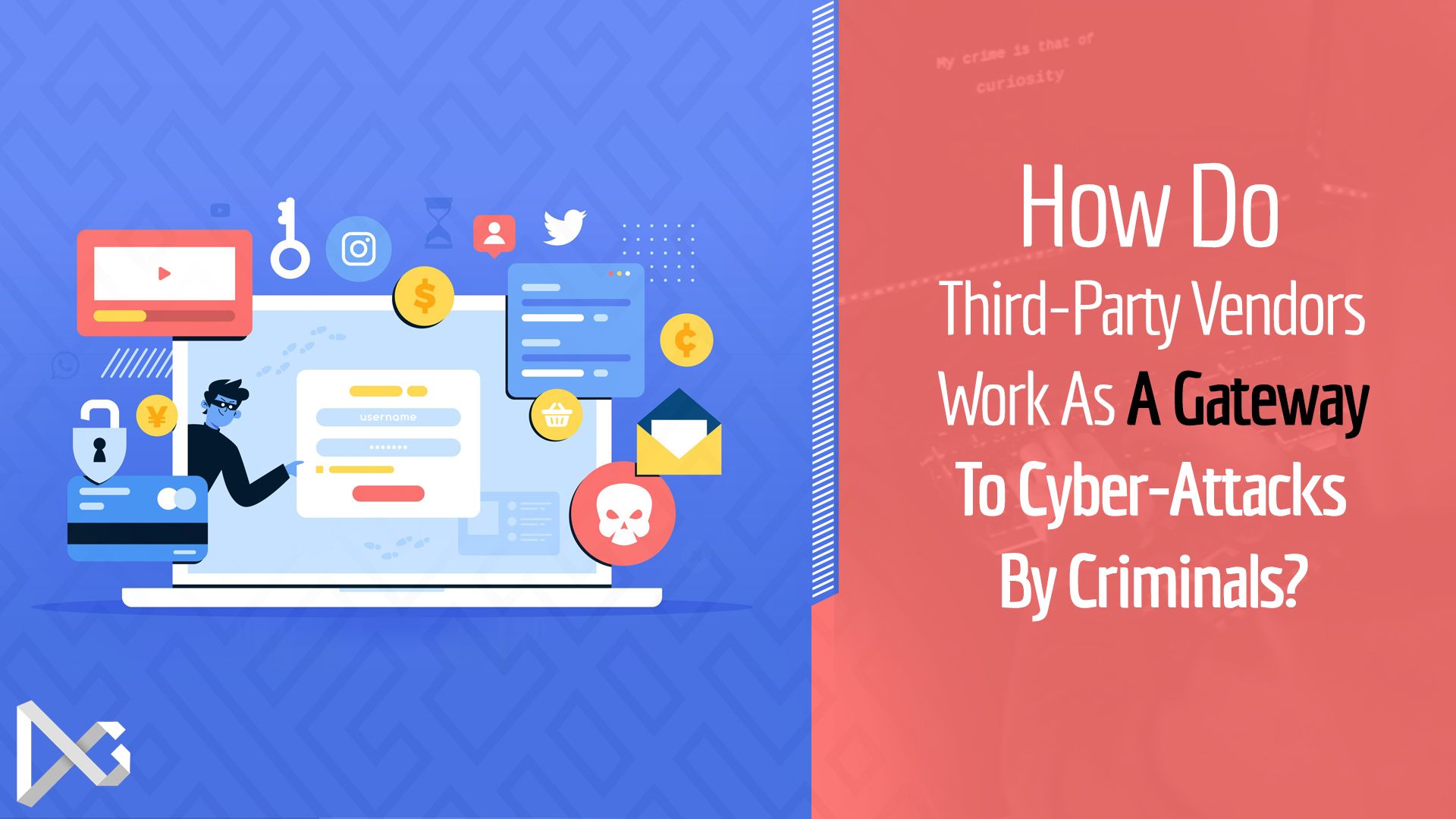
In recent years, businesses have increasingly become dependent on third-party vendors to maintain their systems/infrastructure as well as provide various services to clients. However, most companies have not invested in third-party vendor management programs, thereby increasing cyber-attacks. Several organizations and agencies such as online retailer Target Corporation, Marriott Corporation hotel chain, and the United States Office of Personnel Management have faced cyber criminals' attacks due to lack of adequate security when interacting with third-party vendors. As a result, third-party vendors can be described as one of the gateways to being exploited by cyber-criminals.

How third-party vendors can be a gateway for cyber-attacks:

The rise in third-party data breaches has resulted in exposing organizations’ private data as well as other massive adverse impacts. In most cases, third-party-related threats exist when the client provider's or third-party system or connection between the two parties is unsecure. Companies are likely to work with several third-party vendors during their daily operations from human resources, web development, design, and other service providers. Granting these service providers remote access to the organization's network results in creating a new threat vector. More so, connection to physical connectors such as integrating security systems with cameras, building management systems printers, and HVAC, among others, often increases an organization’s proneness to cyber-attacks. The increased use of the Internet of Things (IoT) operated through third-party vendors has increased cyber-criminals' abilities to gain access to firms' data and systems.

Third-party vendors can be a gateway for cyber-attacks in a number of ways. For example, third-party vendors may have access to sensitive data, such as customer information or financial data. If a third-party vendor is hacked, this data could be compromised. Additionally, third-party vendors may not always have the same level of security as the businesses they work with. This means that if a third-party vendor is hacked, the business they work with may also be hacked.

Risks of using third-party vendors:

There are a number of risks associated with using third-party vendors. These risks include:

  • Data Breach: Third-party vendors may have access to sensitive data. If a third-party vendor is hacked, this data could be compromised.
  • Malware Infections: If the third party vendor gets infected by malware, it could impact your organization and malware could get into your system throught the vendor.
  • Ransomware Attacks: Most of the ransomeware attacks happen using Third-party vendor, where they don't have robust security and cyber defense in place.
  • Distributed Denial of Services (DOS) Attacks: Your business could hit DDOS attacks through the Third-party vendor's systems.
  • Compliance Failures: Third-party vendors may not always be in compliance with the same regulations as the businesses they work with. This could lead to compliance failures for the businesses they work with.
  • Reputation Damage: If a third-party vendor is hacked, this could damage the reputation of the businesses they work with.

How to mitigate the risks of using third-party vendors:

There are a number of things businesses can do to mitigate the risks of using third-party vendors. These include:

  • Identify Vendor and Validate Risk Profile: Before you work with a third-party vendor, it is important to do your research and make sure they have a good product and security practice in place. Conduct a risk assessment for each vendor to evaluate their cyber security posture, policies, practices, and controls. You can use various methods such as questionnaires and audits to gather information about their cyber risk profile.
  • Security and Compliances: When you work with a third-party vendor, it is important to make sure they have security process and 3rd party compliances in place. It is important to monitor them to make sure they are in compliance with your requirements and that they are taking the necessary steps to protect your data.
  • Private Cloud: Most of the vendor now a days offer private cloud option for their services, that will create a separate private environment for your business. It would be great way to monitor the security and controls for your organization in your dedicated cloud instance.
  • Implement a Vendor Risk Management Program: The high rate of third-party breaches can be attributed to a lack of vendor risk management programs among most firms seeking third party services. The programs are essential in helping organizations manage and monitor their vendors and interactions. Notably, the implementation of effective programs will ensure that organizations and their third-party vendors are secure, reducing the risk of cyber-attacks and costly liabilities.

The use of third-party vendors to facilitate organizations' operations and service delivery has led to the emergence of new cyber-related threats.  The best approach to mitigate these threats is for companies to invest in imposing cyber-security standards on their third parties vendors.

https://bit.ly/3mjhvjc
https://bit.ly/43oCfGE


https://guptadeepak.com/content/images/2023/04/How-Do-Third-Party-Vendors-Work-As-A-Gateway-To-Cyber-Attacks-By-Criminals---guptadeepak.com.jpeg
https://deepakguptaplus.wordpress.com/2023/04/11/the-risks-of-third-party-vendors-a-gateway-to-cyber-attacks/

Friday, April 7, 2023

How We Fortified LoginRadius’s Security Posture?

How We Fortified LoginRadius’s Security Posture?

We unmistakably understand security is a continuous, diligent process — which also underpins our ethos at LoginRadius.

Our InfoSec team continuously works to ensure a robust security posture by working on various InfoSec compliance frameworks and programs that assure data security and enable continuous trust with our customers.

In the last couple of years, we re-engineered LoginRadius CIAM to deliver a highly-scalable, more robust identity platform for our customers whose growing end-user interactions needed enterprise scalability and reliability to serve seamless experiences, implying that we also need to be aware of a security paradox:


Yesterday’s innovative features and capabilities can leave a trail to tomorrow’s vulnerabilities: this paradox is commonly evident in the security updates and patches received for some of the most popular software packages and OS platforms.


We’re knowledgeable of and diligent about this paradox, needing our InfoSec team to creatively work parallelly to comply with various security frameworks and ensure a comprehensive, robust security posture throughout the organization and for our customers.

Comprehensive Security with ISO 27001, 27017, and 27018

We implement important security standards set by ISO that are highly relevant to us, like ISO 27001, ISO 27017, and ISO 27018, so that we can demonstrate the quality of our security policies, methodologies, and infrastructure.

In 2022, we again completed external audits without shortcomings to ensure our re-engineered platform’s security aligns with industry-wide recognized standards.

How We Fortified LoginRadius’s Security Posture?

SOC2 Type 2 Audit

We have conducted a SOC2 Type 2 external audit to ensure that our security controls have been effective and producing the results we intended without lags.

How We Fortified LoginRadius’s Security Posture?

Penetration Testing

As part of our recurring annual activities, we have successfully performed external penetration testing in multiple phases utilizing manual and automated techniques. This has furthered our efforts to ensure LoginRadius’s security posture is robust and highly defensible.

Bug Bounty Program

We have been actively engaging with the broader security community through our bug bounty program, instilling trust in our customers and stakeholders that we won’t leave any stone unturned when it comes to the security and integrity of our organization.

Further on InfoSec

In addition to some major InfoSec compliances, external audits, and bounty programs, our team has worked closely on various other areas:

  • Ongoing Review and Updates: As part of our continuous focus on security, we reviewed and updated policy and process documents for different compliance standards. We ensured that the latest compliance standards were followed and documented, allowing us to stay current and compliant. This effort helped us increase our documentation's accuracy and consistency; accordingly, we can easily identify areas for improvement and take action to mitigate risks.
  • Security Awareness: We conducted company-wide InfoSec awareness training programs, tracked and ensured completion by all employees, and improved their understanding of security risks and mitigation measures.
  • InfoSec Tools Management: We have evaluated various tools in our inventory and upgraded to necessary tools relevant and effective in the current cybersecurity landscape. This has enabled us to improve the overall security strength, especially for endpoints.

Conclusion

We have taken significant strides in fortifying our security posture in 2022, almost perfectly supporting and complementing our re-engineering of the LoginRadius CIAM platform. Overall, the InfoSec team has diligently ensured that the security controls and methodologies are effective.

At LoginRadius, we remain committed to staying current and compliant with the latest security standards to provide customers with the best possible experience while ensuring their data is secure.


Originally published at LinkedIn

2020-2022: How We Fortified LoginRadius’s Security Posture?
We unmistakably understand security is a continuous, diligent process — which also underpins our ethos at LoginRadius. Our InfoSec team continuously works to ensure a robust security posture by working on various InfoSec compliance frameworks and programs that assure data security and enable continu
How We Fortified LoginRadius’s Security Posture?

https://bit.ly/3zENVYa
https://bit.ly/3zF1vuH


https://guptadeepak.com/content/images/2023/04/loginradius-security-posture-build.png
https://deepakguptaplus.wordpress.com/2023/04/08/how-we-fortified-loginradiuss-security-posture/

Tuesday, April 4, 2023

Revolutionizing Social Media: Twitter’s Open Source Algorithm

Revolutionizing Social Media: Twitter's Open Source Algorithm

Twitter is one of the world's most popular social media platforms, with over 368 million monthly active users. The platform has been used to share news, information, and opinions on various topics. However, the inner workings of Twitter's algorithm have been a mystery to many users.

Twitter has tried to be more transparent about its algorithm in recent years. In 2017, the company released a blog post outlining its algorithm's basic principles. However, the details of the algorithm have remained largely unknown.

In 2023, Twitter announced that it would be making its algorithm open-source. This means anyone can now view the code that powers Twitter's algorithm. This is a significant development, as it allows users to understand better how their content is ranked and displayed.

What is Twitter's algorithm?

Twitter's algorithm is a complex system that considers various factors when ranking and displaying content.

These factors include:

  • The user's interests
  • The user's past interactions with the content
  • The content's popularity
  • The content's relevance to the user

The algorithm is constantly being updated to improve the user experience. For example, in 2018, Twitter announced that it would give more weight to "quality" content. This means users are likelier to see high-quality, informative, and engaging content.

Why is Twitter's algorithm important?

Twitter's algorithm is crucial because it determines what content users see. The algorithm can be used to promote certain types of content over others. This can have a significant impact on the spread of information and ideas.

For example, if the algorithm is biased towards certain types of content, it can lead to a "filter bubble" where users only see content that confirms their existing beliefs. This can be dangerous, making people more polarized and less open to new ideas.

Open-source algorithms

The move was announced by Twitter's CEO Elon Musk, who had previously polled his followers about whether they wanted to see the algorithm's inner workings.

https://platform.twitter.com/widgets.js

The decision to open-source the algorithm is expected to bring more transparency and accountability into Twitter's functions and help researchers and developers understand how the platform curates and ranks content for its users. The recommendation algorithms code have released on GitHub.

GitHub – twitter/the-algorithm: Source code for Twitter’s Recommendation Algorithm
Source code for Twitter’s Recommendation Algorithm – GitHub – twitter/the-algorithm: Source code for Twitter’s Recommendation Algorithm
Revolutionizing Social Media: Twitter's Open Source Algorithm

According to Twitter's blog post, the algorithm has three main stages: candidate sourcing, ranking, and filtering.

Candidate sourcing is the process of fetching the best tweets from different sources, such as accounts that a user follows (in-network) or accounts that a user does not follow (out-of-network). The algorithm uses various models to predict how likely users are to interact with a tweet or an account based on their previous engagements and interests. The goal is to make the "For You" timeline a mix of 50% in-network and 50% out-of-network tweets.

Ranking is the process of scoring each tweet using a machine learning model that considers thousands of features, such as the tweet's content, popularity, recency, and relevance. The algorithm also labels each tweet with a category, such as news, entertainment, sports, etc. The ranking aims to optimize for positive engagement, such as likes, retweets, and replies.

Filtering applies heuristics and filters to remove tweets unsuitable for display on the timeline, such as tweets from blocked users, NSFW content, or duplicate tweets. The algorithm also tries to ensure diversity and balance on the timeline by limiting the number of tweets from the same account or category.

Implications of Twitter's open-source algorithm

The release of Twitter's open-source algorithm is a significant development. It allows users to understand better how their content is ranked and displayed. This can help users to improve the chances that a wider audience will see their content. The algorithm's release does not mean that users can fully control what they see and do on Twitter.

Twitter's open-source algorithm is a rare example of a significant tech company sharing its core technology with the public. It could potentially inspire other platforms to follow and offer more transparency and control to their users. It could also enable researchers and developers to study and improve the algorithm's performance and impact on society.

https://platform.twitter.com/widgets.js

Overall, the release of Twitter's open-source algorithm is a positive development. It allows users to understand better how the platform works and to improve the chances that a wider audience will see its content. However, it is essential to note that the algorithm is still complex, and there is still much that we do not know about it.

https://bit.ly/3Kw2IL1
https://bit.ly/3zwQ5Jy


https://images.unsplash.com/photo-1611605698335-8b1569810432?crop=entropy&cs=tinysrgb&fit=max&fm=jpg&ixid=MnwxMTc3M3wwfDF8c2VhcmNofDl8fHR3aXR0ZXIlMjBjb2RlfGVufDB8fHx8MTY4MDU2MzYzMQ&ixlib=rb-4.0.3&q=80&w=2000
https://deepakguptaplus.wordpress.com/2023/04/04/revolutionizing-social-media-twitters-open-source-algorithm/

Monday, April 3, 2023

Effortless Sign-up with Lazy Registration

Effortless Sign-up with Lazy Registration

Lazy registration is a process allowing users to start using a website or app without creating an account first. Instead, they can try out the site or app and decide later if they want to register. This can be a great way to encourage users to try out your site or app, as they don't have to commit to anything immediately.

Benefits of lazy registration

Lazy registration is a design pattern that defers asking users to register until it’s absolutely needed, such as when they want to perform an action that requires an account.

There are several benefits to using lazy registration on your website or app.

  1. Increase sign-ups: It reduces the friction and cognitive load for users who just want to try out your app or service without committing to it. It can help to increase sign-ups. When users don't have to commit to creating an account right away, they're more likely to give your site or app a try. This can lead to more sign-ups in the long run.
  2. Improve user experience and conversion: It increases the conversion rate of users who are more likely to register after they have experienced some value from your app or service. Users who don't have to fill out a long registration form can start using your site or app more quickly. This can lead to a more positive user experience, which can encourage users to come back and use your site or app again.
  3. Help get more valuable data from users: It allows you to collect some information about the users based on their previous interactions with your app or service, which can help you pre-fill some of the registration fields or personalize the experience. When users register for your site or app, you can collect information about them, such as their name, email address, and interests. This data can be used to improve your site or app and to target your marketing efforts more effectively.

How to implement lazy registration

Depending on your needs and preferences, there are different ways to implement lazy registration on your website or mobile app.

Here are some best methods:

  1. Guest Mode: The guest mode allows users to browse your site or app without creating an account. They can then choose to register later if they want to.
  2. Passwordless Login: It just require email for the passwordless login and it simplifies the registration with link verification or OTP (one-time passcode). It is very easy to setup lazy registration without even having password.
  3. Social Login: Social Login allows users to log in to your site or app using their social media accounts, such as Facebook, Apple, and/or Google. This can make it easier for users to sign up and help you collect more data about your users.
  4. Registration Later: Using a simple form that asks for the minimum information needed to create an account, such as name and email, and then prompting the user to complete the registration later or when they want to perform an action that requires more details.
  5. Temporary Registration: Using a separate table or collection to store the temporary information of the users who have not registered yet, and then linking them to a permanent record when they register using a cookie or a local ID.

Tips for successful lazy registration

When implementing lazy registration, there are a few things you can do to make it successful. First, ensure your site or app is easy to use and navigate. This will make it easier for users to find the information they need and to take the next step in the registration process.

Second, make sure that your call to action is clear and concise. Tell users what they must do to register and what they'll get out of it.

Third, offer a variety of ways for users to register. This could include a traditional registration form, a social login feature, or a guest mode.

Fourth, make sure that your registration process is secure. Use a secure form and store user data in a safe place.

Fifth, test your lazy registration process before you launch it. Ensure that it works properly and that users can easily register for your site or app.

Conclusion

Lazy registration can be a great way to encourage users to try out your website or app and to collect more data about your users. Passwordless and social login are couple of the quick way to implement and utilize the benefits. When implemented correctly, it can help to improve user experience and to increase sign-ups.

https://bit.ly/40MUWBY
https://bit.ly/3U633XZ


https://images.unsplash.com/photo-1581081536310-c88f076b4ac4?crop=entropy&cs=tinysrgb&fit=max&fm=jpg&ixid=MnwxMTc3M3wwfDF8c2VhcmNofDEzfHxsYXp5fGVufDB8fHx8MTY4MDQ1MDA3MQ&ixlib=rb-4.0.3&q=80&w=2000
https://deepakguptaplus.wordpress.com/2023/04/03/effortless-sign-up-with-lazy-registration/

Friday, March 31, 2023

Understanding Hashing Algorithms: A Beginner’s Guide

Introduction

Understanding Hashing Algorithms: A Beginner's Guide

A hashing algorithm is a mathematical function that takes an input (like a piece of text or a file) and converts it into a fixed-length string of characters, usually numbers or letters. This string called a "hash," is like a unique fingerprint for the input.

Hashing algorithms are designed to be fast and produce unique hashes for different inputs. They are used in various applications, such as checking data integrity, securing passwords, and organizing data.

A good hashing algorithm should:

  1. Create a fixed-length output, no matter the input size.
  2. Always produce the same hash for the same input.
  3. Make it very hard to figure out the original input from the hash.
  4. Rarely create the same hash for two different inputs.
  5. Be efficient and fast in calculating the hash for an input.

Here are some common types of hashing algorithms:

  1. MD5 (Message-Digest Algorithm 5)

Pros:

  • Fast computing hashes, making it suitable for performance-sensitive applications.
  • Widely supported and easy to implement.

Cons:

  • No longer considered secure due to vulnerabilities and susceptibility to collision attacks.
  • Not recommended for cryptographic purposes.

2. SHA-1 (Secure Hash Algorithm 1)
Pros:

  • Faster than some other secure hashing algorithms, like SHA-256.
  • It was once widely used and supported.

Cons:

  • No longer considered secure due to vulnerabilities and susceptibility to collision attacks.
  • Not recommended for cryptographic purposes or data integrity.

3. SHA-256 (Secure Hash Algorithm 256-bit)
Pros:

  • More secure than MD5 and SHA-1, due to a larger hash size and resistance to collision attacks.
  • Widely used and supported for cryptographic purposes.

Cons:

  • Slower computing hashes compared to MD5 and SHA-1 so that it might concern performance-sensitive applications.

4. bcrypt
Pros:

  • Explicitly designed for password hashing and is considered secure.
  • Automatically incorporates a salt (random data) to protect against rainbow table attacks.
  • It can be configured to increase its computational complexity over time, making it more resistant to brute-force attacks as computer hardware improves.

Cons:

  • Slower than other hashing algorithms can be both an advantage (making brute-force attacks more difficult) and a disadvantage (increased processing time for legitimate users).
  • It may not be as widely supported or easily implemented as other algorithms like MD5 or SHA-256.

5. Argon2
Pros:

  • Winner of the Password Hashing Competition in 2015, Argon2 is considered a state-of-the-art hashing algorithm for password security.
  • Highly configurable with options for memory usage, processing time, and parallelism, allowing for fine-tuning of security vs. performance trade-offs.
  • Designed to be resistant to both time-memory trade-off (TMTO) and side-channel attacks.

Cons:

  • Slower and more resource-intensive than simpler hashing algorithms, which can be a disadvantage for some use cases.
  • It may have less widespread support and implementation than older, more established algorithms.

The choice of hashing algorithm depends on the specific use case, security requirements, and performance considerations. Modern algorithms like bcrypt or Argon2 are recommended for critical applications such as password security. For general-purpose hashing, where security is less of a concern, faster algorithms like SHA-256.

How do hashing algorithms work

Here's a high-level overview of how hashing algorithms work:

  1. Initialization: The hashing algorithm initializes its internal state and variables based on predefined initial values.
  2. Preprocessing: The input data goes through a preprocessing step, which may involve padding the data to ensure it is the correct size for processing. This step may also divide the input into smaller blocks for further processing.
  3. Processing: The hashing algorithm processes the input data iteratively or block by block, updating its internal state and variables after each iteration or block. This step typically involves a series of mathematical operations, such as bitwise operations, modular arithmetic, and logical functions. The processing step is designed to "mix" the input data thoroughly, ensuring that even a tiny change in the input results in a significant change in the output hash.
  4. Finalization: The algorithm enters the finalization phase once the entire input data has been processed. In this step, the internal state and variables are combined and transformed to produce the final fixed-size hash. This may involve further mathematical operations to ensure that the hash is uniformly distributed and has the desired properties (e.g., one-way function, collision resistance).
  5. Output: The fixed-size hash is returned as the output of the algorithm. This hash serves as a unique fingerprint for the input data, and any change in the input data (even a single character) should result in a completely different hash.

Some fundamental properties of a good hashing algorithm include the following:

  1. It should produce a fixed-size output (hash) regardless of the input size.
  2. It should be deterministic, meaning the same input will always produce the same hash.
  3. It should be difficult to reverse-engineer the input from the hash (one-way function).
  4. It should have a low probability of producing the same hash for two different inputs (collision resistance).
  5. It should be computationally efficient and fast to compute the hash for an input.

Applications of hashing algorithms

Hashing algorithms have several critical use cases across various domains, including:

Password Storage and Verification: Hashing algorithms commonly securely store and verify user passwords. When a user creates a password, the password is hashed, and the hash is stored in the database. When the user attempts to log in, the entered password is hashed again, and the resulting hash is compared to the stored hash. This ensures that the actual password is never stored in plain text.

Data Integrity: Hashing algorithms can verify data integrity by generating a unique hash for a given piece of data. When the data is transferred or stored, the hash can be recalculated and compared to the original to ensure the data has not been altered or corrupted.

Data Indexing and Lookup: Hashing algorithms are used in data structures like hash tables to index and look up data quickly. By generating unique hashes for input data, the data can be efficiently stored and retrieved using the hash as the key.

Proof-of-Work Systems: In blockchain and cryptocurrency technologies, hashing algorithms are used in proof-of-work (PoW) systems to validate new blocks and maintain consensus in the network. Miners must find a hash that meets certain conditions, which requires significant computational effort to ensure the security and stability of the blockchain.

Cryptographic Applications: Hashing algorithms are used in various cryptographic applications, such as digital signatures, message authentication codes (MACs), and key derivation functions. In these scenarios, hashing provides a unique and secure input data representation.

Deduplication and Data Compression: Hashing algorithms can identify duplicate data and perform data compression by comparing the hashes of different data elements. If two data elements have the same hash, they are considered identical, allowing the system to store only one copy and save storage space.

Digital Forensics and Malware Detection: In digital forensics and cybersecurity, hashing algorithms can identify known malicious files or detect changes in system files by comparing their hashes to known good or bad hashes in a database.

The versatility and unique properties of hashing algorithms make them an essential tool in various security applications.

Security of hashing algorithms

Hashing algorithms are considered secure when they possess specific properties that make them resistant to attacks and ensure the confidentiality, integrity, and authenticity of the data they process.

Here are some fundamental properties that contribute to the security of hashing algorithms:

One-Way Function: A secure hashing algorithm should be a one-way function, meaning it's computationally infeasible to reverse-engineer the input data from its hash. This property ensures that even if attackers gain access to the hash, they cannot easily determine the original data or password.

Collision Resistance: A secure hashing algorithm should have a low probability of producing the same hash for two different inputs. This property, called collision resistance, makes it extremely difficult for an attacker to find two distinct inputs that produce the same hash, potentially compromising the data's integrity or authenticity.

Avalanche Effect: A secure hashing algorithm should exhibit the avalanche effect, which means that a slight change in the input results in a significant change in the output hash. This property ensures that similar input data will produce vastly different hashes, making it harder for an attacker to guess the input based on the hash.

Fast and Efficient: A secure hashing algorithm should be fast and efficient to compute for legitimate users and applications but slow enough to deter brute-force attacks where an attacker attempts to guess the input by trying numerous possibilities.

Resistance to Preimage Attacks: A secure hashing algorithm should resist preimage attacks, where an attacker tries to find an input that produces a specific target hash. Given only its hash, this property ensures that it's computationally infeasible to find the original input data by brute force or other means.

Resistance to Length Extension Attacks: A secure hashing algorithm should resist attacks. An attacker can append additional data to the input and compute the new hash without knowing the original input. This property is crucial for maintaining data integrity and preventing unauthorized modifications.

When a hashing algorithm possesses these properties, it is considered secure and can be used for various applications such as data integrity, password storage, and cryptographic purposes. The latest developments are always happening in cryptography and hashing algorithms, as new weaknesses or vulnerabilities in existing algorithms may be discovered over time, and more secure alternatives may become available.

Conclusion

In conclusion, hashing algorithms are essential in cyber security and cryptography, providing unique fingerprints for input data through mathematical functions. They play a crucial role in various applications, such as ensuring data integrity, securely storing passwords, digital signatures, and data indexing.

A secure hashing algorithm possesses properties like one-way functionality, collision resistance, and the avalanche effect, making it resistant to attacks and suitable for sensitive applications. As the field of cryptography evolves, it's vital to stay informed about the latest developments and choose the appropriate hashing algorithm based on the specific use case, security requirements, and performance considerations.

https://bit.ly/40RIX5Y
https://bit.ly/3JYzNxO


https://guptadeepak.com/content/images/2022/11/hashing-algorithm-deepak-gupta-com.jpeg
https://deepakguptaplus.wordpress.com/2023/03/31/understanding-hashing-algorithms-a-beginners-guide/

Thursday, March 9, 2023

2021-2022: How LoginRadius’s DevOps Delivered Beyond Expectations?

2021-2022: How LoginRadius’s DevOps Delivered Beyond Expectations?

In the last couple of years, we re-engineered our CIAM platform to consistently deliver enterprise-grade scalability, throughput, availability, and stability. This was much needed as some of our largest customers have been serving massive user bases for whom seamless and responsive experiences were paramount.

In this transition, the DevOps team has pushed boundaries to improve the infrastructure, availability, and scalability, supporting our platform re-engineering efforts and thus delivering a highly performant CIAM platform.

Here, I write about the DevOps team’s journey, invaluable contributions, and memorable achievements.

Zero-Downtime Upgrades

There are no two ways about it: We don’t like downtimes, and avoiding them is our priority, so we need to be technically strong with the DevOps fundamentals while incorporating cutting-edge technologies and creative engineering.

Firstly, our DevOps team has prioritized upgrades with zero downtime, as this approach benefits our customers immediately as well as in the long term.

We extensively use Kubernetes to deploy, manage, and orchestrate our application and container infrastructure. And new Kubernetes versions are released every four months with security and performance improvements. For this, our team has devised an upgrade procedure with robust automation, which resulted in upgrading our Kubernetes clusters to the latest version with zero downtime.

Secondly, our biggest customers have had some events with unpredictably heavy application loads. As our customers communicated these events timely and relied on us to deliver seamless scalability and throughput, we diligently worked with them to provide zero-downtime elastic scalability with efficient cost optimization.

The team’s efforts are supported by our earlier rebuilding of APIs in Golang, about which our Lead Architect Vijay Singh has written thoroughly: Why We Re-engineered LoginRadius APIs with Go?

Security Enhancements

Performance upgrades and zero-downtime efforts are easily perceivable; however, we know that security efforts should be second to none.

While our customers want us to deliver cutting-edge performance for their identity use cases, we help them trust us with robust security and data compliance measures.

Firstly, as a CIAM platform provider, it’s common for us or for our customer endpoints to get malicious traffic. To improve malicious IP address blocking, we have automated blocking at the proxy level based on real-time analysis utilizing factors like HTTP response codes and IP malicious score — blocking bad actors incredibly early without letting them degrade API and infrastructure performance.

Secondly, we have thoroughly reviewed the security posture of various multi-cloud platforms and services. We have moved away from services that didn’t meet our security levels and incorporated much more secure and robust services.

All these efforts have helped us successfully complete a third-party penetration testing and provide compliance reporting for ISOs and SOC2 with no shortcomings.

New Infrastructure for Disaster Recovery

As our application loads grew, we soon realized that relying on Kubernetes for failover has some downsides. Keeping the control plane up to date became tedious, and the team soon discovered that one region's API degradation was affecting another region's traffic since it was the failover for the first region.

After much discussion and research, we decided to work on a completely new DR infrastructure utilizing AWS Elastic Container Service to create a solution to completely isolate region-specific traffic and degradation. With this approach, the team re-architected the DR setup at minimal cost and achieved better resilience.

Also, we have successfully completed the yearly disaster recovery execution, achieving an impressive 30% improvement in the time it takes to restore various components of the architecture.

Through careful planning and execution, we have streamlined the disaster recovery process, ensuring critical systems can be brought back online as quickly as possible when extreme events occur.

Further DevOps Improvements

We have worked on many other processes and objectives, including:

Incident Management Handbook: We recently introduced a thoroughly improved incident management handbook that provides comprehensive guidance for various actions based on alerts.

The handbook serves as a single point of reference and contains detailed information on handling specific alerts. The team's proactive efforts in creating the handbook have significantly reduced the time taken to onboard new site reliability engineering (SRE) members to just a couple of days from a few weeks.

The handbook has proven to be a valuable resource for the team, providing the necessary information and tools to manage and mitigate incidents effectively.

Fully Automated Custom Domain/SSL Pipeline: Our existing custom domain pipeline had code complexities and could only create or renew certificates every six hours. This led to certificate synchronizing issues across all proxy servers in the old architecture, making it hard to detect if sync didn't happen.

In response to this challenge, we architected and implemented a fully automated custom domain and SSL pipeline from the ground up. The new system has significantly reduced the time it takes to create or renew certificates, bringing it down to just 15 minutes. With the new pipeline, certificates synchronize automatically across all proxy servers instantly. Additionally, an alerting system has been implemented to notify us of any sync failures.

The Results

The DevOps team's efforts have been monumental in extensively supporting our re-engineering efforts. All this has given us competitive performance, reliability, and cost-effectiveness advantages that our customers have been so satisfied with — and helped us scale our platform to support 100k RPS (requests per second) and beyond if the need arises.

Conclusion

Overall, the LoginRadius DevOps team’s efforts and achievements have exceeded expectations, resulting in a highly performant CIAM platform that meets customers' demands for scalability, stability, and security.


Originally published on LinkedIn

2021-2022: How LoginRadius’s DevOps Delivered Beyond Expectations?
In the last couple of years, we re-engineered our CIAM platform to consistently deliver enterprise-grade scalability, throughput, availability, and stability. This was much needed as some of our largest customers have been serving massive user bases for whom seamless and responsive experiences were
2021-2022: How LoginRadius’s DevOps Delivered Beyond Expectations?

https://bit.ly/3Jrk6A8
https://bit.ly/3my4q53


https://guptadeepak.com/content/images/2023/03/guptadeepak-devops-learnings.png
https://deepakguptaplus.wordpress.com/2023/03/09/2021-2022-how-loginradiuss-devops-delivered-beyond-expectations/

Monday, March 6, 2023

BYOI: Empowering Individuals to Take Control of Their Digital Identities

BYOI: Empowering Individuals to Take Control of Their Digital Identities

In today's digital world, our digital identities are becoming increasingly important. We use them to access services, purchase goods, and interact with others. However, many of us are unaware of the risks associated with our digital identities and how to protect them. This is where Bring Your Own Identity (BYOI) comes in. BYOI is a concept that empowers individuals to take control of their digital identities and protect them from misuse.

The benefits of BYOI are numerous. It increases security, improves privacy, and gives users greater control over their digital identities. It also provides more convenience, as users can access their digital identities from any device. In this article, I will discuss what digital identity is, what BYOI is, and the benefits of BYOI.

What is Digital Identity?

Digital identity represents a person's identity in the digital world. It can include a person's name, address, phone number, email address, social media accounts, and other online activity. Digital identity can also include biometric data, such as fingerprints and facial recognition.

There are two types of digital identities: static and dynamic.

Static digital identities are unchanging and are used to identify individuals. Examples of static digital identities include Social Security and driver's license numbers.

Dynamic digital identities are constantly changing and are used to authenticate individuals. Examples of dynamic digital identities include passwords, PINs, and security questions.

What is BYOI?

BYOI stands for Bring Your Own Identity. It is a secure and convenient way for individuals to manage their digital identities. It allows users to create, store, and work their digital identities in a safe environment and provides the tools to protect their identities from misuse.

At its core, BYOI gives users control over their identity. Organizations can reduce the cost and complexity of managing user identities by allowing users to authenticate their identity with their device or identity provider. Additionally, BYOI can provide organizations with a more secure authentication process, as users can establish their identity with a device or identity provider they trust.

BYOI works by allowing users to create a secure digital identity that is stored in a safe environment. This identity can then be used to access services and make purchases. The essence is protected by encryption, and users can easily revoke access to their identity if needed.

How to Implement BYOI

Implementing BYOI is relatively straightforward. Organizations can use existing identity management systems to create and manage digital identities, or they can create their own systems. Once an identity is created, users can access it from any device, and can easily revoke access if needed.

So, how can organizations implement BYOI? The first step is to identify the appropriate identity provider for your organization. This could be a third-party identity provider, such as Google or Microsoft, or an in-house identity provider, such as a biometric device. Once you have identified the appropriate identity provider, you will need to configure the identity provider to authenticate users. This could include setting up a user directory, configuring authentication protocols, and setting up access control policies.

Once the identity provider is set up, organizations must implement the BYOI model. This could include setting up authentication protocols, such as two-factor or access control policies. Additionally, organizations should ensure that their BYOI model is secure by implementing security measures like encryption and multi-factor authentication.

Finally, organizations should ensure that their BYOI model is user-friendly. This could include providing users with clear instructions on how to authenticate their identity and access to support resources, such as FAQs or tutorials. Additionally, organizations should ensure that their BYOI model is accessible to all users, regardless of their device or identity provider.

Bring Your Own Identity (BYOI) is an increasingly popular security model allowing users to authenticate their identity with their device or provider. By implementing BYOI, organizations can reduce the cost and complexity of managing user identities while providing a more secure authentication process. To successfully implement BYOI, organizations should identify the appropriate identity provider, configure the identity provider, implement the BYOI model, and ensure that their BYOI model is user-friendly and accessible to all users.

Benefits of BYOI

BYOI provides numerous benefits to users. It increases security, improves privacy, and gives users greater control over their digital identities. It also offers more convenience, as users can access their digital identities from any device.

  • Increased Security: BYOI increases security by allowing users to create secure digital identities protected by encryption. This ensures that only authorized users can access the essence and that the identity is protected from misuse.
  • Improved Privacy: BYOI improves privacy by allowing users to control how their digital identities are used. Users can choose which services and websites to access with their identity and can easily revoke access if needed.
  • Increased Control: BYOI gives users greater control over their digital identities. Users can choose which services and websites to access with their identity and can easily revoke access if needed.
  • More Convenience: BYOI provides more convenience, as users can access their digital identities from any device. This makes it easier for users to manage their digital identities and for organizations to authenticate users.

Conclusion

BYOI is a secure and convenient way for individuals to manage their digital identities. It allows users to create, store, and work their digital identities in a safe environment and provides the tools to protect their identities from misuse. The benefits of BYOI are numerous, including increased security, improved privacy, increased control, and convenience. BYOI is an essential tool for individuals to take control of their digital identities and protect them from misuse.

https://bit.ly/3ZMVN4S
https://bit.ly/3F0wmF8


https://guptadeepak.com/content/images/2023/03/bring-your-own-identity.png
https://deepakguptaplus.wordpress.com/2023/03/07/byoi-empowering-individuals-to-take-control-of-their-digital-identities/

Palo Alto Networks + CyberArk: The $25 Billion Deal Reshaping Cybersecurity

Deal Overview Transaction Details : Palo Alto Networks announced on July 30, 2025, its agreement to acquire CyberArk for $45.00 in cash ...